Power Distribution Cabinets: A Systematic Understanding—From Structural Analysis To Manufacturing Processes
Oct 19, 2026
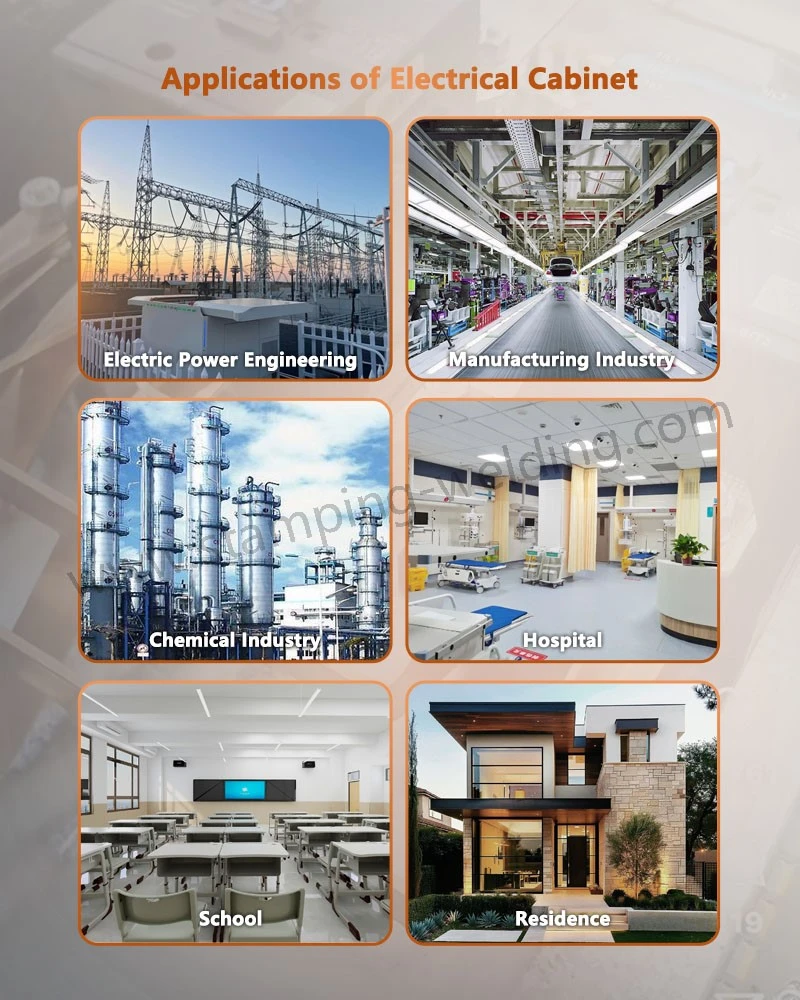
Power distribution cabinets are important equipment in industrial power distribution, building electrical systems, and new energy power systems. They are responsible for tasks such as power distribution, circuit control, fault protection, and operating status monitoring. With the continuous development of industrial automation, data centers, smart buildings, and new energy storage projects, power distribution equipment is developing in the direction of modularization, intelligence, integration, and high reliability. The structural design, sheet metal processing quality, electrical component layout, and assembly process of the power distribution cabinet directly affect the safety, stability, and later maintenance efficiency of the equipment operation.
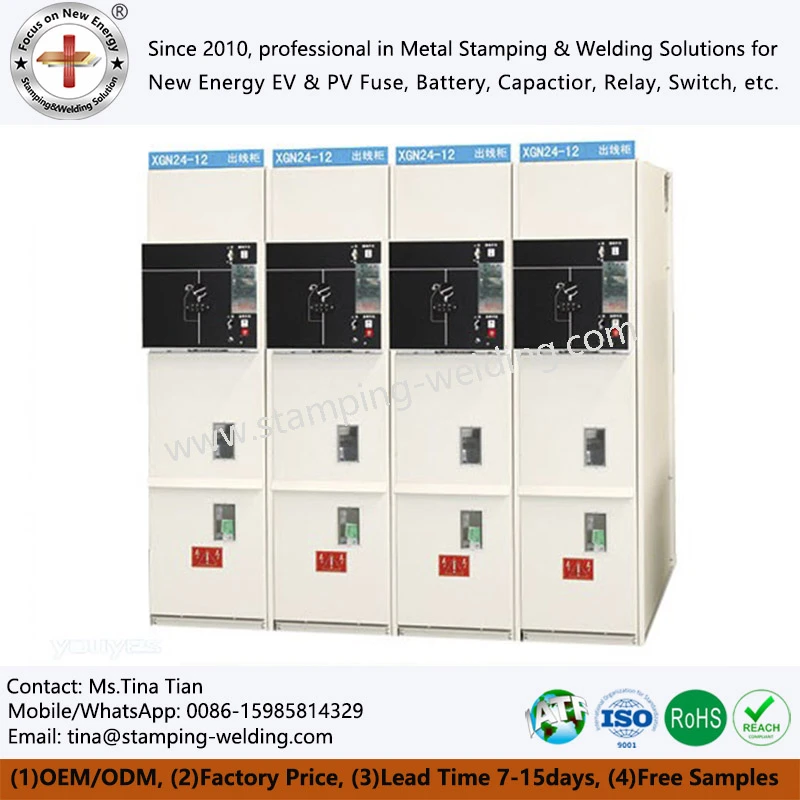
From the perspective of system functions, power distribution cabinets are usually installed between the power supply and terminal electrical equipment. Through components such as circuit breakers, contactors, relays, measuring instruments, protection devices, and busbars, power distribution, loop control, and electrical isolation under abnormal conditions are achieved. Different application scenarios have different requirements for the rated voltage, rated current, short-circuit withstand capability, protection level, and heat dissipation performance of the equipment. Therefore, the design needs to be combined with the actual load characteristics, installation environment, and project specifications.
In the field of industrial power distribution, the design of power distribution cabinets usually needs to take into account the main circuit capacity, internal space utilization, component installation convenience, and subsequent expansion needs. For large industrial plants and production lines, the power distribution system needs to meet the requirements of multi-circuit power supply, centralized equipment control, and fault partition isolation; for commercial buildings and infrastructure projects, more attention is paid to power supply continuity, operational safety, and daily maintenance efficiency. Reasonable cabinet structure and electrical layout help reduce wiring complexity and improve the convenience of equipment operation and management.
The structural forms of power distribution equipment mainly include fixed, closed, and drawer types. The fixed structure has the characteristics of a relatively simple structure and easy installation, and is suitable for application scenarios where the circuit configuration is relatively stable. The closed structure forms a protective space through the shell and door panels, and corresponding protective measures can be configured according to the on-site environment.
In the drawer-type structure, some electrical functional units are designed as extractable modules, which facilitates inspection and replacement, helping to shorten equipment maintenance time. The specific structure selection needs to comprehensively consider the rated current, short-circuit withstand requirements, maintenance conditions, and project budget, and the equipment performance cannot be judged solely based on the cabinet form.
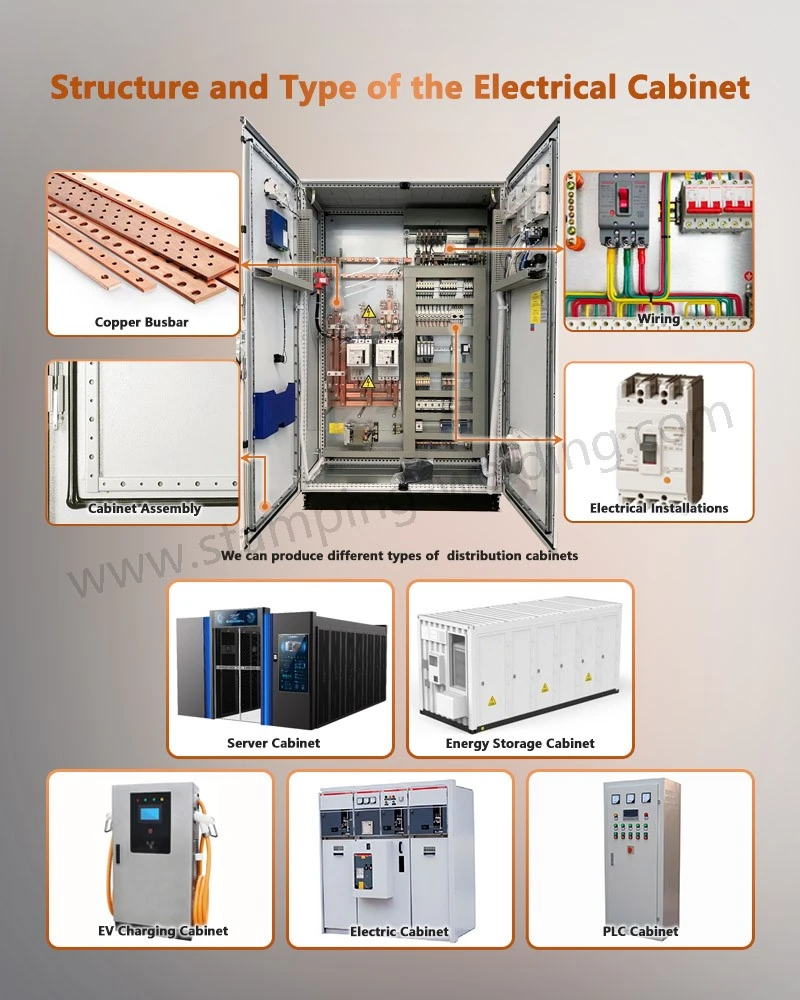
From the perspective of product composition, electrical distribution cabinets usually consist of metal cabinets, mounting brackets, busbar systems, circuit breakers, contactors, relays, instruments, control circuits, and grounding components. Among them, the cabinet not only plays the role of mechanical support, but also needs to provide reliable installation benchmarks, insulation intervals, and protective spaces for electrical components.
Cabinet size deviations, installation hole position errors, and inconsistent bending angles may affect component assembly, door panel closing, and busbar connection. Therefore, sheet metal processing accuracy is a key step that needs to be controlled during the manufacturing process of power distribution equipment.
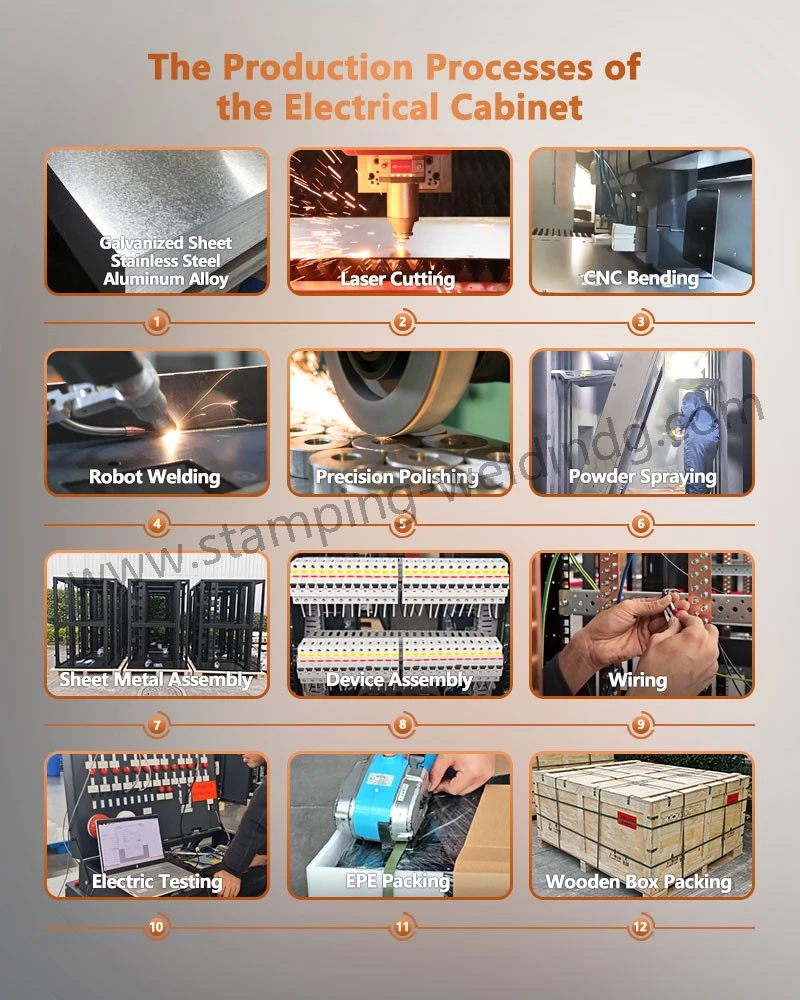
In terms of the manufacturing process, power distribution cabinets usually need to go through processes such as sheet blanking, CNC punching, bending, welding assembly, surface treatment, structural assembly, and electrical installation. The cabinet material can be selected from cold-rolled steel plate, galvanized steel plate, or other suitable metal materials according to project requirements.
CNC stamping and laser cutting are used to process mounting holes, ventilation holes, and connection structures. The bending process determines the geometric accuracy of the cabinet frame and door panels. The welding quality is related to the overall structural strength and long-term stability.
For outdoor installation projects, the cabinet needs to be specifically designed based on factors such as rainfall, dust, humidity, solar radiation, and ambient temperature. An outdoor fiber distribution cabinet is a typical cabinet form in outdoor fiber distribution applications. Its design focuses on shell protection, fiber wiring space, cable entry sealing, and outdoor environment adaptability.
This type of equipment differs from conventional power distribution cabinets in internal functions and usage requirements. However, in terms of cabinet manufacturing, it is also necessary to pay attention to the plate processing accuracy, door panel sealing structure, connector strength, and surface anti-corrosion treatment.
In optical communication infrastructure, a fiber distribution cabinet is mainly used for centralized management, wiring, and connection protection of optical fiber lines. With the construction of optical fiber networks and upgrading of communication infrastructure, the requirements for internal module layout, cable bending radius management, operating space, and maintenance convenience of related cabinets are constantly increasing.
For communication equipment that needs to be installed outdoors, the impact of waterproofing, dustproofing, corrosion resistance, and temperature changes should also be fully considered during the design stage to ensure that the cabinet structure and internal communication components can adapt to the expected use environment.
For power equipment manufacturers, the environmental adaptability of cabinets not only depends on the shell material and sealing structure, but is also closely related to internal temperature rise control. During high-load operation, heat may be generated at the circuit breaker, terminal blocks, and busbar connection locations; if the space inside the cabinet is unreasonably planned or the ventilation conditions are insufficient, local temperature rise may affect the long-term reliability of components. Therefore, designers need to evaluate cooling needs based on electrical losses, installation density, and ambient temperature, and make a reasonable choice between natural ventilation, forced ventilation, or dedicated temperature control solutions.
Cabinet climate control involves temperature and humidity management inside the cabinet and can be used for electrical and electronic equipment cabinets that are sensitive to environmental conditions. The specific plan should be determined based on the heat load and site conditions.
In addition to the main loop, the control loop is also an important part of the power distribution equipment. Cabinet control usually involves functions such as relay logic, contactor control, status indication, interlock protection, and signal transmission. For automated production lines, pump stations, and industrial equipment, control loops need to operate in coordination with on-site sensors, actuators, and upper-level control systems.
During the manufacturing process, line laying, terminal numbering, wiring harness arrangement, and functional verification should be completed according to the electrical schematic diagram and wiring diagram to ensure clear wiring relationships and accurate markings, and to facilitate later troubleshooting.
In specific industrial applications, boiler control units are used to control and monitor boiler-related equipment, usually involving functions such as operating status collection, interlocking logic, and safety protection. The design of its cabinet and electrical system needs to match the control requirements of the specific equipment, and fully consider on-site temperature, vibration, electromagnetic interference and maintenance conditions. For electrical cabinets with dedicated control functions, the manufacturing process should not only pay attention to the mechanical structure and electrical installation, but also pay attention to the control system interface, signal reliability, and related safety requirements.
In the field of transportation infrastructure, 332 traffic signal cabinet can be used as a search or project description term related to a specific traffic signal cabinet. Traffic signal control equipment usually needs to accommodate controllers, power components, communication modules, and wiring systems, and meet outdoor operation, line management, and maintenance requirements. Since transportation facilities may be exposed to temperature and humidity changes, rain, and dust environments for a long time, the sealing, anti-corrosion, heat dissipation, and mechanical protection design of the cabinet needs to be adapted to the on-site installation conditions.
In low-voltage terminal power distribution applications, an 8-way TPN DB box usually corresponds to three-phase and neutral line distribution box products with 8 circuit configurations. This type of equipment is often used in building power distribution, commercial facilities, and small industrial scenarios.
Actual selection requires checking the number of circuits, rated current, incoming and outgoing wire methods, installation forms, and applicable standards. For engineering projects, the suitability of the equipment cannot be determined based solely on the number of circuits. The selection also needs to be completed in combination with load calculation, protection device configuration, and expected expansion needs.
The busbar system is an important part of the current transmission structure of the distribution cabinet. The material selection, cross-sectional area, support method, connection process, and insulation spacing of the busbar will all affect the current-carrying capacity and temperature rise performance of the equipment. Copper busbars are widely used in medium- and low-voltage power distribution systems because of their good electrical conductivity.
In specific projects, specifications also need to be determined based on current-carrying requirements, installation space, and cost requirements. The quality of the contact surface, fastening status, and surface treatment method should be controlled at the connection part, and relevant inspections should be completed in accordance with applicable specifications to avoid local overheating due to increased contact resistance.
During the cabinet manufacturing and complete assembly process, quality control needs to cover the material incoming inspection, dimensional processing, welding, surface treatment, electrical assembly, and final testing. Structural inspection should focus on overall dimensions, mounting hole locations, door panel fit, weld quality, and coating integrity; electrical inspection needs to carry out protection circuit continuity, insulation performance, dielectric performance, and functional verification based on product category and applicable standards. For products involving special protection levels or complex operating environments, corresponding protection and environmental adaptability verification should also be carried out according to project requirements.
In addition, cabinet power distribution-related designs also need to pay attention to maintenance convenience and expansion capabilities during equipment operation. Clear circuit identification, reasonable cable routing, standardized grounding design, and serviceable internal layout can help operation and maintenance personnel locate faults faster and reduce maintenance operation risks. For mass production projects, the use of standardized structural modules and digital processing procedures can also help improve manufacturing consistency and reduce repeated debugging and assembly rework.
Overall, distribution cabinet manufacturing is a systematic project that integrates sheet metal processing, electrical design, busbar processing, control wiring, and quality inspection. With the continuous development of industrial power distribution, communication infrastructure, smart buildings, and new energy projects, the market has put forward higher requirements for the processing accuracy, structural reliability, environmental adaptability, and delivery stability of cabinets.
Manufacturing companies need to establish a complete quality management process between design verification, production process control, and finished product inspection to ensure that the equipment meets actual working conditions and project technical specifications.
For engineering procurement personnel and equipment integrators, when selecting distribution cabinets and related metal cabinet supply solutions, it is recommended to clarify the application scenario, installation environment, cabinet size, plate specifications, surface treatment requirements, protection level, electrical configuration, and expected purchase quantity in advance.
If the project involves non-standard cabinets, outdoor equipment boxes, or batch sheet metal structural parts, further technical drawings, technical specifications, and expected delivery plans can be provided so that the engineering team can evaluate the structural manufacturability, processing technology, assembly interfaces, and quality inspection requirements, and conduct technical communication and inquiry accordingly to promote subsequent sample verification and mass production.
contact us