Precision Brass Machining Industry Undergoes Structural Upgrading: New Energy And Electrical Sectors Drive Demand For High-Performance Copper Alloy Components
Oct 14, 2026
As a key category of copper-zinc alloys, brass is widely used in sectors such as electrical connections, mechanical manufacturing, fluid transport, sanitary hardware, and industrial equipment, thanks to its excellent electrical and thermal conductivity, corrosion resistance, and machinability. As global manufacturing shifts toward high performance, sustainability, and precision, the brass processing industry is transitioning from traditional mass production to high-precision, customized manufacturing.
In recent years, the growth of new energy vehicles, power electronics, smart home devices, and new energy infrastructure has raised the bar for brass material applications. While competition in the market for traditional, low-value-added brass products intensifies, precision brass components-characterized by high dimensional accuracy, high reliability, and the ability to form complex structures-are emerging as a new growth driver for the industry.
The brass processing industry is shifting from scale-based competition to precision manufacturing competition
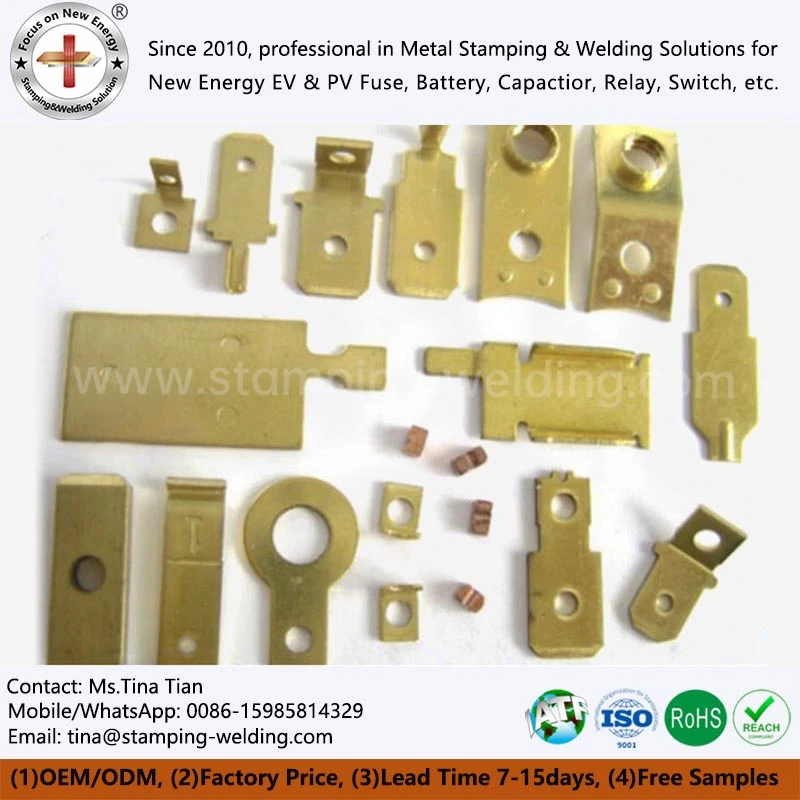
Brass products are primarily manufactured using processes such as stamping, turning, extrusion, drawing, machining, and surface treatment. Depending on specific application requirements, they can be produced as connection terminals, conductive components, mechanical structural parts, and precision hardware components.
In the electrical industry, brass is widely used in electrical connection systems due to its stable electrical conductivity and excellent machinability. For instance, precision-stamped brass sheet metal terminals are commonly used inside switches, electrical sockets, relays, and control equipment; precision stamping enables the formation of complex structures while ensuring mechanical strength and electrical stability during long-term operation.
As electronic devices trend toward miniaturization and higher power output, customer requirements for brass parts have shifted from simple material processing to comprehensive performance control-encompassing material composition stability, dimensional tolerances, surface quality, and batch consistency.
Enterprises specializing in precision brass processing must possess comprehensive capabilities-including material selection, mold development, stamping, and quality inspection-to meet the performance requirements of diverse application scenarios.
The electrical connection sector has become a key application area for precision brass parts
Brass possesses low electrical resistivity and good oxidation resistance, establishing a long-standing track record of use in electrical connections. It is extensively utilized as a conductive connection material in switchgear, sockets, electrical control systems, and relay components.
As a critical internal conductive component of the relay, the relay pin brass terminal must meet stringent requirements regarding electrical conductivity, mechanical strength, and assembly precision. In operating environments involving high-frequency switching and prolonged on/off cycles, the contact reliability of the terminal directly impacts the operational stability of the equipment.
Beyond the relay sector, stamped brass components are widely used in power interfaces, connectors, industrial control equipment, and the electrical systems of new energy vehicles. As the number of smart electrical devices grows, market demand for high-precision brass connection components continues to rise.
Precision Stamping Technology Enhances Brass Component Performance
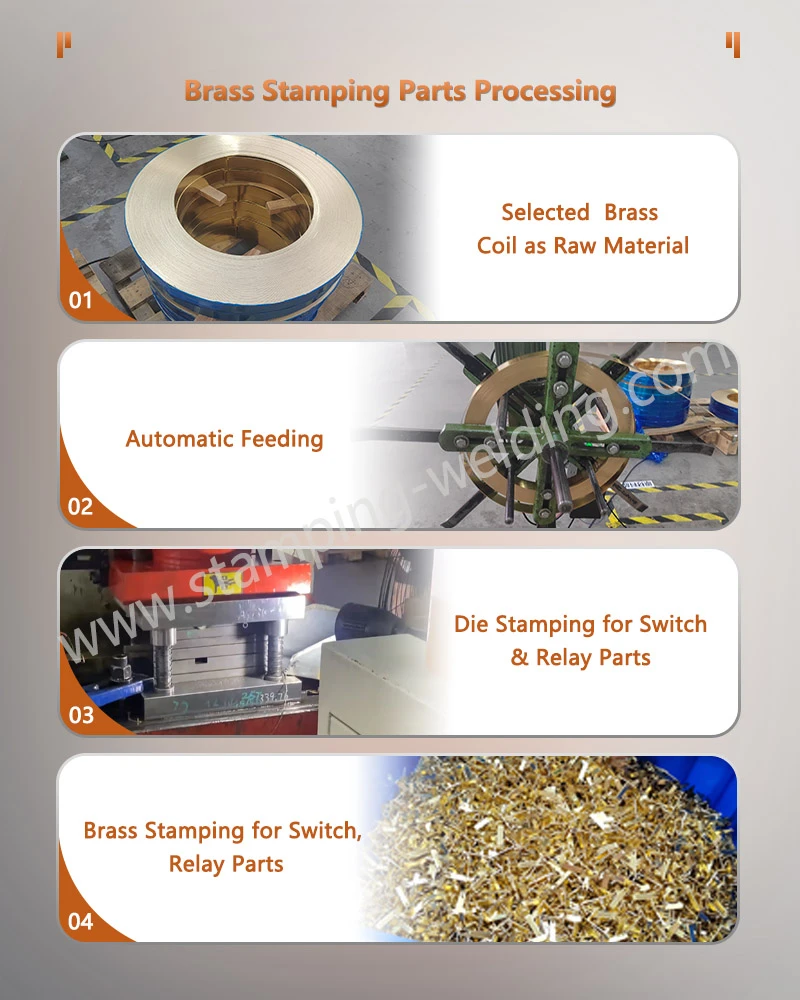
Brass metal stamping is a key process for manufacturing complex electrical parts. Through mold design and progressive stamping, manufacturers can achieve high-efficiency, mass production while ensuring consistent product dimensions.
For instance, sheet metal brass stamping processes can transform brass sheets into terminals, brackets, and connectors with complex geometries. Compared to traditional machining methods, stamping offers superior material utilization, higher production efficiency, and greater product consistency.
In high-end applications, stamped brass components must not only meet basic conductivity requirements but also exhibit excellent elasticity retention, fatigue resistance, and stable assembly characteristics. Consequently, factors such as mold precision, stamping parameter control, and post-processing techniques are critical to product quality.
Advancements in automated production-including precision stamping equipment, in-line inspection systems, and intelligent production management-are elevating the manufacturing standards for brass components, enabling products to meet the high-reliability demands of the automotive, power electronics, and industrial control sectors.
New Energy and Smart Devices Expand the Scope of Brass Component Applications
The growth of the new energy industry is driving the expanding application of brass materials. Components such as electrical connectors in new energy vehicles, battery systems, electronic control units, and charging infrastructure require excellent conductivity and long-term reliability.
Simultaneously, the rapid development of smart home technology and industrial automation equipment has increased the demand for precision electrical connectors. For example, stamped brass electrical connector sockets-manufactured via precision stamping-are utilized in plug-in systems and electrical interfaces to ensure stable current transmission.
Compared to standard consumer electronics applications, the new energy and industrial equipment sectors impose stricter quality requirements on components, demanding stable material properties, precise dimensional control, and long-term operational reliability. Consequently, brass component suppliers possessing engineering and development capabilities will secure greater opportunities in future market competition.

Challenges in Technological Upgrading for Brass Component Manufacturing
Although the brass processing industry rests on a mature foundation, it faces new technical challenges as downstream industries upgrade.
First, market competition is shifting from price-based to technology-based rivalry. While standard brass products suffer from high levels of commoditization, high-precision, highly reliable customized parts require significant R&D investment-encompassing mold design, process optimization, and material testing.
Second, customer demands for product consistency are rising. In sectors such as automotive and electrical equipment, components must ensure stable, long-term operation; suppliers must therefore establish robust quality management systems to strictly control raw materials, processing workflows, and finished products.
Furthermore, increasingly stringent environmental regulations are driving companies to optimize their production processes. Brass processing involves material utilization, surface treatment, and energy consumption management, making "green manufacturing" capabilities an increasingly critical factor in supply chain selection.
Customized Brass Processing: A Future Trend
The brass component industry is poised to evolve toward higher precision, lightweight designs, and enhanced functionality. As the new energy, power electronics, and intelligent manufacturing sectors expand, the growth potential for traditional standardized products remains limited; instead, customized parts tailored to specific application requirements will drive future growth.
For instance, the production of brass-stamped electrical contact assemblies requires material selection and structural optimization based on the operating environments of specific electrical systems-including the design of contact pressure, surface treatment strategies, and assembly configurations.
Simultaneously, digital manufacturing technologies will see wider adoption in the brass processing sector. Technologies such as CAD/CAM design, automated mold manufacturing, and intelligent inspection systems can shorten product development cycles and enhance stability in mass production.
Looking ahead, enterprises that possess capabilities in material analysis, precision mold development, and large-scale production will be best positioned to serve the supply chains of new energy vehicles, electrical equipment, and industrial automation. The supply chain for precision brass components is evolving toward higher reliability.
As global manufacturing supply chains continue to upgrade, purchasing companies are looking beyond mere price and delivery capabilities when selecting brass component suppliers; they are increasingly prioritizing product development expertise, quality control standards, and long-term supply stability.
This is particularly true in the fields of electrical connections and industrial applications, where brass stamped parts must undergo rigorous dimensional inspection, electrical performance testing, and reliability verification to ensure they meet the demands of long-term operation in end-use equipment.
For engineering procurement, selecting a supplier with comprehensive manufacturing capabilities can effectively mitigate project development risks. From material selection, mold design, and sample validation to mass production, professional suppliers can provide tailored manufacturing solutions based on customer blueprints and application requirements.
If you are seeking custom brass stamped parts for switches, electrical connectors, relays, new energy equipment, or industrial control systems, we invite you to share your product drawings, material specifications, and application environment details. By consulting with our engineering team on structural design, manufacturing processes, and quality standards, you can secure high-reliability component solutions that meet your project's specific needs.
contact us