The Continuous Advancements in Heat-Shrink Tubing Technology: Radiation Cross-linking, Insulation Sealing, And Busbar Protection Drive Industry Growth
Nov 25, 2026
As new energy vehicles, energy storage systems, power equipment, and industrial electrical systems evolve toward higher voltages, larger currents, and greater integration, the requirements for insulation, moisture resistance, heat resistance, and mechanical protection at electrical connection points have become increasingly stringent. As a vital type of polymeric insulating and protective material, heat-shrink tubing-characterized by its ability to shrink upon heating, provide a tight wrap, and conform to complex geometries-is now widely used in applications such as wires and cables, copper busbars, flexible connectors, battery interconnect components, and power distribution equipment.
In power connection systems, heat-shrink materials serve not only as basic insulation but also as a means to minimize the risk of conductive components coming into direct contact with the external environment, thereby enhancing protection in connection zones. This is particularly relevant in the context of power batteries for new energy vehicles, high-voltage power distribution units, and energy storage power conversion equipment, where busbar configurations are becoming increasingly compact and connection layouts and insulation boundaries more complex. These trends are driving the development of heat-shrink tubing toward higher dimensional precision, more stable shrinkage performance, and multifunctional, composite structures.
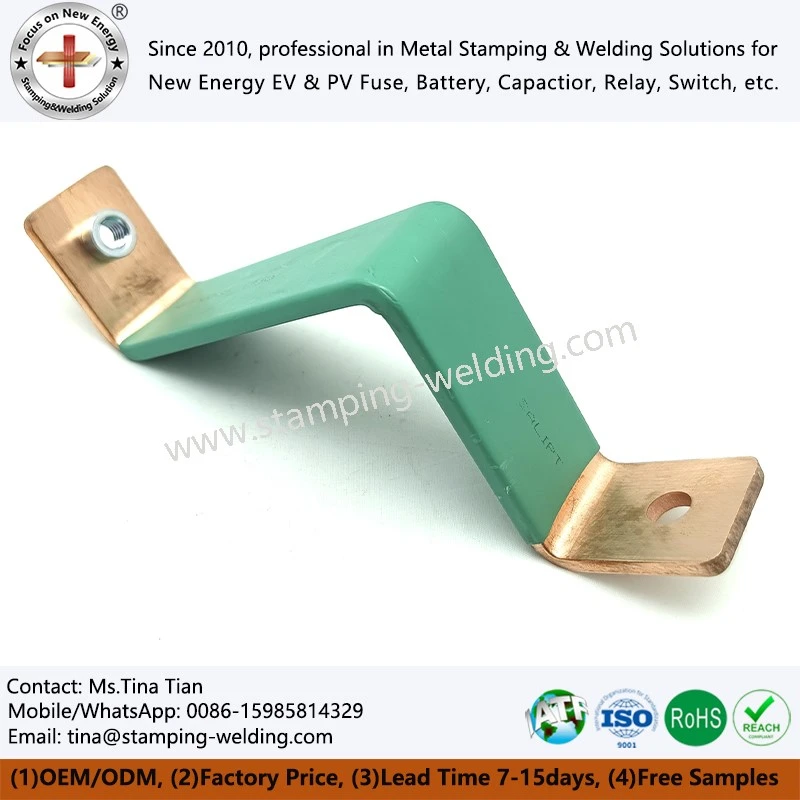
Material Characteristics and Primary Classifications of Heat-Shrink Tubing
Heat-shrink tubing, also known as heat-shrinkable sleeving, is a tubular protective material that leverages the shape-memory effect of polymers. At room temperature, the product maintains a predetermined size; upon heating, it shrinks radially, forming a tight, conformal wrap around wires, cables, metal connectors, or other components requiring protection. Depending on the material formulation, structural design, and intended operating environment, heat-shrink tubing can provide electrical insulation, mechanical protection, moisture-proof sealing, wear resistance, and cable identification.
Structurally, heat-shrink tubing is primarily categorized into single-wall and dual-wall (adhesive-lined) types. Single-wall tubing is typically composed of materials such as cross-linked polyolefin; it features a relatively simple structure and is primarily used for the insulation and protection of wire splices, metal terminals, and electrical connection points. Dual-wall, adhesive-lined tubing incorporates an inner layer of hot-melt adhesive.
When heated, the outer layer shrinks, while the inner adhesive softens and fills the gaps between the protected component and the tubing, thereby providing superior moisture resistance and sealing. In terms of material systems, cross-linked polyolefins are widely used as a foundational material, offering excellent electrical insulation, flexibility, and processability. Fluoropolymer materials, by contrast, are suited for applications requiring high resistance to heat and chemical agents, as well as long-term environmental stability. Additionally, elastomeric heat-shrink materials, halogen-free flame-retardant materials, and specialized heat-shrink products with identification features are employed in automotive wiring harnesses, telecommunications equipment, and industrial electrical systems.
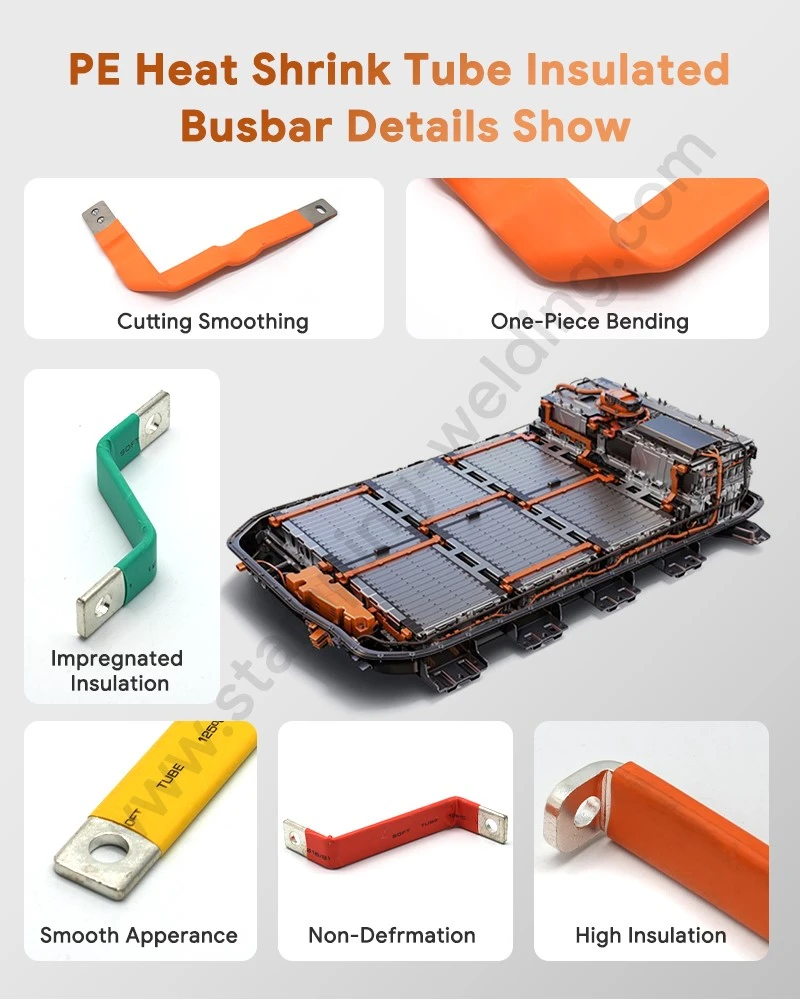
In the field of busbar insulation, the application of heat-shrink tubing differs from its use in standard cable protection. Copper busbars typically feature large cross-sections, complex bends, and various types of connection terminals; therefore, the selection of heat-shrink material must account for the busbar's width, thickness, bend radius, and connection points. For rectangular copper busbars, solutions such as PVC heat-shrinkable sleeves can be used to provide continuous coverage, thereby reducing the risk of accidental contact between exposed conductive surfaces and surrounding components.
Radiation cross-linking and the shape-memory effect form the technical foundation of heat-shrink tubing. What distinguishes heat-shrink tubing from ordinary plastic tubing is its internal cross-linked network structure and the resulting shape-memory effect. The typical manufacturing process begins with the extrusion of base tubing, followed by exposure to high-energy radiation-such as an electron beam-to induce cross-linking between polymer chains. The material is then heated, expanded, and cooled to set its shape.
During radiation cross-linking, high-energy electron beams act upon the polymer molecular chains, creating a three-dimensional network structure. The degree of cross-linking influences the material's heat resistance, mechanical properties, and thermal shrinkage stability.
Insufficient cross-linking can lead to unstable shrinkage performance during subsequent heating, while excessive cross-linking may compromise the material's flexibility and elongation. Consequently, factors such as radiation dosage, material formulation, and the stability of the production process are critical control parameters in the manufacturing of heat-shrink tubing.
Once cross-linking is complete, the tubing is heated to an appropriate processing temperature and then expanded-typically via vacuum expansion or internal pressure-to increase its diameter. The expanded material is then cooled and set, allowing it to temporarily retain its larger dimensions. Upon reheating, the stress stored within the material is released, causing the tubing to revert to its pre-expansion dimensions-a process known as radial shrinkage.
This mechanism defines the fundamental operation of heat-shrink tubing, enabling it to accommodate cables and electrical components of varying diameters. For complex busbar assemblies, selecting an appropriate shrink ratio is critical. Common shrink ratios-such as 2:1, 3:1, and 4:1-are designed to handle different ranges of dimensional variation. However, the final selection must account for the busbar's maximum cross-section, minimum coverage dimensions, as well as its corners and terminal configurations, to ensure that the tubing does not become loose or exhibit insufficient wall thickness after shrinking.
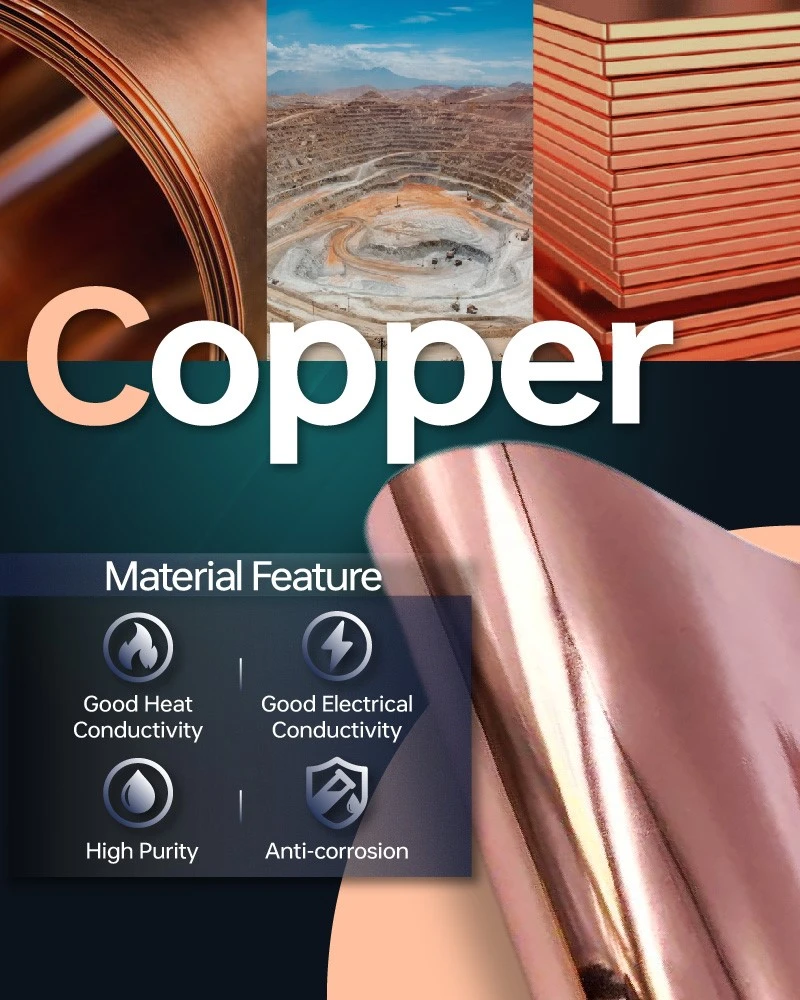
Core Performance and Selection Criteria for Heat-Shrink Tubing
The effectiveness of heat-shrink tubing depends on the alignment between its material properties, dimensions, shrinkage characteristics, and the operating environment. Selection should not be based solely on the tubing's initial inner diameter; rather, it must also consider the post-shrink inner diameter, wall thickness, temperature rating, flame retardancy, and electrical insulation requirements.
The shrink ratio is a key parameter for evaluating the dimensional adaptability of heat-shrink tubing. For busbar assemblies featuring bends, welds, or multi-layer configurations, the tubing must be capable of covering the largest cross-section while forming a secure, stable fit after shrinking. An inadequate shrink ratio may result in incomplete shrinkage in certain areas, while an oversized selection can lead to a poor fit.
Temperature resistance determines the suitability of the tubing for both equipment operation and processing conditions. Different materials offer varying continuous operating temperature ranges and short-term heat resistance; it is important to distinguish between the temperature at which shrinkage begins and the temperature at which the material can operate long-term. In applications such as new energy vehicles and energy storage systems, factors including conductor temperature rise, proximity to external heat sources, available installation space, and the equipment's operational lifecycle must all be taken into account.
Regarding electrical performance, key considerations include insulation resistance, voltage withstand, dielectric strength, and how these properties evolve as the material ages. Busbars often carry high currents, which can lead to localized temperature increases at connection points. Therefore, the insulation material must not only meet initial electrical specifications but also maintain stability over long periods of thermal cycling and environmental fluctuations.
Furthermore, properties such as flame retardancy, wear resistance, oil resistance, chemical resistance, and low-temperature flexibility significantly influence the reliability of products across various application scenarios. For automotive wiring harnesses and energy storage equipment, material selection must also account for halogen-free requirements, environmental compliance, and practical installation processes.
The Evolution of Heat-Shrink Tubing Production: Toward Greater Precision and Stability
The production of heat-shrink tubing encompasses several interconnected stages: polymer formulation, extrusion, radiation cross-linking, expansion (via heating), cooling/setting, and post-processing. Because these processes are highly interdependent, any fluctuation in parameters at any stage can affect the final product's dimensions, shrinkage performance, and operational reliability.
The process begins with raw material formulation. Depending on the intended application, a base resin is selected and combined with additives such as flame retardants, antioxidants, colorants, and other functional agents. Since different formulations dictate the material's flexibility, heat resistance, mechanical strength, and electrical properties, the material system must be tailored to the specific application.
Next is the extrusion phase. The blended material is processed through an extruder to form a tubular structure. Parameters such as extrusion temperature, screw speed, haul-off speed, and cooling conditions directly influence the outer diameter, wall thickness, and dimensional uniformity of the tubing. For heat-shrink tubing used in precision electrical connections, consistent wall thickness is critical for ensuring effective insulation and a high-quality appearance after shrinking.
This is followed by radiation cross-linking and expansion/setting. Radiation cross-linking establishes the material's network structure and shrinkage characteristics, while the expansion process determines the final dimensional range of the product. Throughout production, factors such as radiation dosage, heating temperature, expansion ratio, and cooling rate must be strictly controlled to minimize performance variations between batches.
Finally, the tubing undergoes cutting, inspection, and packaging. Finished products are cut to specified lengths, and their inner diameter, wall thickness, shrinkage rate, appearance, and relevant electrical properties are tested. Depending on the intended operating environment, additional specialized testing-such as heat aging, low-temperature performance, flame retardancy, and chemical resistance-may also be required.
As downstream electrical connection structures grow increasingly complex, the processing of heat-shrink tubing has evolved beyond the production of standard-sized tubes to encompass customized insulating sleeves, pre-cut sleeves, and integrated connection components. For busbar applications, heat-shrink sleeves must be precisely matched to the conductor's dimensions, bend geometry, and assembly method; relying solely on standard, off-the-shelf specifications is often insufficient to meet the insulation requirements of complex configurations.
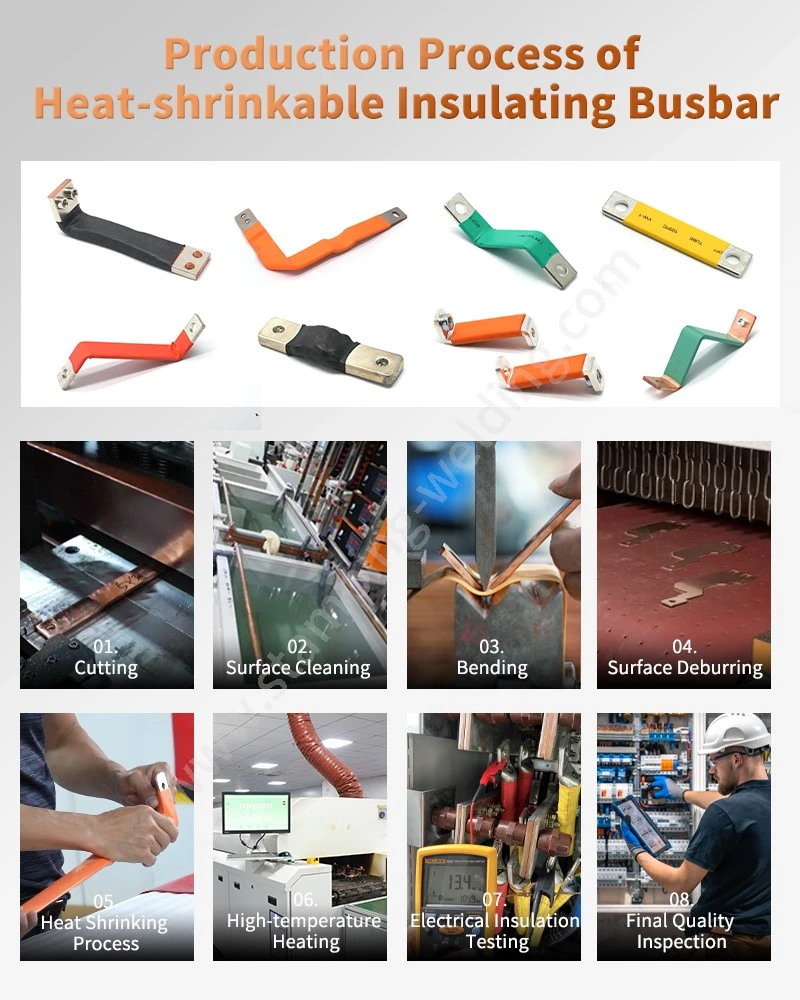
The demand for busbar insulation is driving the customization of heat-shrink materials
In new energy vehicles, energy storage systems, and industrial power distribution equipment, copper busbars serve as the primary medium for power transmission and electrical interconnection. Compared to traditional cables, busbars offer a compact design, high current-carrying capacity, and a clear, organized connection layout-though their conductive surfaces and connection terminals require robust, well-engineered insulation.
Heat-shrink insulation solutions, such as PVC busbar heat-shrink sleeves, are used to encase the surfaces of copper busbars and various electrical connectors. By selecting the appropriate material, wall thickness, and shrink ratio, engineers can enhance the external insulation of the busbar and minimize the risk of accidental contact with surrounding metal structures during installation.
For connections that require a degree of flexibility or the ability to accommodate displacement, insulated flexible busbars-which combine a flexible conductive core with an external insulating layer-provide both the necessary electrical connectivity and essential surface protection. Such configurations are commonly found in battery module interconnects, energy storage units, and internal power distribution systems within equipment.
For traditional rigid copper busbars, heat-shrink sleeves can be applied to provide an insulating outer layer. Depending on the voltage rating and available installation space, the design process must account for factors such as sleeve thickness, the tightness of the fit after shrinking, the treatment of busbar edges, and the extent to which connection terminals remain exposed.
In high-voltage electrical equipment, the design of heat-shrink-insulated copper busbars goes beyond simple coverage of the conductor. It requires careful alignment of the insulating material with the system's voltage rating, creepage distance, electrical clearance, and specific operating environment. Heat-shrink materials cannot serve as a substitute for a comprehensive electrical insulation design, nor should the insulation capability of an entire busbar assembly be judged solely by the nominal voltage rating of the material itself.
For applications requiring specific colors, dimensions, or configurations, heat-shrink tubing for copper busbars can be custom-designed to match the busbar's cross-section, length, and installation method. During the actual processing, careful consideration must be given to busbar bends, connection holes, welded areas, and terminal structures to prevent the formation of wrinkles, gaps, or localized stress concentrations after the tubing has shrunk.
Expanding Applications for Heat-Shrink Tubing in New Energy Vehicles and Energy Storage Systems
The high-voltage electrical systems in new energy vehicles (NEVs) encompass traction batteries, motor controllers, on-board chargers, high-voltage power distribution units, and various connection components. As platform voltages rise and the integration of electrical systems increases, the requirements for the insulation and protection of conductive connectors have become increasingly stringent.
Within traction battery packs, busbars facilitate electrical connections between battery modules, as well as between the modules and the high-voltage system. Heat-shrink tubing is utilized for surface insulation, protection of connection points, and localized shielding. For battery connection structures, the insulation design must account for factors such as conductor material, connection methods, temperature rise, vibration, and available assembly space, ensuring that the insulation material does not interfere with the proper function of the connectors.
In the terminal connection areas of batteries, insulation for busbars-such as those connected to battery terminals-must be tailored to the terminal dimensions, conductive paths, and mounting configuration. For components utilizing laminated copper foil or flexible connectors, heat-shrink insulation can be applied as an external covering, reducing the risk of direct contact between flexible conductors and surrounding components. The design must also account for the bend radius of flexible sections to prevent the tubing from cracking or detaching during repeated deformation.
Energy storage systems-including battery clusters, busbar aggregation units, and power conversion equipment-also rely on a large number of electrical connection components. As the capacity of energy storage systems grows, busbar designs are increasingly trending toward high-current, modular, and compact configurations. Heat-shrink insulation materials offer significant utility for the external protection of busbars, the isolation of connection zones, and the management of internal wiring within such equipment.
In industrial power distribution cabinets and power electronic equipment, insulated busbars-such as those featuring PVC insulation-facilitate a clearer layout of conductive paths while reducing the risk of exposed conductors coming into contact with adjacent structures. In scenarios where different electrical circuits must be distinguished, heat-shrink tubing-available in black or other colors-can assist in identifying specific busbars and their connecting components. A busbar encased in black heat-shrink tubing is one such application, combining color-coding with electrical insulation.
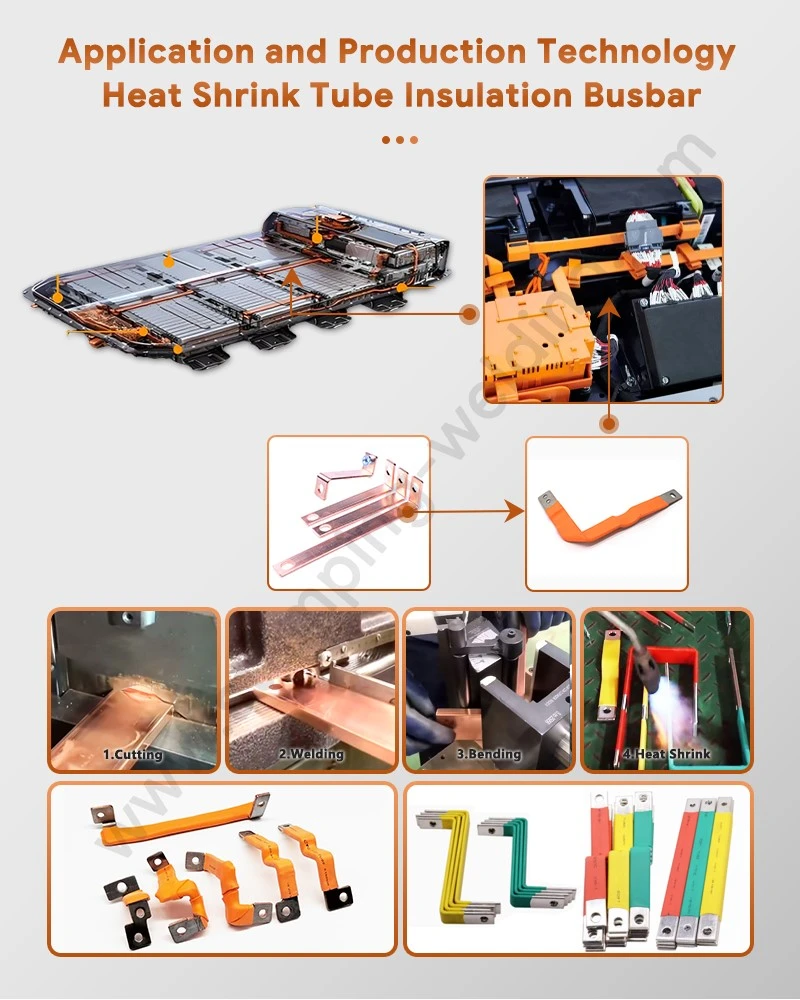
The global heat-shrink tubing industry is transitioning toward high-performance, eco-friendly manufacturing
In terms of industry structure, the heat-shrink tubing supply chain encompasses the upstream provision of polymer materials and functional additives; the midstream production of tubing and radiation processing; and downstream applications across sectors such as power, automotive, telecommunications, industrial electronics, and new energy equipment.
Upstream raw materials primarily consist of polyolefins, polyethylene, fluoropolymers, elastomers, and various functional additives. The formulation and supply stability of these raw materials directly influence the product's processability, heat resistance, and electrical properties. Driven by increasingly stringent environmental regulations and the evolving requirements of end-use equipment, there is a growing focus on halogen-free flame-retardant materials, low-smoke materials, and polymers with enhanced environmental adaptability.
Midstream manufacturing focuses on key technical areas: formulation development, extrusion precision, the control of radiation cross-linking, and the stability of the expansion process. Essential production infrastructure-including electron accelerators, precision extrusion machinery, expansion equipment, and performance testing systems-ensures batch-to-batch consistency. Furthermore, manufacturers are increasingly adopting automated equipment and production data management systems to boost efficiency and improve quality traceability.
Downstream applications are becoming increasingly diverse. While power equipment, automotive electronics, and new energy vehicles remain major sources of demand, sectors such as telecommunications, rail transit, aerospace, and industrial automation also impose specific requirements for specialized heat-shrink materials.
Technological development in the industry is trending toward halogen-free flame retardancy, thinner wall profiles, higher shrink ratios, greater high-temperature resistance, and multi-layer composite structures. Halogen-free materials help meet environmental requirements for specific applications; thin-wall designs facilitate the miniaturization of electronic equipment and electrical connection components; and multi-layer structures allow for the integration of functions such as insulation, sealing, and mechanical protection.
For busbar applications, the synergistic design between heat-shrinkable materials and the processing of copper busbars is becoming increasingly important. Solutions such as heat-shrinkable tubing and sleeves specifically designed for busbars illustrate a trend: the evolution of heat-shrinkable products from general-purpose insulation materials into specialized protective solutions for busbars. Future product development must look beyond the performance of the tubing itself, taking into account factors such as copper busbar dimensions, surface conditions, bending processes, and downstream assembly requirements.
Technical Challenges and Key Focus Areas for Quality Control
Although the scope of heat-shrinkable tubing applications continues to expand, the industry still faces challenges, including the development of high-performance materials, fluctuations in raw material costs, environmental compliance, and product commoditization.
In demanding environments-characterized by high temperatures, intense vibration, high humidity, or complex chemical exposure-standard heat-shrinkable materials may not meet long-term operational requirements. Addressing this necessitates the optimization of material systems, and Targeted testing is essential to determine the appropriate scope of application.
For busbar insulation products, quality control must encompass material inspection, dimensional verification, shrinkage performance testing, and validation of the final assembly. The inner diameter and wall thickness of the tubing, as well as its fit after shrinkage, must align with the actual dimensions of the busbar. In cases involving copper busbars with sharp edges, apertures, or complex bends, particular attention should be paid to potential localized thinning, wrinkling, or incomplete coverage of the tubing during the shrinking process.
Regarding electrical safety, insulation material requirements should be established based on the operating voltage, service temperature, and installation environment. These requirements must be verified through testing-such as withstand voltage, insulation resistance, and environmental aging-in accordance with relevant product standards. For applications requiring long-term operation, such as in new energy vehicles (NEVs) and energy storage systems, it is also necessary to evaluate the impact of thermal cycling, vibration, and hygrothermal (damp-heat) conditions on the tubing and its interface with the conductor.
Furthermore, the installation process for heat-shrink tubing significantly influences the final level of protection. Uneven heating can lead to insufficient shrinkage in some areas or overheating of the material, while excessive temperatures may damage the tubing itself or adjacent insulating components. Consequently, during mass assembly, it is critical to define precise process parameters-including heating temperature, distance from the heat source, movement speed, and cooling duration-to ensure consistent coverage across different production batches.
Future Trends in the Heat-Shrink Tubing Industry
The growth of new energy vehicles and energy storage systems will continue to drive demand for heat-shrink insulation materials. The shift toward high-voltage architectures, high-current connections, and more compact electrical designs places higher demands on the heat resistance, dimensional adaptability, and long-term reliability of insulation materials. Manufacturers of busbars and flexible connectors will increasingly prioritize the integrated development of conductor design and insulation coverage.
Environmentally friendly materials will become a key focus for industry R&D. Halogen-free, flame-retardant, low-smoke, and sustainable polymer materials are expected to see wider adoption in electrical equipment; however, any specific material must be validated against requirements for flame-retardancy, electrical performance, heat resistance, and the intended operating environment.
The use of dual-wall, adhesive-lined heat-shrink tubing is also set to expand. For connection points that require moisture protection, sealing, or environmental isolation, the dual-wall structure-which utilizes a hot-melt adhesive to fill gaps-provides enhanced protection for the connection area. However, the actual sealing performance depends on the surface condition and structural dimensions of the protected component, the properties of the adhesive layer, and the installation process.
Furthermore, the integrated design of heat-shrink tubing and busbar assemblies is emerging as a key trend. Future busbar insulation products will move beyond simple standard-sleeve coverings, focusing instead on pre-cutting, adaptation to complex geometries, color-coding, end-treatment, and high-efficiency, large-scale assembly. For solutions such as PVC heat-shrink insulation sleeves for copper busbars, designers must strike a balance between insulation performance, structural dimensions, and ease of assembly.
Overall, the heat-shrink tubing industry is evolving from the production of general-purpose insulation materials toward the development of high-performance materials, precision processing, and collaborative application solutions. The ongoing advancement of new energy vehicles, energy storage systems, and industrial power distribution equipment will further drive the adoption of heat-shrink materials for high-voltage busbars, flexible connectors, and electrical connection components.
Engineering Procurement and Customized Busbar Insulation Solutions
When selecting heat-shrink insulation products, procurement and engineering design personnel should clearly define the busbar's material, width, thickness, length, bending geometry, operating voltage, temperature rise range, and installation environment. Additionally, they must specify the type of heat-shrink material, shrinkage ratio, wall thickness, color, and flame-retardant requirements. For components with complex structures or those intended for high-volume assembly, it is essential to evaluate the dimensional fit between the sleeve and the busbar, the methods for end-treatment, and the heating/shrinking process.
During the development of copper busbars, flexible busbars, and battery connection components, the insulation sleeve must be considered in tandem with conductor fabrication, connection techniques, and final assembly requirements. Engineering procurement teams can provide product drawings, technical specifications, application scenarios, and projected demand volumes, enabling the manufacturing team to assess material selection, dimensional compatibility, processing feasibility, and sample validation protocols.
For busbar assemblies with varying voltage ratings, structural dimensions, and operating environments, tailored insulation material selection and customized processing assessments can be conducted to ensure that the heat-shrink insulation solution aligns with the specific electrical system and assembly process. Please feel free to send your product drawings or technical specifications to discuss your requirements for the development and mass production of insulated copper busbars, flexible connectors, and custom heat-shrinkable protective components.
contact us