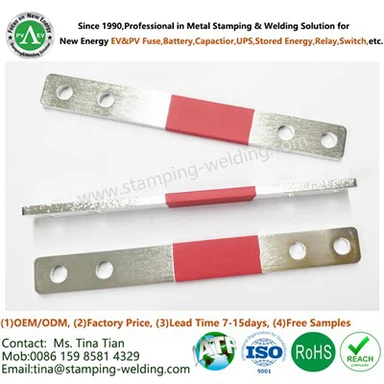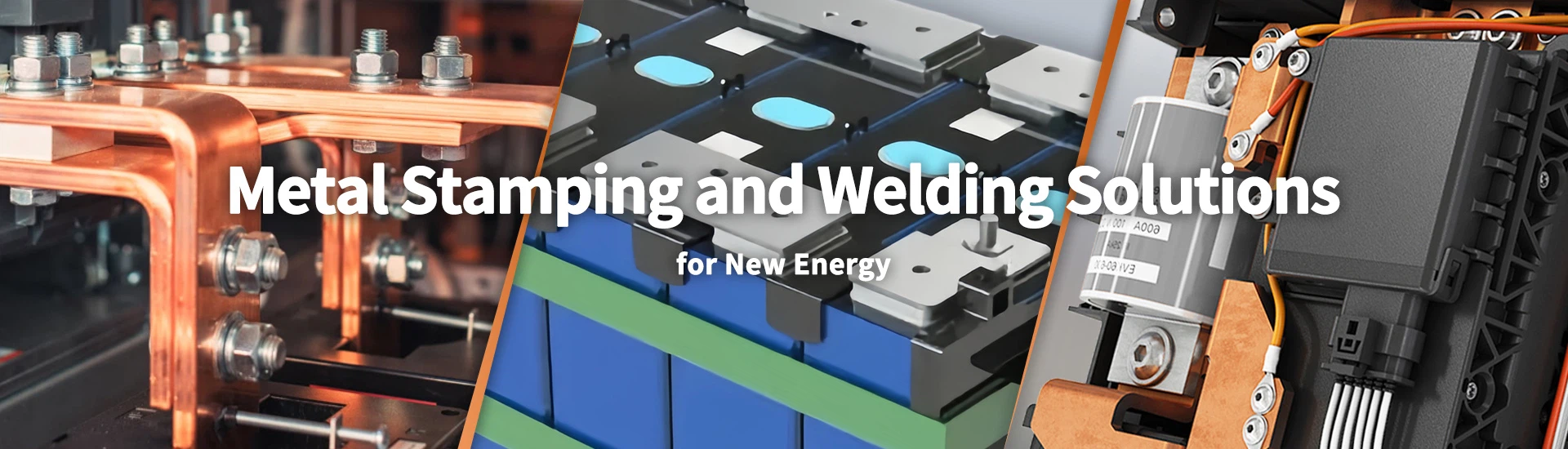
Multi-Layers Copper Foil Flexible BusBar
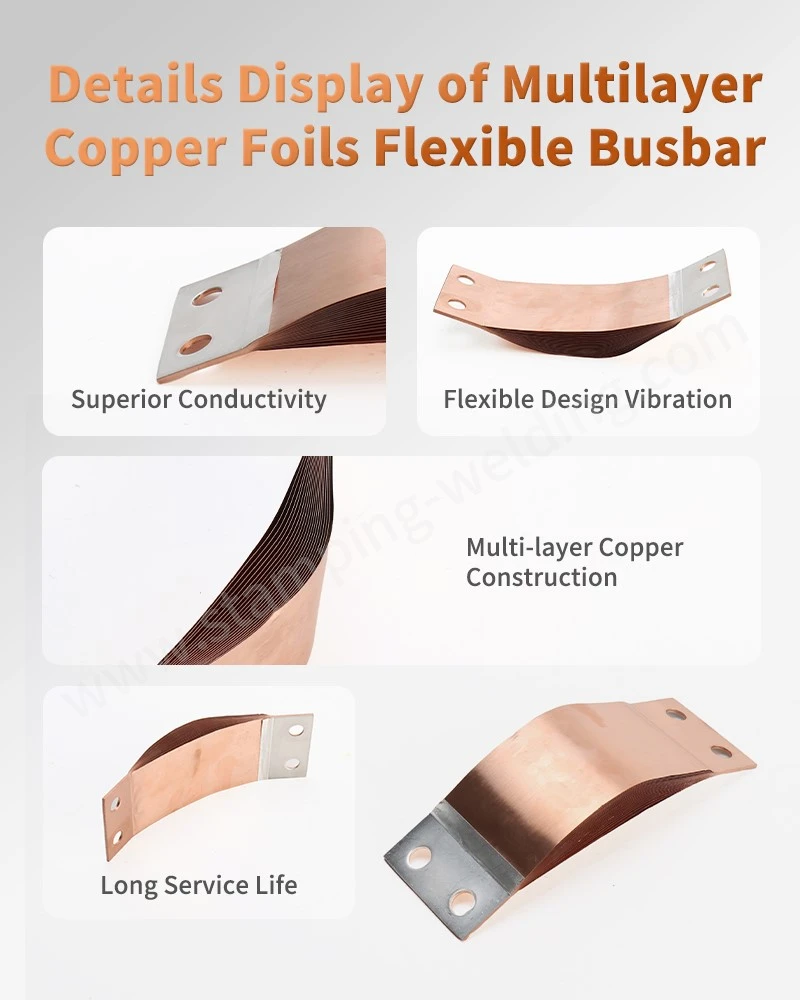
Constructed from stacked high-purity oxygen-free copper foils using a vacuum diffusion welding process, this multi-layer copper foil flexible busbar seamlessly integrates high electrical conductivity, flexible displacement compensation, and vibration damping. It effectively absorbs stresses caused by thermal expansion and contraction as well as high-frequency vibrations, while minimizing the skin effect and contact resistance. Widely used in new energy vehicle battery packs, energy storage systems, and high-power electronic equipment, it offers a highly reliable conductive solution characterized by zero pre-stress and minimal temperature rise.
- Fast Delievery
- Quality Assurance
- 24/7 Customer Service
Product Introduction
What is a Multi-Layer Copper Foil Flexible Busbar?
Multi-layer copper foil flexible busbars-often referred to as laminated copper foil connectors, flexible copper busbars, or copper foil expansion joints-are advanced, flexible, high-current power transmission components designed for environments characterized by high current density, frequent vibration, and significant thermal stress. In applications such as modern high-voltage battery packs (800V+ architectures), high-power inverters, traction converters for rail transport, and large-scale industrial transformers, these busbars physically decouple the conflicting requirements of superior electrical conductivity and rigid stress transmission, serving as a vital link that ensures the safe, long-term operation of high-power systems.
Material Advantages of Copper Foil Laminated Busbars
Extremely High Electrical Conductivity
By utilizing C1100/C1020 oxygen-free copper, our copper laminated foil busbar delivers exceptionally high conductivity, minimizing heat loss and voltage drop during high-current transmission to the physical limit.
Superior Fatigue Resistance and High Toughness
Engineered for automotive copper busbar applications, the high-purity copper foil exhibits excellent elongation, preventing metal fatigue cracking or brittle fracture caused by repeated, minute displacements.
High Thermal Conductivity
For our flexible copper busbar, with thermal conductivity up to 1.7 times that of aluminum, the material rapidly conducts and dissipates Joule heat generated during high-current flow away from welding joints.
Chemical Stability and High-Quality Plating Adhesion
The plating bonds exceptionally well to the copper, resisting peeling and maintaining low contact resistance over the long term; it also provides outstanding oxidation protection in high-temperature, humid, or salt-spray environments.
Manufacturing Process for Copper Flexible Busbars
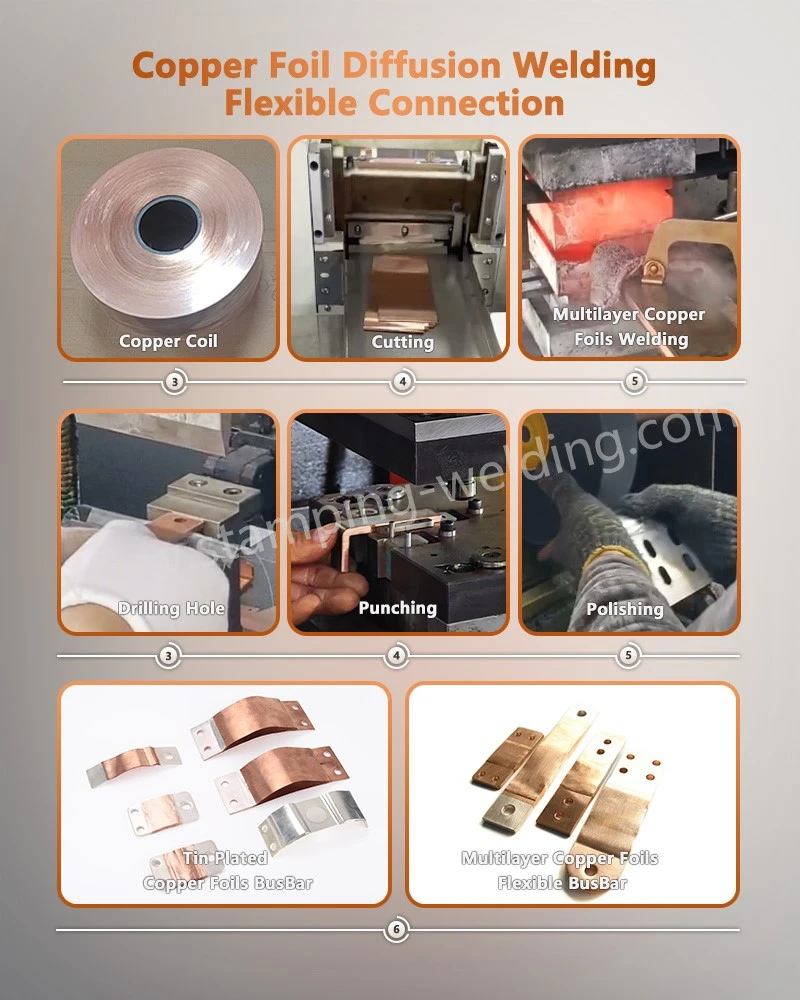
High-Precision, Burr-Free CNC Cutting
During the manufacturing of each copper foil connector, high-precision progressive stamping dies or stress-free laser cutting systems are used to cut copper foils into the designed shapes, eliminating the risk of burrs puncturing interlayer insulation or triggering high-voltage arc discharges.
Solder-Free Molecular Diffusion Welding
When manufacturing copper laminated flexible busbars, in a high-temperature, high-pressure environment shielded by a vacuum or reducing gas, the solid-state diffusion of copper atoms enables grain boundary fusion between the stacked copper foil layers at temperatures below the melting point, resulting in zero contact resistance.
Automated Precision Surface Treatment of Terminals
For our laminated flexible copper foil tape, copper is prone to surface oxidation when exposed to air, forming black copper oxide (CuO), which increases contact resistance. To ensure long-term stability after crimping, we offer customized plating options, including tin, nickel, and high-grade silver plating.
Application Scenarios for Multilayer Busbars
Electric Mobility & EV Powertrain
Custom flexible copper foil laminated busbars connect CTP/CTC battery modules, BDU high-voltage output terminals, and motor controllers to IGBT modules.
Grid-scale & Residential Electrochemical Energy Storage
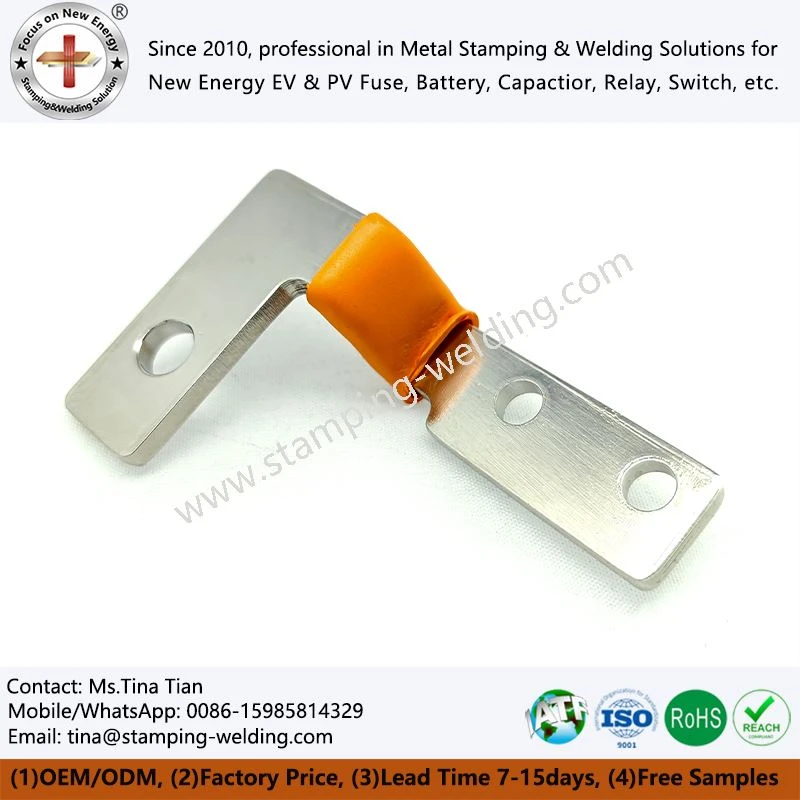
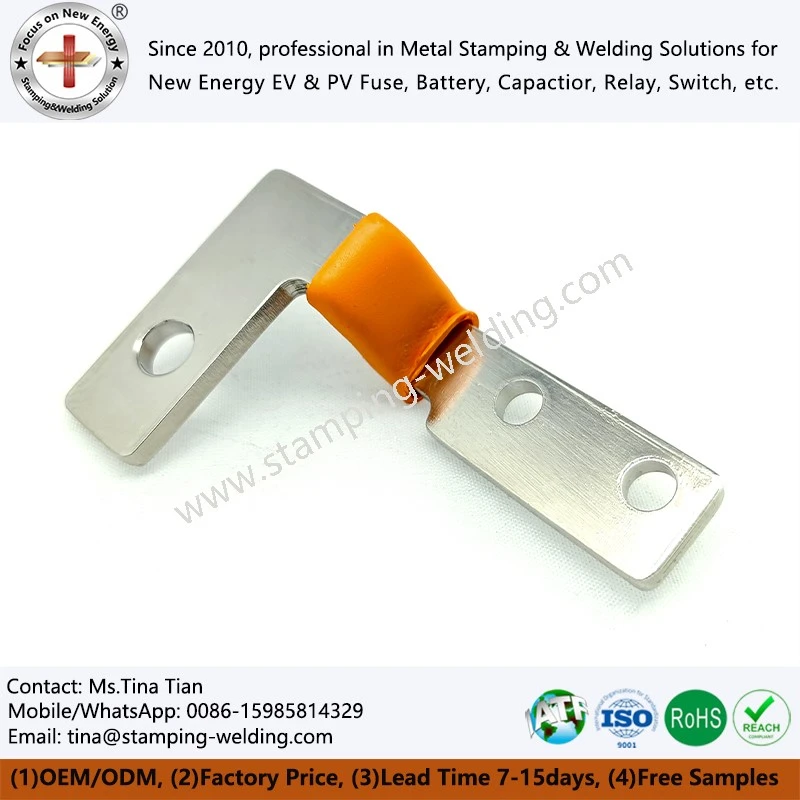
Copper foil flexible busbar with insulated tube provides flexible connections for high-voltage energy storage battery clusters and AC/DC power conversion systems
Rail Transit & Traction Systems
Traction converter modules for high-speed trains/subways; high-voltage leads for onboard main transformers; flexible lightning protection grounding cables for bogies.
Industrial High-Current Power Supplies
Optimized as a robust copper foil connection, it significantly reduces high-frequency skin effect losses and withstands over a million high-speed 3D movement cycles without fatigue failure.

Frequently Asked Questions About Press-Welded Connectors
What are the fundamental differences in long-term reliability between vacuum diffusion welding and traditional brazing?
Unlike traditional brazing that uses filler metal causing contact resistance and foil softening, our flexible copper shunts use solder-free vacuum diffusion welding to bond pure copper directly, eliminating galvanic corrosion and performance degradation.
What are the optimal application scenarios for tin, silver, and nickel plating on the contact surfaces of flexible connectors?
Tailored for diverse operating environments, our copper foil multi-layer welding busbar can be customized with tin plating (cost-effective anti-oxidation), silver plating (minimal contact resistance and arc erosion for high-voltage nodes), or nickel plating (enduring up to 300°C and corrosive conditions).
Does interlayer friction under prolonged vibration generate metallic debris and cause short circuits?
In unoptimized designs, interlayer friction can cause fretting wear. We mitigate this by applying micron-scale self-lubricating coatings or optimizing copper roughness for low-damping micro-slip. Combined with sealed end structures and insulated sleeves, any metallic debris is strictly isolated from conductive paths, eliminating dust-induced short circuits and insulation breakdown.
Does the insulating sleeve on the outer layer of the flexible connector affect its heat dissipation performance?
Our thermally conductive coating eliminates insulating air gaps. By expanding the surface area, the flexible section improves radiative and convective cooling beyond solid busbars under air cooling. For extreme power densities, we offer ventilated or micro-channel thermal designs.

Contact Us
Our core competitive advantage stems from a profound understanding of the micro-mechanisms of solid-state metal metallurgy and multi-physics coupling simulation technology; this enables us to provide global engineering clients with rigorously validated, customized press-welded copper foil flexible busbar system solutions characterized by zero pre-stress, minimal temperature rise, and exceptional fatigue life.

Hot Tags: multi-layer copper foil flexible busbar, China, manufacturers, suppliers, factory