



Copper Cap Contact For High Voltage Low Current EV Fuse
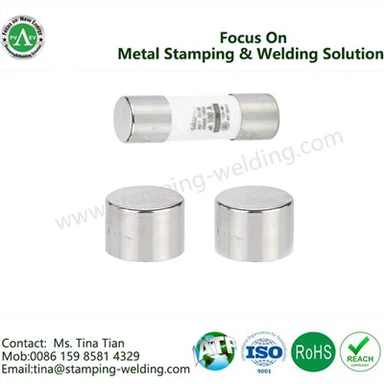
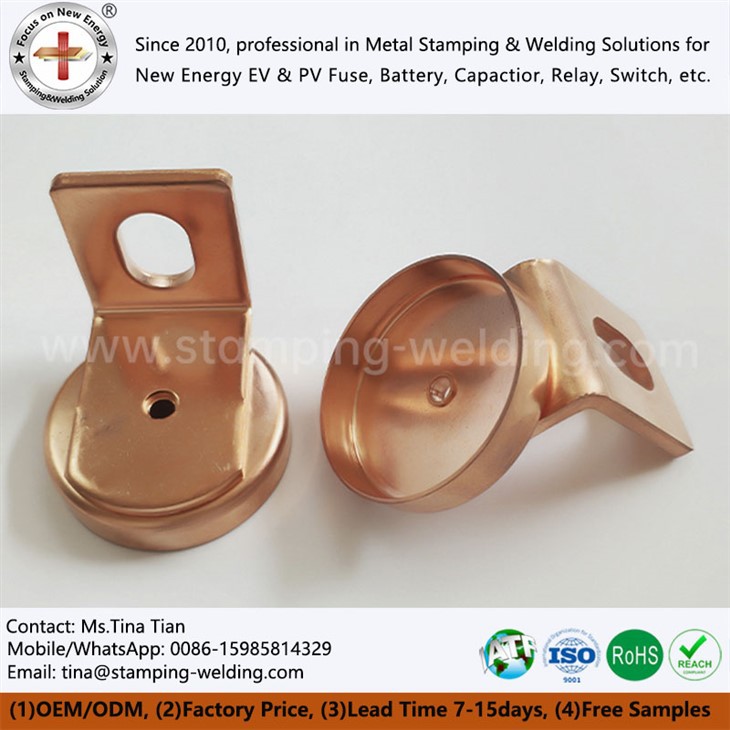
The Copper Cap Contact for High Voltage Low Current EV Fuse is a critical component designed to provide efficient and reliable electrical contact in high-voltage, low-current electric vehicle (EV) fuse applications. Raw material selection: The Copper Cap Contact is typically manufactured using...
- Fast Delievery
- Quality Assurance
- 24/7 Customer Service
Product Introduction
Products profile
The Copper Cap Contact for High Voltage Low Current EV Fuse, made from high-purity copper and featuring appropriate solder paste and plating, offers exceptional electrical conductivity, thermal properties, and durability. Its application in EV fuse assemblies ensures reliable circuit protection and optimal performance in high-voltage, low-current environments.
The Copper Cap Contact is typically manufactured using high-purity copper, chosen for its excellent electrical conductivity and thermal properties. Copper ensures minimal resistance, enabling efficient current flow and reducing energy loss within the EV fuse. The use of high-quality copper also ensures the contact's durability and longevity, allowing it to withstand high-voltage and low-current conditions.
To secure the Copper Cap Contact with other components of the EV fuse assembly, a suitable solder paste is used for welding. The solder paste is carefully selected based on its compatibility with copper and other materials, as well as its ability to provide a strong and reliable bond. The solder paste undergoes controlled melting and cooling processes during assembly, forming a robust joint that ensures proper electrical conductivity and mechanical stability.

Production process
The manufacturing process for a Copper Cap Contact used in high voltage low current EV (electric vehicle) fuses involves several steps: material selection, contact design, tooling making, metal stamping, welding assembly, plating, testing, and quality control.

Copper contacts may undergo plating processes to enhance their performance and durability. Common plating options include tin, silver, or nickel plating. Plating can improve the contact's resistance to corrosion and provide better electrical conductivity.
In some cases, the Copper Cap Contact undergoes plating to enhance its performance and protection. Plating materials such as silver or tin can be applied to the contact's surface. Silver plating improves conductivity, corrosion resistance, and overall performance, while tin plating offers excellent solderability and protection against oxidation. The plating process ensures a uniform and reliable coating, further enhancing the contact's durability and electrical properties.
Before the finished fuse with copper cap contacts is released for use, it undergoes rigorous testing to verify its electrical and thermal performance. This can include testing for electrical conductivity, current-carrying capacity, short-circuit performance, and thermal behavior.

Products application
The Copper Cap Contact is specifically designed for high-voltage, low-current EV fuse applications. These fuses are essential for protecting sensitive electrical components and systems in electric vehicles. The Copper Cap Contact provides a secure and efficient electrical connection within the fuse, allowing for precise and reliable current interruption when necessary. Its robust construction and materials make it suitable for demanding operating conditions in EVs.

quality guarantee
Throughout the manufacturing process, quality control measures are implemented to ensure the contacts meet the required specifications. This can involve dimensional checks, electrical resistance testing, and visual inspections.
Inspecting Copper Cap Contacts for high voltage low current EV fuses is an important quality control step to ensure their reliability and performance. Here are some key steps to inspect these contacts:
1. Visual Inspection: Begin by visually examining the copper cap contacts. Check for any signs of physical damage, such as cracks, chips, or deformities. Ensure that the contact surface is smooth and free from burrs or irregularities that could affect electrical connectivity.
2. Dimensional Check: Verify that the copper cap contacts meet the required dimensions specified in the design. Use precision measuring tools, such as calipers or micrometers, to measure critical dimensions like length, width, height, and thickness. Compare the measurements against the specified tolerances to ensure they fall within the acceptable range.
3. Plating Inspection: If the copper contacts are plated, inspect the plating for uniformity and coverage. Look for any signs of pitting, blistering, or peeling, which can indicate poor plating quality. Ensure that the plating thickness meets the specified requirements.
4. Electrical Resistance Testing: Perform electrical resistance testing to measure the contact's electrical conductivity. This can be done using a low-resistance ohmmeter or a four-point probe technique. The measured resistance should be within the acceptable range, indicating a low resistance connection.
5. Thermal Behavior Assessment: High voltage low current EV fuses may experience elevated temperatures during operation. Therefore, it's crucial to evaluate the thermal behavior of the copper cap contacts. This can be achieved through thermal testing or simulations to ensure that the contact can withstand the expected heat dissipation and maintain its electrical properties.
6. Compatibility Check: Verify that the copper cap contacts are compatible with the specific EV fuse design and intended application. Consider factors such as the voltage rating, current-carrying capacity, and environmental conditions. Ensure that the contact materials and design meet the necessary safety and performance standards.
7. Documentation and Record Keeping: Maintain detailed records of the inspection process, including the results of visual inspection, measurements, test data, and any deviations from the specifications. This documentation is essential for traceability and quality control purposes.

contact us
We are always here to listen to you! Whether it's a question, a suggestion or an intention to co-operate, you are welcome to get in touch with us via the following methods. We are looking forward to every communication with you to light up new sparks!

Copper Cap Contact For High Voltage Low Current EV Fuse is made from highly conductive copper material, ensuring stable current transmission in high-voltage, low-current environments. Its design optimizes electrical connections, reduces contact resistance, and enhances the reliability and safety of the fuse. This product is widely used in fuse systems for electric vehicles, effectively protecting circuits from overload and short-circuit damage.
Hot Tags: copper cap contact for high voltage low current ev fuse, China, manufacturers, suppliers, factory, Electrical Fuse Components, T2 Copper End Caps And Fuse Contact, Fuse Terminal And Cap Welded Components, Fuse Contact And End Caps Components, Fuse Contact, Fuse Contact Welded Components