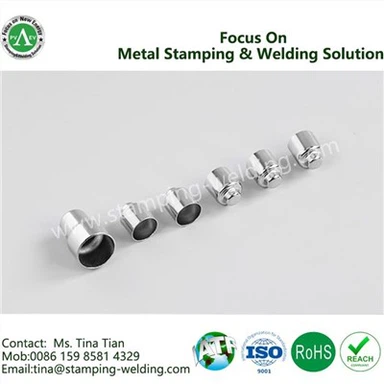


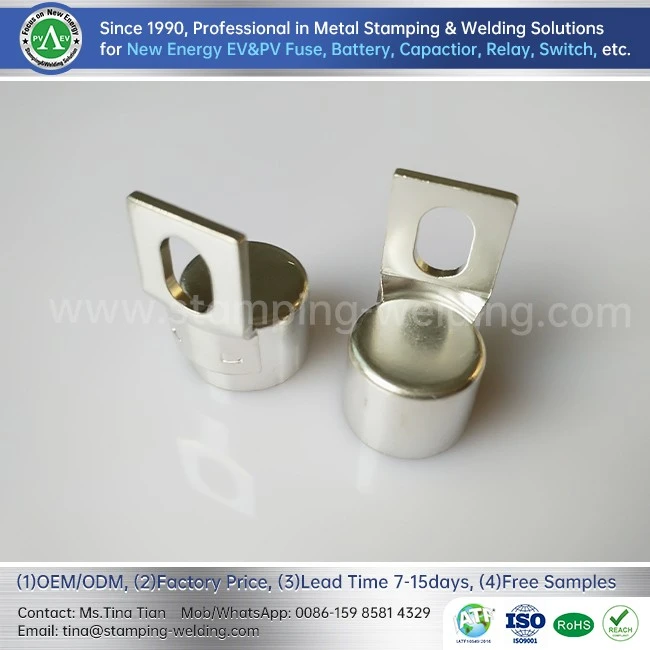
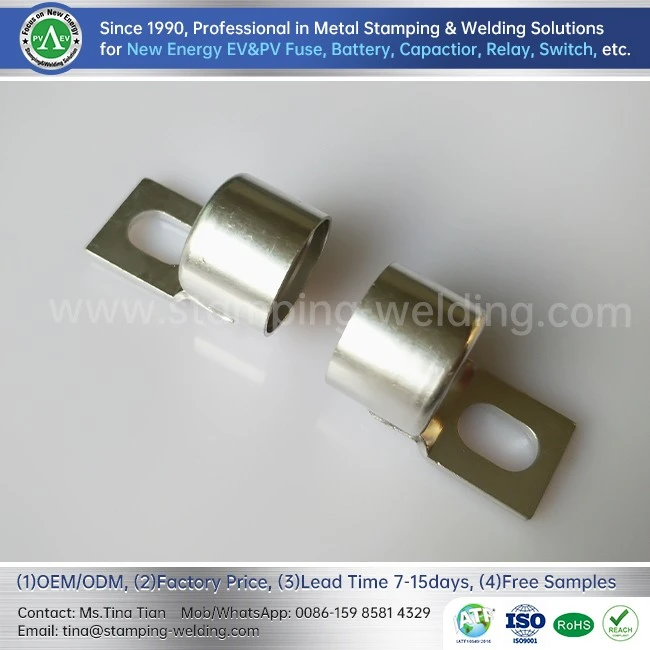
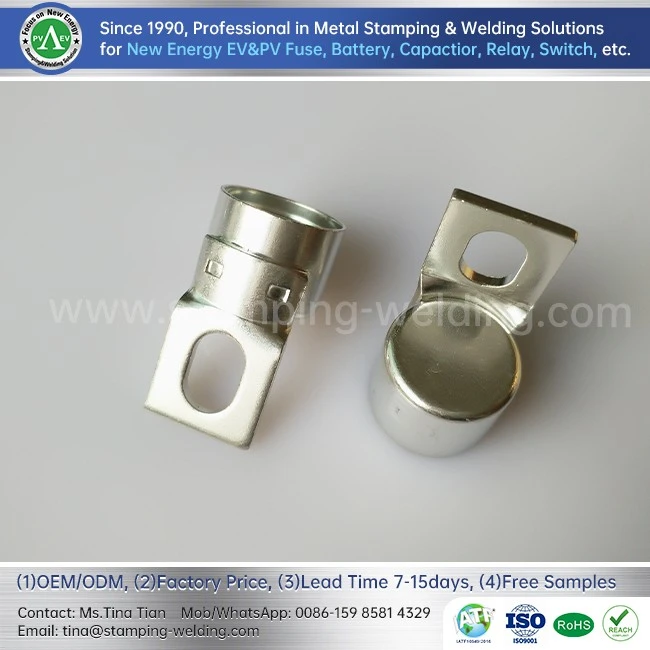
Copper Cap For EV Bolt Type Fuse
The copper cap for an EV bolt-type fuse is a critical component that provides a secure and reliable electrical connection between the fuse and the electrical system.
- Fast Delievery
- Quality Assurance
- 24/7 Customer Service
Product Introduction

The copper cap for an EV bolt-type fuse is a critical component that provides a secure and reliable electrical connection between the fuse and the electrical system. The copper cap is designed to withstand high voltage levels commonly found in electric vehicle applications. It is engineered to provide insulation and prevent arcing or electrical breakdown at high voltages.EV bolt-type fuses are specifically designed for low-current applications.

The copper cap is typically made of high-quality copper material. Copper is chosen for its excellent electrical conductivity, allowing for efficient current flow and minimal power loss.
The copper cap for an EV bolt-type fuse is designed to accommodate a bolt connection. It features a threaded hole or receptacle to securely fasten the fuse bolt, ensuring a robust and reliable electrical connection.
Copper caps for EV bolt-type fuses often undergo plating or coating processes to enhance their corrosion resistance. This protects the contact surface from oxidation or other forms of corrosion, ensuring long-term reliability.


Inspecting the welding force of a Copper Cap for an EV Bolt Type Fuse involves evaluating the strength and quality of the welded connection between the copper cap and other components. Here are the general steps to inspect the welding force:
1. Visual Inspection: Begin by visually examining the welded area. Check for any visible signs of cracks, fractures, or irregularities. Ensure that the weld is uniform, smooth, and free from any surface defects.
2. Dimensional Check: Verify that the dimensions of the welded area match the specifications. Use precision measuring tools to assess critical dimensions such as weld size, fillet size, or penetration depth. Compare the measurements against the specified tolerances to ensure they fall within the acceptable range.
3. Tensile Testing: Tensile testing is commonly used to assess the strength of welded connections. It involves applying a pulling force to the weld to measure its resistance to separation or failure. The force is gradually increased until the weld breaks or reaches a specified limit. The measured force provides an indication of the welding force and the integrity of the joint.
4. Shear Testing: Shear testing is another method to evaluate the strength of a weld. It involves subjecting the welded connection to a perpendicular force applied in a parallel direction to the plane of the weld. The force is increased until the weld shears or reaches a predetermined threshold. The measured force provides information about the welding force and the quality of the joint.
5. Non-Destructive Testing: Non-destructive testing (NDT) methods can be employed to assess the welding force without causing damage to the sample. Techniques such as ultrasonic testing, X-ray inspection, or magnetic particle inspection can be used to detect any internal defects or discontinuities in the weld, which could affect the welding force.
6.Weld Quality Evaluation: In addition to inspecting the welding force, evaluate the overall quality of the weld. Consider factors such as the appearance, fusion, and penetration of the weld. Ensure that the weld is free from porosity, inclusions, or other defects that may compromise its strength.

EV Bolt Type Fuses play a crucial role in protecting the electrical systems of electric vehicles from overcurrent conditions. They are designed with specific voltage and current ratings, utilize a bolted connection system, and adhere to safety standards to provide reliable and safe operation in electric vehicles.
1. High Voltage Rating: Electric vehicles operate at high voltage levels, typically ranging from several hundred volts to over 1000 volts. EV Bolt Type Fuses are specifically designed to handle these high voltage levels and effectively interrupt the current flow in case of a fault.
2. Current Rating: EV Bolt Type Fuses are available in various current ratings to match the specific requirements of the electric vehicle system. The current rating determines the maximum current that the fuse can handle without tripping or opening the circuit.
3. Fast-Acting or Time-Delay Characteristics: EV Bolt Type Fuses can have different response characteristics, such as fast-acting or time-delay. Fast-acting fuses quickly interrupt the circuit when the current exceeds the rated value, while time-delay fuses provide a temporary overcurrent withstand capability before tripping.





Hot Tags: copper cap for ev bolt type fuse, China, manufacturers, suppliers, factory, Fuse Contact, Fusible End Cap And Contact For New Energy Car, Inner Cap, Outer Cap And Contact For Automotive Fuse, Outer Cap Fuse Contact, T2 Copper End Caps And Fuse Contact