Analysis of Common Types and Core Functions of Fuse Holder
Feb 24, 2026
NH Fuse Bases are a core supporting component used for installing and fixing fuses in electrical systems. Its type classification needs to be based on practical application requirements such as installation methods, specifications, material characteristics, etc. Different types of fuse holders are suitable for different scenarios, and their functional focus also varies. Reasonable selection of Fuse Copper Holders can not only ensure the stable overcurrent protection of fuses, but also improve the maintenance convenience of circuit systems. This article will provide a detailed analysis of the common types and core functions of fuse holders.

Common Types of NH Fuse Bases
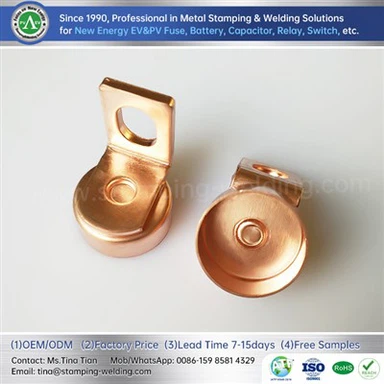
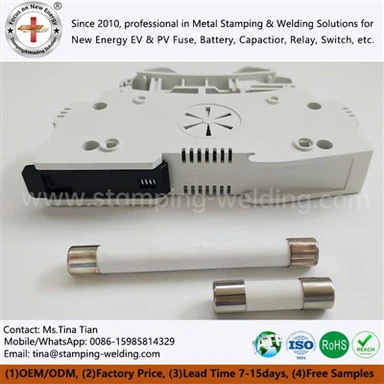
The types of Fuse Copper Bases can be divided into multiple dimensions, and the most commonly used classification methods in the industry are mainly three, corresponding to different application scenarios and usage requirements. Divided by installation type, it is mainly divided into fuse tube seat and fuse piece seat. The fuse tube seat has a tubular structure and is mainly installed vertically, suitable for tubular fuses; The fuse holder adopts a surface mount installation, which conforms to the layout of the circuit board and is compatible with surface mount fuses. According to the size of the fuse, it can be divided into three specifications: large, medium, and small. Due to the differences in the working current of different electrical equipment, the required size of the fuse is also different. The corresponding Fuse Copper Knife specifications need to be matched to ensure the current blocking effect and installation compatibility. Divided by material, the most commonly used are plastic fuse holders and electric wood Copper Holders for Knife Type NH Fuse Links. Due to their different material characteristics and adaptability to different scenarios, they are widely used in various civilian and industrial electrical equipment.
Core functions of Copper Holder for Knife Type Fuses
The core function of Copper Knife for NH Fuse revolves around the installation, protection, and circuit maintenance of fuses, mainly reflected in two aspects: protection and load-bearing. The two complement each other to ensure the safe and stable operation of electrical systems. The protection function is the primary function of the fuse holder, mainly used to assist the fuse in exerting overcurrent protection and avoiding damage to electrical equipment. Normally, the rated current of a fuse needs to be higher than the normal operating current of the electrical appliance and have a certain overload capacity. However, if the current margin is too large, it will affect the protection effect of the fuse. At this time, the Copper Knife Set for NH Fuse can assist in assuming the protection responsibility, ensuring that the circuit can be cut off in a timely manner when overloaded or short circuited. The load-bearing function is reflected in the storage and fixation of fuses. As a specialized accessory for placing fuses, various types of fuses can be arranged in an orderly manner according to specifications, without interfering with each other's work, and providing great convenience for subsequent circuit fault diagnosis and fuse replacement, reducing maintenance costs and workload.
Production process of Knife Contact
The production of Copper Knives for NH Fuse follows a standardized process, centered around material processing, component assembly, and quality inspection to ensure stable product performance, uniform specifications, and adaptability to various application scenarios. Firstly, material preparation involves selecting qualified insulation materials such as plastic and electric wood, as well as conductive auxiliary materials such as copper and silver, based on product material requirements. After passing inspection, they are put into production; Next is molding processing. The insulated Copper Holder for Fuse Bases is integrally formed using injection molding or pressing processes, with strict control over mold accuracy to avoid defects such as shrinkage and cracks. Conductive accessories are processed through precision stamping and cutting to ensure accurate dimensions; Subsequently, component assembly is carried out to accurately assemble conductive components, fixed structures, etc. into the base, ensuring firm connections, good contact, and no potential looseness hazards; After assembly, enter the quality inspection stage, focusing on testing insulation performance, conductivity stability, installation adaptability, and appearance integrity, and removing unqualified Fuse Holders for NH Fuses; Finally, qualified products are cleaned and dried, packaged and stored, and strict quality control is implemented throughout the process to ensure that each batch of products meets industry standards.

contact us
If you have any questions regarding the selection, use, or production of NH Fuse Bases, or have any related product requirements, please feel free to contact us at any time. We will provide professional technical answers and precise solutions to help you efficiently advance the project.