Analysis of industry knowledge on power distribution cabinets and precision power distribution systems
May 30, 2026
The power distribution cabinet is a complete set of electrical equipment that centrally installs switchgear, protection devices and measuring instruments. It connects the power supply and the load through the busbar to realize power distribution, circuit control and fault protection. In an industrial production environment, the power distribution cabinet distributes main power to various equipment in the production line to ensure stable power supply; in building electrical systems, it provides power distribution for lighting, air conditioning and socket circuits. The core functions of the power distribution cabinet can be summarized into three aspects: first, to distribute electric energy, that is, to introduce power from the power grid and then transport it to different electrical equipment through multiple branches; second, to control the switching on and off of circuits, and realize remote or local operation of each circuit through circuit breakers or contactors; third, to provide fault protection, automatically cutting off the circuit in the event of overload, short circuit or ground fault to prevent equipment damage or fire accidents. In the application scenarios of industrial control cabinets and industrial electrical cabinets, power distribution cabinets also need to meet additional stringent conditions such as impact resistance, dust resistance, and wide-temperature operation. The cabinet structure often uses cold-rolled steel plates of more than 2.0mm and is designed with reinforced ribs to withstand vibration and mechanical stress at industrial sites.

Main components
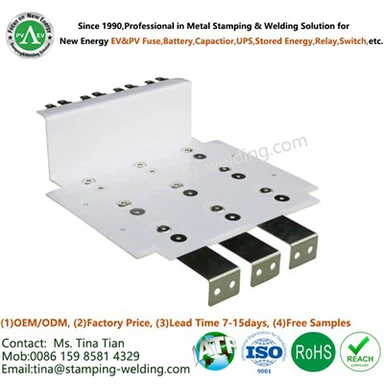
The power distribution cabinet is composed of multiple key components, and each component is closely coordinated at the electrical and mechanical levels. The cabinet is usually made of steel plates that are bent, welded and surface-sprayed to provide mechanical protection and electrical insulation to prevent personnel from accidentally touching live parts or intrusion by external environmental factors. The busbar is a high-conductivity conductor made of copper or aluminum. It is used to connect the power input end and each output branch and undertakes the core function of power collection and redistribution. The current carrying capacity of the main busbar needs to be calibrated according to the total capacity of the power distribution cabinet and the heat and dynamic thermal stability conditions. Among switching equipment, the circuit breaker is the most core component. It is used to make and break circuits under normal conditions and automatically break off in the event of a short circuit or overload. The vacuum circuit breaker commonly used in incoming cabinets has the characteristics of strong arc extinguishing ability and long electrical life; the isolating switch provides a visible disconnection point during maintenance to ensure the safety of the operator. It is usually used in conjunction with the circuit breaker to form a complete switching appliance combination.
In terms of protective electrical appliances, current transformers and voltage transformers are used to convert high voltage and large current into standard signals for use in measuring instruments and relay protection devices; lightning arresters and fuses are used to prevent overvoltage shock and overcurrent damage, respectively. In the outdoor control cabinet served by the control cabinet air conditioner, since the cabinet may be exposed to thunderstorm weather, the configuration of the lightning arrester is particularly important; otherwise, the induced lightning overvoltage may break down the internal electronic components. Measuring and monitoring devices include live displays, multi-functional energy meters and relay protection devices, which monitor electrical parameters such as voltage, current and power in real time, and automatically trigger protective actions when abnormalities are detected. Taking a standard entry cabinet as an example, it is usually equipped with a vacuum circuit breaker, three sets of current transformers, a set of lightning arresters and a voltage transformer to realize the introduction, measurement and comprehensive protection functions of electric energy.

Working principle
The power distribution cabinet realizes the automated operation of the three major functions of power distribution, circuit control and fault protection through the orderly cooperation of various components. At the power distribution level, the external power supply is connected to the main busbar through the incoming line cabinet, and the main busbar distributes the power to each branch through the outlet cabinet, and finally delivers it to the electrical equipment. Take the power distribution system of the data center as an example: the incoming cabinet receives power from the mains or UPS, the contact cabinet switches to the generator power supply during a power outage, and the precision power distribution cabinet supplies power to each server cabinet, forming a complete power distribution chain. At the circuit control level, circuit breakers or contactors open and close the circuit based on manual operation or automatic control signals - for example, in a motor control center, the contactor controls the start and stop of the motor based on the start and stop signals output by the PLC, and the thermal relay provides overload protection.
At the fault protection level, the overload protection detects the branch current through the current transformer. When the current exceeds the set value but does not reach the short-circuit current, the thermal trip element in the thermal magnetic circuit breaker operates and delays the circuit cutoff; the short-circuit protection is completed by the electromagnetic trip element of the circuit breaker, which breaks the fault current within a few milliseconds; the ground protection monitors the vector sum of the three-phase current through the zero-sequence current transformer, and triggers the leakage protection switch to trip when the residual current exceeds the threshold is detected. In the traffic control cabinet, the power distribution section also needs to consider the different power supply requirements of signal lights, gates and detection equipment - signal lights require stable AC power supply, while detection equipment often requires DC power supply and is sensitive to voltage ripples. Therefore, a switching power supply module must be configured in the cabinet and the AC and DC loops must be strictly separated to avoid coupling AC interference on the DC system ground line.

Classification methods and typical types
Power distribution cabinets are classified according to multiple dimensions such as structural characteristics, usage functions, and voltage levels to adapt to the needs of different application scenarios. According to the structural characteristics, the protective power distribution cabinet is closed on all sides except the installation surface. It is suitable for industrial workshops where dust or metal debris is present. Its protection level usually reaches IP40 or above; the components of the drawer-type power distribution cabinet are installed in pull-out unit modules, and the modular design is convenient. For the quick replacement and maintenance of faulty units, it is widely used in power supply places that require high reliability; the panel distribution cabinet only has protection on the front, has a simple structure and low cost, but is relatively insufficient in safety. It is mainly used in small substations or temporary power supply places that do not have high reliability requirements.
According to the purpose and function, the incoming cabinet is responsible for introducing electric energy from the external power supply to the busbar, and is often equipped with an automatic switching device to realize the automatic switching of the main and backup power supplies; the outlet cabinet distributes the electric energy from the busbar to each load branch, and each outlet is equipped with a circuit breaker to achieve branch overcurrent protection; the metering cabinet is dedicated to electric energy measurement, and is equipped with high-precision current transformers and power supplies. The voltage transformer has its secondary circuit connected to the gateway energy meter; the PT cabinet is used to measure the bus voltage and provide operating power for the protection device; the contact cabinet connects two sections of the bus to achieve dual power redundant power supply, and automatically or manually switches to the backup power supply when the main power fails; the isolation cabinet provides an obvious electrical disconnection point during maintenance to ensure complete power outage in the maintenance area.
According to the voltage level, the rated voltage of low-voltage distribution cabinets does not exceed 400V and is commonly found in buildings and general factory workshops; medium and high-voltage distribution cabinets are used in substations and large industrial and mining enterprises, such as 10kV or 35kV armored metal-enclosed switchgear. In plc cabinet and PLC control cabinet, the power distribution part and the control part are often integrated in the same cabinet, but the two must be electrically separated by partitions or independent chambers to avoid electromagnetic interference from the power circuit affecting the normal operation of weak current equipment such as PLC.

contact us
If you want to obtain a Distribution Cabinets for Data Centers technical solution for your current project, please submit your specific requirements, and our engineering team will provide matching product configuration suggestions based on load characteristics and usage environment.