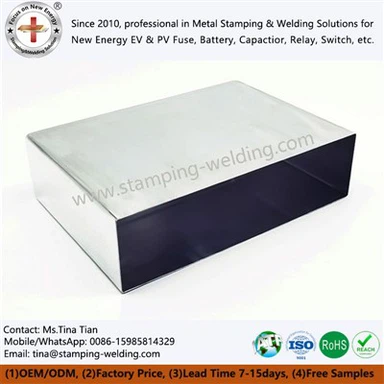
Analysis of the material mechanism of brass stamping parts having significantly higher hardness than copper
Jul 04, 2026
In the electrical, hardware, plumbing, and automotive parts manufacturing industries, the performance differences between brass and copper stampings have always been a key focus in material selection. Brass Sheet Metal Stamping are typically 2 to 3 times harder than copper. The core principle behind this is the solid solution strengthening effect induced by the introduction of zinc, combined with the unique crystal structure characteristics and cold work hardening advantages of brass, resulting in superior resistance to deformation and structural strength.

The core role of solid solution strengthening
As a copper-zinc alloy, brass's superior hardness primarily stems from the solid solution strengthening effect of zinc atoms on the copper lattice. Pure copper has a highly ordered face-centered cubic lattice with well-ordered atomic arrangement. Under external forces, its crystal planes easily slip, resulting in a relatively soft material with low hardness. When zinc atoms are incorporated into the copper lattice, the difference in atomic size between zinc and copper creates lattice distortion, disrupting the original ordered atomic arrangement. This distortion significantly hinders dislocation movement, greatly increasing the external force required for plastic deformation, thus macroscopically manifesting as a significant increase in hardness. Data shows that the Brinell hardness of ordinary brass can reach 60 to 100 HB, while some complex brasses can reach 120 to 180 HB, compared to only 35 to 45 HB for pure copper. Brass's hardness can be 2 to 3 times that of pure copper.
Synergistic strengthening of crystal structure properties and alloying
Besides solid solution strengthening, the crystal structure of brass itself endows it with superior work hardening ability. Typical α-phase brass (zinc content less than 37%) also has a face-centered cubic structure, but its uniform deformation ability is better than that of pure copper, with a work hardening index of 0.45, higher than that of copper (0.35). This means that during stamping deformation, brass can more effectively achieve cold work hardening through dislocation multiplication, thereby further improving its hardness while forming. In addition, some special brasses also have the addition of elements such as lead, tin, aluminum, and manganese, which further optimize the material strength and wear resistance through solid solution or precipitation strengthening. Among them, manganese brass can reach a fatigue limit of 220 MPa, a level that is difficult for pure copper to achieve.

The amplification effect of stamping process on hardness differences
In the stamping process, the hardness difference between brass and copper widens further. During cold rolling or stamping, brass hardness increases by an additional 10% to 20% with each cold working step. This work hardening effect gives stamped brass parts higher surface hardness and wear resistance. Copper, on the other hand, experiences limited hardening after cold working and often requires annealing to eliminate internal stress and maintain subsequent machinability, making it difficult to achieve significant hardness gains through stamped alone. This performance difference results in stamped brass parts exhibiting better resistance to deformation and wear, making them particularly suitable for manufacturing components with specific structural strength requirements, such as gears, locks, and plumbing valve bodies.
For copper stamping, increased material hardness not only affects the forming difficulty but also directly relates to the wear resistance and dimensional stability of the final product. In the electrical connection field, stamped parts using Silver Plated Brass Terminals balance conductivity and contact wear resistance, making them a preferred solution for switch and socket products. In mass production, for the demand for Custom Copper Stamping, the cold work hardening properties of brass can be utilized to obtain ideal mechanical properties without subsequent heat treatment, significantly reducing manufacturing costs.

Industry significance
In conclusion, the hardness advantage of Brass Sheet Metal Stamping is not due to a single factor, but rather the result of the synergistic effect of solid solution strengthening, crystal structure characteristics, and cold work hardening. This material characteristic provides engineers with clear performance boundaries when selecting materials: for applications requiring high conductivity and excellent formability, copper remains the preferred choice; while for stamped parts requiring higher structural strength and wear resistance, brass is undoubtedly a more cost-effective technical solution. As electrical connectors, terminal blocks, and switch assemblies develop towards miniaturization and high reliability, the hardness advantage of brass stampings will continue to receive industry attention and be further explored.
Contact Us
For different products with varying hardness and structural strength requirements, such as precise matching of brass and copper stamping materials and processing techniques, please feel free to contact us for customized solutions.