Why Choose Stainless Steel Stamped Parts for Outdoor PV Mounting Systems? 304 vs. 316 Materials and Procurement Guide
Aug 14, 2026
Outdoor photovoltaic mounting accessories are constantly exposed to rain, moisture, salt spray, and temperature fluctuations; therefore, material selection must balance corrosion resistance, structural strength, service life, and procurement costs. For sheet metal components, stamping enables consistent mass production through processes such as punching, trimming, bending, and forming. While Stainless Steel Stamped Parts is not the only option for every project, it generally offers superior overall performance for long-term outdoor applications.

Which photovoltaic mounting accessories are suitable for stainless steel stamping?
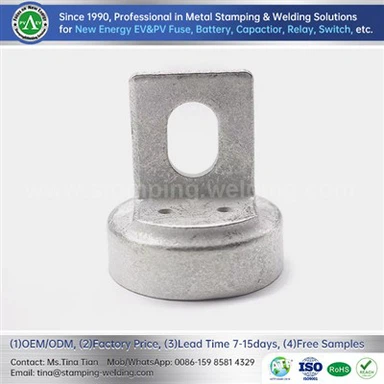
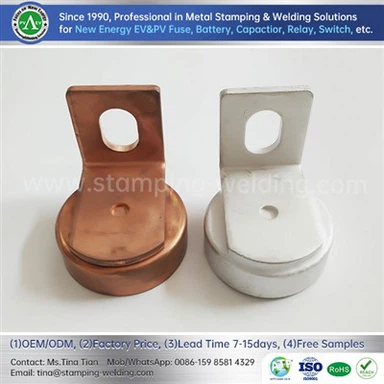
For standard outdoor photovoltaic projects, stamped 304 stainless steel is suitable for sheet-metal components such as connecting plates, mounting brackets, clamps, and supports. Grade 304 offers excellent corrosion resistance and formability, meeting the requirements of most conventional applications in typical outdoor environments.
When products require operations like punching, bending, and localized forming, stainless steel stamping is ideal for producing parts that demand structural stability and high-volume output. Compared to individual machining, mass stamping ensures greater dimensional consistency and helps control long-term procurement costs.
For mounting accessories requiring extensive punching and complex profiles, stainless steel sheet metal stamping allows punching, trimming, and forming to be integrated into a single production workflow, thereby reducing the need for secondary processing steps.
If a project involves specific dimensions, tolerances, or mounting configurations, custom stainless steel stamping can be employed; this allows material thickness, die design, and forming methods to be tailored to the product drawings, rather than relying on off-the-shelf standard parts.
For small components such as connecting plates and fasteners, stainless steel stamping balances dimensional consistency with high-volume production efficiency; if the process primarily involves creating holes, the suitability of 304 stainless steel punching can also be evaluated.
304 or 316? How should procurement make the choice?
For general outdoor environments, 304 stainless steel is a suitable initial choice for stamped stainless steel parts; however, if the product is to be installed in coastal, high-humidity, or high-salinity areas, 316 stainless steel should be considered as an alternative. Procurement decisions should not be based solely on material grade but must also take into account the operating environment and expected service life.
| Selection factors | 304 | 316 |
|---|---|---|
| General outdoor environments | More suitable | Suitable |
| Salt spray/chloride ion environment | generally | more suitable |
| Corrosion resistance | good | higher |
| Material costs | Lower | Relatively high |
When procuring OEM Stainless Steel Stamped Parts in bulk, it is advisable to clearly specify the installation location and corrosive environment during the inquiry stage. This helps avoid the unnecessary use of Grade 316 stainless steel in standard environments while also mitigating future maintenance risks associated with insufficient material corrosion resistance.

Why use stamping? How can procurement costs be controlled?
When selecting manufacturing methods for photovoltaic mounting accessories-such as stainless steel parts involving drawing or stamping-one should evaluate the options based on specific product requirements. It is worth noting that stainless steel inherently possesses good corrosion resistance; therefore, the necessity of additional surface treatment should be determined by considering the specific operating environment and usage requirements.
For small components like clips and fasteners, continuous stamping allows for the formation of multiple features in a single process, thereby enhancing production efficiency and dimensional consistency. Procurement decisions should not rely solely on the unit price of the material; instead, one must comprehensively consider the costs associated with tooling, stamping, secondary processing, inspection, and packaging.
For long-term, high-volume procurement, price comparisons should extend beyond the initial quote. A more prudent approach involves evaluating material utilization rates, tooling investments, unit processing costs, and the total cost of ownership based on projected procurement volumes.
If a product requires a specialized structure or high dimensional consistency, opting for custom OEM stainless steel sheet metal stamping allows for the simultaneous evaluation of material thickness, nesting layouts, and tooling strategies during the design phase, effectively minimizing unnecessary material waste and secondary processing at the source.
Request Custom Stamping Cost Evaluation
What information needs to be provided for an RFQ?
When sourcing stainless steel stamping parts, it is recommended to provide at least six key pieces of information: material grade, material thickness, product drawings and dimensions, load-bearing requirements, installation environment, and estimated annual purchase volume. If the product is intended for use in coastal or high-humidity areas, the corrosive nature of the environment and the expected service life should also be specified.
For small bracket connectors, quotations are typically influenced by product dimensions, tolerances, annual demand, and tooling design; therefore, providing complete drawings yields more accurate quotes than simply stating the product name.
For specialized projects, manufacturers can use drawings to evaluate stamping, bending, and secondary processing options. Providing critical dimensions and functional requirements upfront helps minimize the need for engineering changes later in the process.
For OEM mass-production projects, specifications regarding quality standards, dimensional tolerances, surface finish requirements, and inspection criteria should be clearly defined to ensure consistency between approved samples and mass-produced parts.
Ultimately, the suitability of Stainless Steel Stamped Parts for outdoor photovoltaic mounting accessories depends on balancing environmental conditions, strength, service life, and cost. Grade 304 is generally the first choice for standard outdoor environments, while Grade 316 is considered for coastal or highly corrosive settings; for structural sheet metal components produced in large volumes, stamping is often the most cost-effective method for controlling long-term procurement expenses.

Contact Us
If you are sourcing stamped components for outdoor photovoltaic mounting systems, please provide product drawings, material grades, sheet thickness, installation environment details, and estimated procurement volumes to facilitate a more accurate assessment of materials and stamping solutions.