Characteristics and special technical requirements of Aluminum alloy waterproof solar rail process
Apr 07, 2026
Core process characteristics of Aluminum alloy waterproof solar rail forming
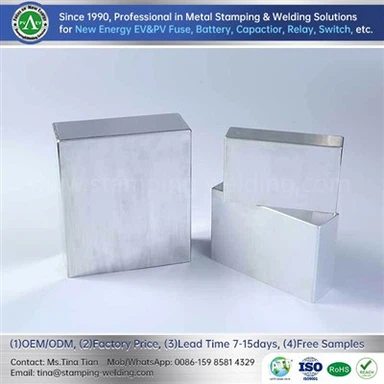
Aluminum alloy has become an important structural material in the fields of modern automobiles and new energy due to its excellent specific strength and lightweight characteristics. The forming process of Aluminum photovoltaic bracket accessories is similar to that of ordinary cold plates in terms of basic flow, and the amount of aluminum shavings can be reduced by adding process cuts or reducing waste knives. However, aluminum exhibits significantly different behavioral characteristics from steel during the stamping process: its age hardening properties lead to an increase in yield strength and a decrease in elongation with storage time. Therefore, in the mold design stage, materials that meet the upper limit of specifications need to be selected for feasibility verification. In addition, the surface of aluminum plates is prone to oxidation, and outdoor storage is strictly prohibited. Special packaging and strict storage management measures must be adopted. The stretching oil and anti rust oil used in the production of Aluminum accessories for solar mounting have strong volatility. The sheet should be used immediately after opening, otherwise it needs to be cleaned and re oiled before stamping.

The connection process of Aluminum alloy waterproof solar rail parts: riveting and resistance welding
The commonly used connection processes for Aluminum clamp hook for roof photovoltaic support in vehicle body and structural assembly include stamping riveting, self piercing riveting, and resistance welding. Stamping riveting connection uses pressure equipment and specialized molds to cold extrude two or more layers of metal plates, forming an internal interlocking structure with tensile and shear resistance. This process has strong adaptability and allows for the combination of boards of different thicknesses and materials, even including adhesives or intermediate layers, without the need for additional connectors.
Self piercing riveting uses riveting equipment to press rivets into the material, forming stable and aesthetically pleasing connection points. It has significant advantages such as high connection strength (dynamic fatigue strength not lower than spot welding), visual inspection, no need for pre drilling, excellent sealing performance (blocking gas-liquid corrosion), and adaptability to the connection of metal and non-metal dissimilar materials.
In terms of resistance welding, aluminum alloys usually use medium frequency or high-frequency resistance welding technology, which melts the base metal to form a molten pool in a very short heating time, and completes the connection after cooling. The possibility of generating aluminum magnesium dust in this process is extremely low, and welding fumes mainly come from surface oxides and impurities. With the help of a local exhaust system, particulate matter can be promptly discharged, effectively ensuring the production safety of Aluminum solar panel end clamps for PV mounting systems.

Key points for long-term storage and process management of Metal stamping aluminum
The long-term storage of aluminum alloy sheets should focus on three aspects.
Firstly, the aging hardening characteristic can lead to an increase in yield strength and a decrease in processing performance. Therefore, when making molds, the upper limit of material properties should be considered, and the feasibility of forming should be confirmed before the production of Premium polished aluminum sign mount brackets.
Secondly, the stretching oil and anti rust oil used in production have strong volatility, and the board should be used as soon as possible after opening; If it cannot be processed in a timely manner, it is necessary to clean and re oil before stamping.
Thirdly, the surface of aluminum plates is prone to oxidation, and outdoor storage is strictly prohibited. Special packaging and targeted management measures must be adopted. Similar principles also apply to aluminum profile components in the photovoltaic field, such as waterproof solar tracks and other products, which must comply with storage standards that prevent oxidation and mechanical damage to ensure the quality of subsequent Aluminum wall bracket stamping and assembly.
Summary and Outlook
Modern automobiles are developing towards lightweight, high-speed safety, comfortable low-carbon, low-cost, and energy-saving directions, and their industrial upgrading is closely related to the three major fields of energy, environmental protection, and safety. Aluminum alloy solar panel mounting bracket has comprehensive advantages in cost control, manufacturing process, mechanical properties, and sustainable development compared to other lightweight materials, and is expected to become the preferred lightweight material for the future automotive industry. At the same time, the application of aluminum alloy in new energy fields such as photovoltaics continues to expand, and the process optimization of aluminum photovoltaic brackets, accessories and other products will further promote the diversified application and technological progress of aluminum alloy materials.
In terms of adaptability to harsh environments, traditional separated busbars have obvious shortcomings in vibration, salt spray, and dust environments. Long term vibration may cause loosening or even disintegration of the connection, moisture infiltration into the insulation layer may cause interlayer breakdown, and dust accumulation may cause creeping electrical breakdown. The Laminated bus bar for high frequency welding power IGBT adopts a high-strength integral bonding structure to ensure long-term operation without looseness. Under the same current conditions, copper bar thickness optimization can be achieved, effectively improving the stability and durability of the system under complex working conditions.

Contact us
The Aluminum alloy waterproof solar rail process involves technical collaboration in multiple aspects such as materials, molds, welding, and storage, and every detail directly affects the quality and safety of the product. If you encounter any technical difficulties in actual production or wish to obtain more specific solution suggestions for your application scenario, please feel free to contact us at any time.