Complete Analysis of Busbar Welding: A Guide to Industry Applications and Core Processes
Jan 05, 2026
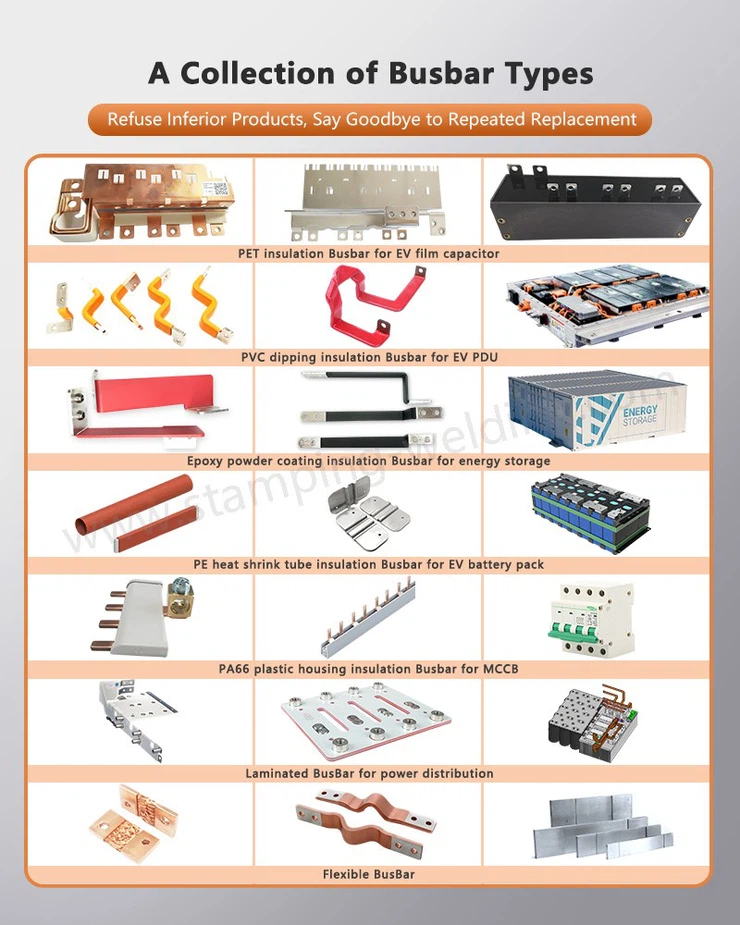
With the rapid development of the new energy, wind power, and photovoltaic industries, as well as the widespread adoption of electronic products, the market size of Bus Bars continues to expand. Looking at industry trends, in the automotive sector, busbars are gradually replacing some traditional wiring harnesses, becoming an important component in the architecture of new energy vehicles due to their unique advantages. Busbars not only facilitate the process of automated assembly but also significantly enhance the safety and operational quality of electrical systems. Different types of insulated busbars, such as PVC Dipping Insulated Busbar and Insulated Flexible Copper Busbar for Power Battery Pack, are also enriching the market supply as application scenarios become more specialized.

The core advantages of using Busbar
Compared to traditional conductive components such as cables, Busbar possesses numerous significant advantages. In terms of space utilization, the flat conductor structure allows it to occupy less space, with a height reduction of up to 70%. This not only reduces facility construction costs but also accelerates installation progress. In terms of transmission performance, compared to cables with the same cross-sectional area, Busbar can support up to 15% more power transmission and has superior heat dissipation efficiency to stranded wires, effectively ensuring stable system operation. In terms of operational and maintenance flexibility, power sources can be quickly added, removed, or relocated without requiring downtime, significantly reducing the cost and cycle of system expansion or renovation. In terms of environmental protection and economy, it requires fewer installation materials, and the plug-in sockets are reusable and easy to relocate, aligning more closely with green development trends. In terms of connection reliability, the bolt fastening method is adopted, which is mature, reliable, and cost-effective. Additionally, Busbar has a lighter overall weight and smaller packaging space. Some flexible products, such as Soft Connection Copper Busbar, also exhibit better adaptability and flexibility. For example, the 160㎡ flexible flat aluminum cable has become an innovative alternative to the 200㎡ round aluminum cable, further enhancing application adaptability.

Classification and current development status
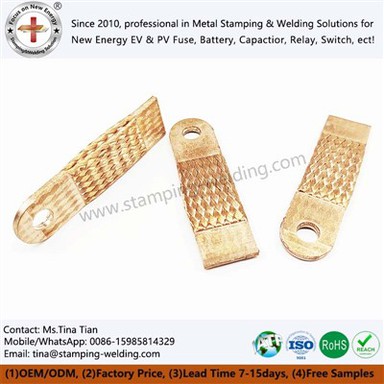
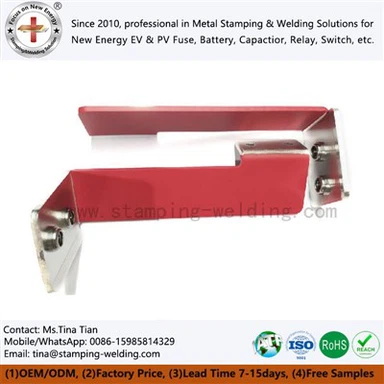
Bus Bars can be classified based on various characteristics such as material, insulation method, structural form, and application scenario, with different types of products adapting to different working conditions. For example, Insulated Custom Copper Bus Bar with PVC Dipping, Plastic Dipping Copper Busbar, Dip Insulated Busbar, etc., all enhance safety through differentiated insulation treatment processes; Soft Connection Copper Busbar, Insulated Flexible Copper Bus Bar for Power Battery Pack leverage the advantages of flexible structures to adapt to compact space layouts such as power batteries; in addition, customized products such as PVC Dipped Insulated Busbar, PVC Coated Bus Bars, Plastic Dipping Electric Copper Busbar Custom Made, Dipping Busbar for Connection, also meet the diverse application needs of the industry. According to industry data, since 2021, the domestic busbar industry market has seen significant growth, driven primarily by the rise in global non-ferrous metal prices during the pandemic, especially the increase in copper prices, a traditional raw material for copper bars, which has driven a shift in demand for the industry's product mix. In 2022, the market size of China's busbar industry reached 165.002 billion yuan, a year-on-year increase of 3.4%.
Analysis of Busbar Core Welding Process
Busbar welding is a crucial step to ensure its conductivity and connection reliability. Currently, the commonly used welding processes in the industry mainly include resistance welding and polymer diffusion welding. Resistance welding is a commonly used method in busbar welding. Its core principle is to apply current at the busbar joint, generating instantaneous high temperature through the thermal effect of current, melting the metal at the joint. At the same time, pressure is applied to form a firm welding connection from the melted part. This process has the significant characteristics of being fast, efficient, and low in energy consumption.
Polymer diffusion welding is the preferred process for busbar welding. Its principle involves bringing the busbar welding surfaces into close contact under specific temperature and pressure conditions, achieving interfacial bonding through microscopic plastic deformation. Subsequently, during the heating and holding process, metal atoms diffuse and penetrate into each other, ultimately forming a strong metallurgical connection. When using polymer diffusion welding, paired with high-current, high-power dedicated diffusion welding equipment, welding efficiency can be significantly improved, offering clear advantages over traditional manual welding. Additionally, this process can achieve high-quality welding of joints, ensuring excellent conductivity and stable contact pressure at the welding site, thereby enhancing the operational performance of the entire electrical system. Furthermore, such diffusion welding equipment typically employs digital touchscreen operation, allowing operators to complete the welding process simply by following set parameters, without requiring complex welding skills, effectively reducing operational difficulty and human error.
In the power battery system of new energy vehicles, Bus Bars serve as the core carrier for energy conduction, and its conductivity efficiency, insulation reliability, and flexibility adaptability directly determine the charging and discharging performance, safety level, and service life of the battery pack. We specialize in the research, development, and manufacturing of insulated flexible copper busbars for power batteries. Relying on high-purity copper material selection, precision molding processes, and professional insulation coating technology, we create customized insulated flexible copper busbar solutions that are compatible with Power Battery Packs. Our products focus on three core advantages: "low-loss conduction, high-safety insulation, and strong flexibility adaptability." They perfectly match the application requirements of compact layout, high-frequency charging and discharging, and stringent safety standards in power battery systems. We provide highly reliable core conduction components for global power battery enterprises, new energy vehicle manufacturers, and supporting engineering customers, helping to enhance the comprehensive performance and market competitiveness of power battery systems.

contact us