Overview, design essentials, and industry applications of Copper BusBar
Jan 04, 2026
As a core conductor component in the power transmission and distribution system, the Copper BusBar plays a pivotal role in efficiently conducting power from power sources such as transformers and generators to various electrical loads. Additionally, it serves as a crucial connection point for electrical equipment, allowing direct installation or docking of devices such as circuit breakers, fuses, and switches through connectors like bolts and clamps. This conductor provides a low-resistance transmission pathway for current, effectively reducing power loss and ensuring efficient power transmission. In certain scenarios, it can also regulate system voltage by establishing stable electrical connections, making it an indispensable component of power infrastructure.

Overview
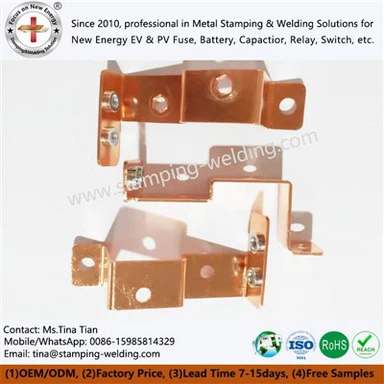
Copper BusBar and Copper Solid BusBar are highly favored in numerous high-end application scenarios due to their excellent conductivity. BusBar Copper is also a commonly used term within the industry to refer to copper bus bars. They come in various forms, including flat bars, rectangular bars, and tubular bars, allowing for flexible adaptation according to different application needs and current-carrying standards. The large surface area design accelerates the dissipation of heat generated during current operation, ensuring stability and safety during operation. As a special type of busbar, the Ground Bus Bar plays a crucial role in circuit grounding protection systems, safeguarding the safe operation of the power system.
Although the technology related to BusBar Electrical has been continuously optimized with the innovation of power distribution technology, busbars, with their core characteristics of high efficiency, reliability, and flexibility, have always occupied a central position in various power distribution systems such as switchboards, switchgear, and distribution panels. They are widely used in diverse scenarios such as building power distribution, industrial facilities, mechanical equipment, vehicle power systems, and data centers. BusBar for ABB, as a busbar product specifically adapted to a specific brand, is a typical application of busbars in the field of industrial equipment support. Meanwhile, 3-phase busbars play an important role in three-phase power supply systems, ensuring the stable transmission and distribution of multi-phase power.

Design Key Points
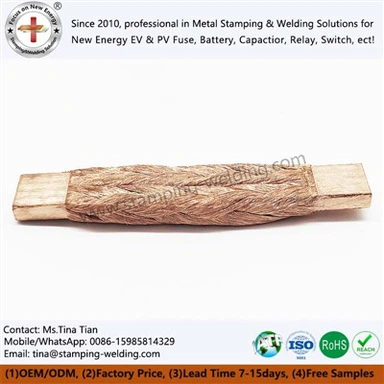
The design of busbars must balance standardization, adaptability, and safety. Firstly, it must adhere to clear standard requirements. Depending on the product type and configuration, it needs to comply with relevant industry standards such as UL grade and IEC 60050. In terms of material selection, besides conventional copper and aluminum, brass also has specific application scenarios. Some busbars may undergo electroplating processes, but care must be taken to avoid improper electroplating that could increase contact resistance. For high-current systems in complex environments with thermal fluctuations, magnetic interference, and vibration, thinner and flexible busbars can be chosen. These busbars typically embed braided copper wires or copper strands in plastic or epoxy resin substrates, allowing them to better adapt to harsh working conditions.
Thermal expansion adaptation is one of the key points in busbar design. System design must fully consider the thermal expansion and contraction of the busbar caused by ohmic heating and thermal fluctuations between the system and the environment, ensuring structural stability. In terms of insulation protection, some busbars are wrapped in insulating materials or installed on insulating supports to avoid safety hazards such as electric leakage. Voltage adaptability design needs to be combined with specific application scenarios. The voltage carrying capacity of busbars varies greatly under different scenarios. Especially for High Voltage BusBar in high-voltage application scenarios, it is important to pay attention to the radio frequency interference generated by connections around the busbar. By selecting appropriate accessories, interference and related power loss can be minimized to the greatest extent. The precise adaptation of BusBar Voltage directly affects the stability and safety of power transmission.

Market, industry, and application
The market for Power BusBar and Bus Bar Electric related products covers a wide range, involving multiple core industries such as automotive, data communication/telecommunications, testing and measurement, medical, and industrial. They have core applications in specific scenarios such as automotive power systems, power distribution networks, telecommunications base station power supply, data center power distribution, and industrial machinery power transmission. This market demand has also given rise to numerous Busbar Manufacturers and Copper Busbar Manufacturers, driving the industry towards professionalization and refinement. In high-current application scenarios, the adaptability of High Current Contacts and High Current Connectors to busbars is crucial. The quality of Busbar Connectors directly affects the reliability of busbar connections and is a key accessory for ensuring the stability of high-current transmission.

Contact Us