Comprehensive analysis of manufacturing process control technology for Power battery cells: coating, stacking, slicing, forming, and volume separation
Apr 09, 2026
Overview of Power battery cell manufacturing process flow
The manufacturing process of Rechargeable brand new batteries mainly includes four stages: electrode manufacturing, cell manufacturing, packaging, and testing. In the manufacturing process of electrode sheets, manufacturers select battery materials according to product requirements, and put the raw materials into a mixing tank according to the formula.
After mixing, stirring, grinding and other processes, they are made into powdered solids, which are then sent to a coating machine for coating. After coating is completed, they are compressed and sliced by a tablet press.
Finally, the cut sheet material is sent to a winding equipment to be wound into a cylindrical shape, and then packaged and tested by equipment to complete the battery packaging.
In the battery cell manufacturing process, battery materials are selected according to customer needs and put into production equipment for battery cell manufacturing. Overall, the manufacturing process of Lifepo4 power cells includes multiple key processes such as coating, polarizer manufacturing, lamination, slitting, chemical conversion, and capacity separation. The level of process control in each link directly affects the performance, safety, and consistency of the battery.
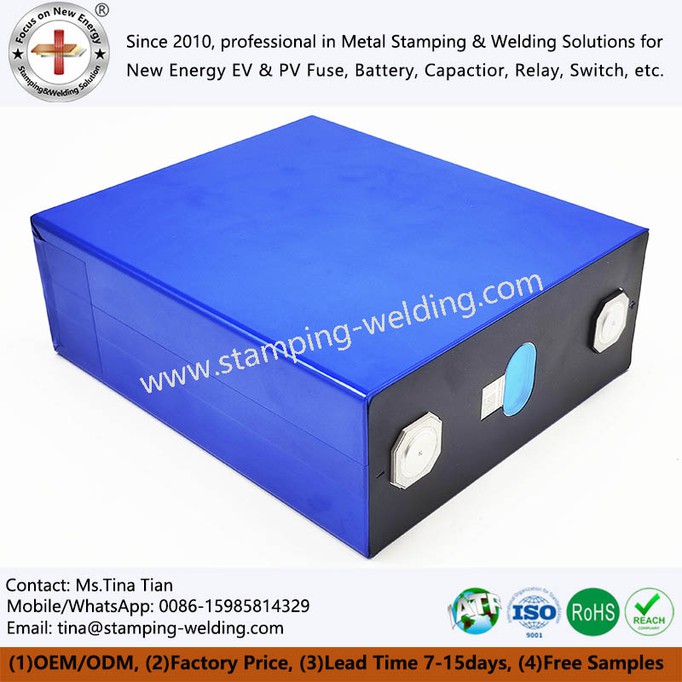
Coating process and polarizer manufacturing technology
The coating process is to coat the slurry onto conductive materials such as copper foil to form a conductive slurry with a certain thickness and uniformity, and then undergo drying, activation, thermal decomposition, sintering and other processes to form Power battery cell electrodes. This process involves roller coating equipment, coating machine control system, online measurement system, and other auxiliary equipment.
The roller coating equipment consists of an upper roller, a lower roller, side rollers, and a lower pressure plate, etc. It achieves uniform coating of the slurry through rotation and is suitable for high-precision polarizer production; The control system of the coating machine ensures uniform coating of the slurry by adjusting the clamping force and traction force between the upper and lower rollers; The online measurement system is used for real-time detection of electrode quality and data analysis; Auxiliary equipment includes protective devices, drying equipment, and dust removal equipment, which are used to improve the quality of the polarizer, reduce energy consumption, and prevent dust from entering.
The manufacturing of electrode plates is a key step in Battery for lithium-ion energy storage system, with carbon materials (such as graphite, natural graphite, artificial graphite, etc.) as the main materials, as well as positive electrode materials such as lithium manganese oxide and lithium cobalt oxide. During the coating and forming process, the raw materials need to be coated, dried, and rolled to form electrode plates. Among them, the control of parameters such as pressure, temperature, and speed in roll forming is crucial.
For different materials such as natural graphite, hard carbon, lithium manganese oxide, etc., corresponding coating methods and process parameters need to be adopted to ensure the flatness and thickness uniformity of Lithium-ion batteries for solar products. In the coating process, it is also necessary to control the coating amount and speed to avoid defects such as bubbles, wrinkles, or burrs. At the same time, the roller pressure, steel roller surface roughness, and slurry composition ratio should be optimized to ensure that the slurry is fully mixed and uniform during the roller pressing process.
Stacking process and slitting process
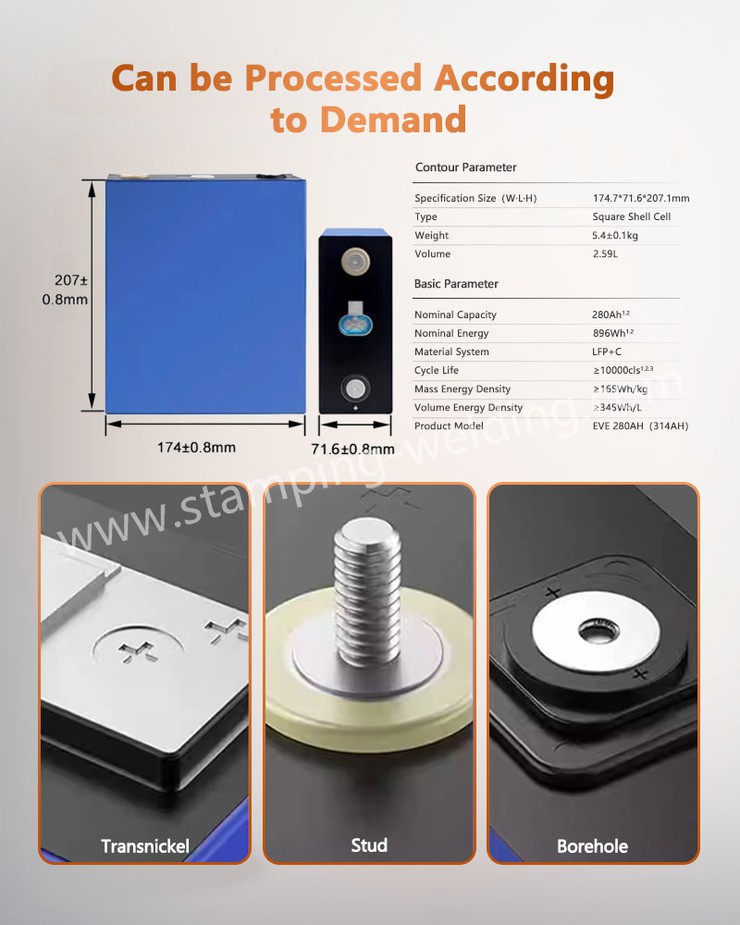
The main purpose of the lamination process is to stack multiple small battery cells together to form high-capacity Lithium superpack batteries, in order to meet the requirements of electric vehicles or energy storage systems. At present, aluminum shell batteries are widely used, and their laminated structure has higher specific energy and energy density. The core of the laminating process lies in the quality of the bonding between the electrode and the diaphragm, which needs to ensure a tight bonding, avoid virtual welding, desoldering and other phenomena, and prevent the electrode material from folding, deforming or edge damage. In addition, the internal resistance of the battery should be minimized as much as possible to reduce the contact resistance between the electrodes. In practical control, it is necessary to test the two materials of pole piece and diaphragm to ensure that the material quality and thickness tolerance meet the requirements.
The slitting process is to separate the positive and negative poles of the Solar energy storage systems lithium batteries pack, mainly including the slitting of the diaphragm and pole pieces. At present, there are three main types of slitting equipment: roll slitting equipment, which adopts high-speed winding technology and has the advantages of high efficiency, high precision, and low cost, but requires high technical requirements for operators; Laser cutting equipment has the advantages of high cutting accuracy, fast speed, and high efficiency, including single axis and multi axis types; Ultrasonic cutting equipment uses an ultrasonic generator to generate high-frequency oscillation signals, separating electrode materials from plastics, and achieving functions such as automatic loading, unloading, sizing, slitting, and collection.
Chemical conversion process and volume separation process
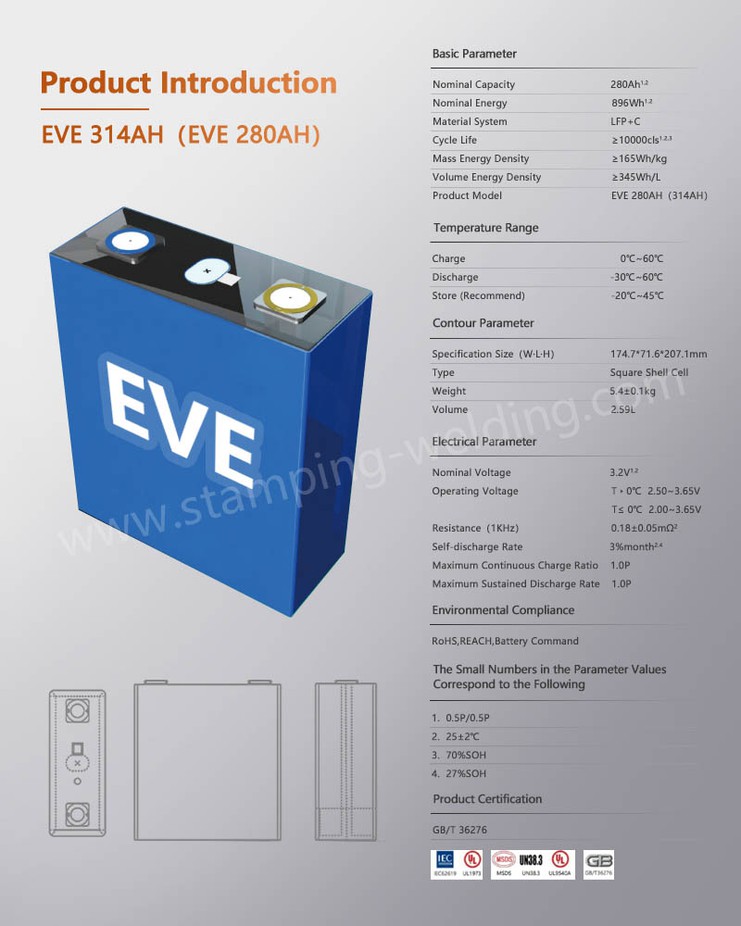
Chemical formation is the process in which chemical reactions occur between the positive and negative electrode materials and the electrolyte during the Lithium battery pack charge discharge cycle, forming new electrode reaction products and releasing heat. Chemical conversion can increase battery internal resistance, reduce capacity, and ultimately improve the cycling performance of lithium batteries. The formation process mainly includes: preparation before formation (drying materials such as electrode sheets, separators, and current collectors), formation (forming lithium sheets in a formation furnace), post-treatment (testing the formed battery for overcharging, short circuiting, overdischarging, etc.), and electrode sheet capacity division (reassembling cells with large capacity deviations to improve cycle life).
Capacity sharing technology refers to the process of removing individual batteries from a grouped Battery pack kit, conducting capacity testing to determine the quality of the battery cells, and then reassembling them. The capacity dividing process mainly includes capacity dividing machines, capacity dividing steel strips, and capacity dividing equipment. Currently, there are two main methods: directly taking out the grouped batteries or discharging the grouped batteries. The capacity sorting process includes cell cutting, electrode cutting, sorting, capacity sorting steel strip cutting, and capacity sorting equipment installation and commissioning.
Capacity sorting equipment can be divided into automatic capacity sorting equipment (such as continuous conveyor belts, dual servo linear reciprocating mechanisms) and semi-automatic capacity sorting equipment (such as one-dimensional conveyor belts, servo linear reciprocating mechanisms). During the separation process, it is necessary to clean the residual particulate matter on the surface of the electrode to ensure the cleanliness and tidiness of the Flash battery lithium batteries electrode surface.
Contact us
The above is a systematic analysis of key manufacturing process control technologies for Power battery cell coating, lamination, slitting, formation, and volume separation. If you encounter technical difficulties or need to further optimize your process plan in production practice, please feel free to contact us through the platform. We will provide you with professional technical support and consulting services.