Deformation mechanism and systematic prevention strategy of Aluminum prismatic casing
Apr 21, 2026
Background and core causes of deformation of Aluminum prismatic casing
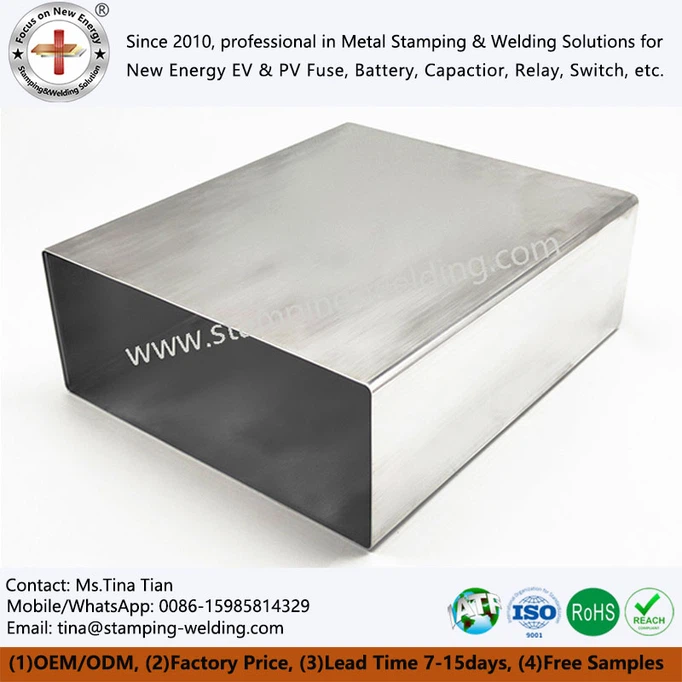
Automotive battery aluminum cases are widely used in fields such as new energy vehicles due to their structural rules and high energy density. However, due to its anisotropic structural characteristics, uneven forces in the length and width directions during the production process can easily lead to deformation problems such as unevenness, which in turn affects the safety and service life of the battery. The occurrence of deformation problems is closely related to multiple aspects such as material properties, manufacturing processes, and internal environmental control of power battery units.
From the perspective of material and structural dimensions, the selection and strength design of Aluminum case for new energy carriers materials are fundamental factors. If materials with insufficient tensile strength (such as 3003 aluminum alloy) or Lithium battery aluminum cases with a thickness less than 0.6 mm are used, they are prone to yield deformation under internal pressure and thermal stress. At the same time, the structural characteristics of the welding area cannot be ignored: the heat affected zone formed during the welding process will reduce local strength by 20% to 30% due to lattice reorganization, becoming a stress concentration area that is prone to deformation during subsequent stress.
Induction mechanism of deformation by welding process and abnormal internal pressure
The rationality of welding process has a decisive impact on the structural stability of the Aluminum prismatic casing. Laser welding, as a mainstream process, if the heat input is not properly controlled (such as power exceeding 300 W or welding speed below 30 mm/s), it can cause local temperatures to far exceed the melting point of aluminum (660 ℃), the molten pool to be too deep, and the cooling shrinkage stress to increase sharply; Improper weld bead design, such as the absence of stress relief notches in continuous ring welding and weld bead width less than 0.8 mm, can reduce the load-bearing capacity of the weld and further exacerbate the risk of deformation.
The abnormal internal pressure of the battery is another core thermodynamic cause of deformation. When the temperature exceeds 45 ℃, side reactions such as electrolyte decomposition and abnormal damage to SEI film will accelerate gas production. When the internal pressure exceeds 10 kPa, it will push the deformation of Prismatic cell cases. At the same time, in a fully charged state, the negative electrode expansion rate can reach 20% to 30%. If the gap between the battery cell and the inner wall of the shell exceeds 1.0 mm (industry standard gap is 0.3 to 0.8 mm), the expansion force cannot be effectively constrained by the shell, and will turn to higher degrees of freedom in the vertical direction, causing deformation of the cover plate or side wall.
In addition, process control deviations during the production process may also cause or exacerbate deformation problems: when the gap between the cover plate and New energy aluminum battery cases exceeds 0.2 mm during assembly, welding thermal stress will directly cause deformation by superimposing with the gap displacement effect; When the vacuum degree during the sealing stage is too low (below -90 kPa), external atmospheric pressure will act on the weak parts of the shell, causing passive compression deformation.
The core strategy of deformation prevention and control: material and structure optimization
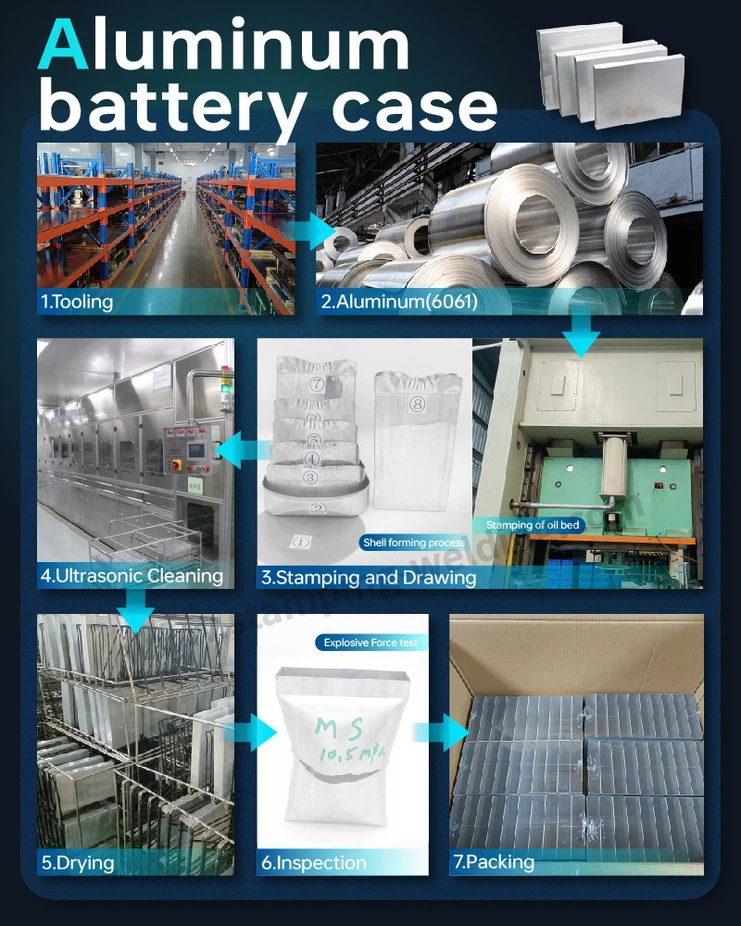
Based on the above deformation mechanism, a prevention and control system can be constructed from aspects such as material optimization, process improvement, internal pressure control, and process strengthening. In terms of material and structural optimization, the core idea is to improve the load-bearing capacity of Aluminum battery casing, which can be achieved by using 5052 aluminum alloy with higher tensile strength, adding 0.5 to 1.0 mm high reinforcement ribs in the top cover area, and increasing the shell thickness to 0.8 to 1.0 mm.
At the same time, a composite welding structure combining laser welding and ultrasonic welding is adopted to reduce single point heat input and improve the stability of the welding area. The welding process improvement of Rechargeable aluminum shell needs to focus on fine control, adopting gradient power welding strategy (such as parameter combination of starting section 200 W/30 mm/s, middle section 250 W/25 mm/s, and ending section 180 W), and controlling the depth of the heat affected zone within 0.5 mm; At the same time, the continuous weld bead will be changed to segmented welding mode (5 to 8 mm per section), with a reserved 2 mm stress release zone, and the weld bead width will be increased to 1.2 mm to improve the weld bearing capacity.
The core strategy of deformation prevention and control: internal pressure control and process strengthening
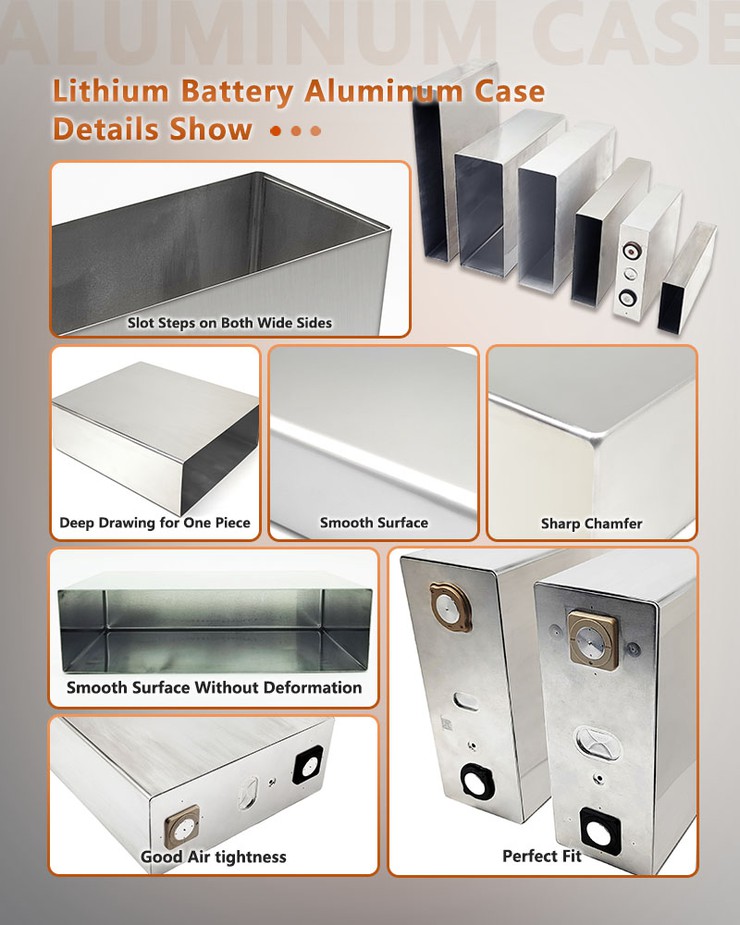
Internal pressure control needs to start from two aspects: expansion compensation and gas production suppression. In the design of the Lithium-ion battery aluminum shell structure, an elastic buffer layer with a compression rate exceeding 50% can be installed on the inside of the cover plate, leaving 0.5 to 1.0 mm of expansion space to reduce the pressure impact caused by negative electrode expansion; In terms of chemical system optimization, adding 1% to 2% FEC film-forming additives during the injection process can effectively suppress abnormal damage to the SEI film, control the gas production at full load within 0.5 ml/Ah, and reduce internal pressure accumulation from the source.
The strengthening of process control requires the introduction of intelligent technology, using a visual positioning system in the assembly process to control the positioning accuracy within ± 0.05 mm; At the same time, upgrade the welding fixture to constant force clamping mode to ensure that the clamping force fluctuation of 20 to 30 N does not exceed 5%, reducing the risk of deformation caused by assembly deviation. Add a pressure testing station during the formation stage, which will automatically sound an alarm when the pressure exceeds 5 kPa. Combined with X-ray detection of EV car battery shell deformation rate, the threshold will be controlled within 0.3% to achieve early identification and control of deformation problems.
contact us
If you encounter technical difficulties related to the Aluminum prismatic casing deformation or need process optimization support during the production process, please feel free to contact us through the platform, and we will provide you with professional solutions and technical consultation.