Distribution Cabinet Industry Guide: Product Types, Applications, Structural Differences, and Lifecycle Management
Nov 22, 2026
A low voltage distribution cabinet is an essential electrical assembly used for power distribution, circuit control, and fault protection. It is widely used in industrial plants, commercial buildings, data centers, substations, and renewable energy infrastructure. From power distribution for factory production lines and lighting control in buildings to power supply management in data centers, the structural configuration and operating conditions of distribution cabinets directly affect the reliability of the electrical system.
With the continued development of industrial automation and power infrastructure, distribution equipment is evolving toward modularization, intelligent monitoring, and application-specific design. Different applications have different requirements for cabinet dimensions, voltage ratings, protection performance, internal electrical components, and maintenance methods. Understanding distribution cabinet classifications, structures, selection criteria, and end-of-life management helps engineers and procurement professionals configure equipment appropriately and control total lifecycle costs.
Definition and Main Classifications of Distribution Cabinets
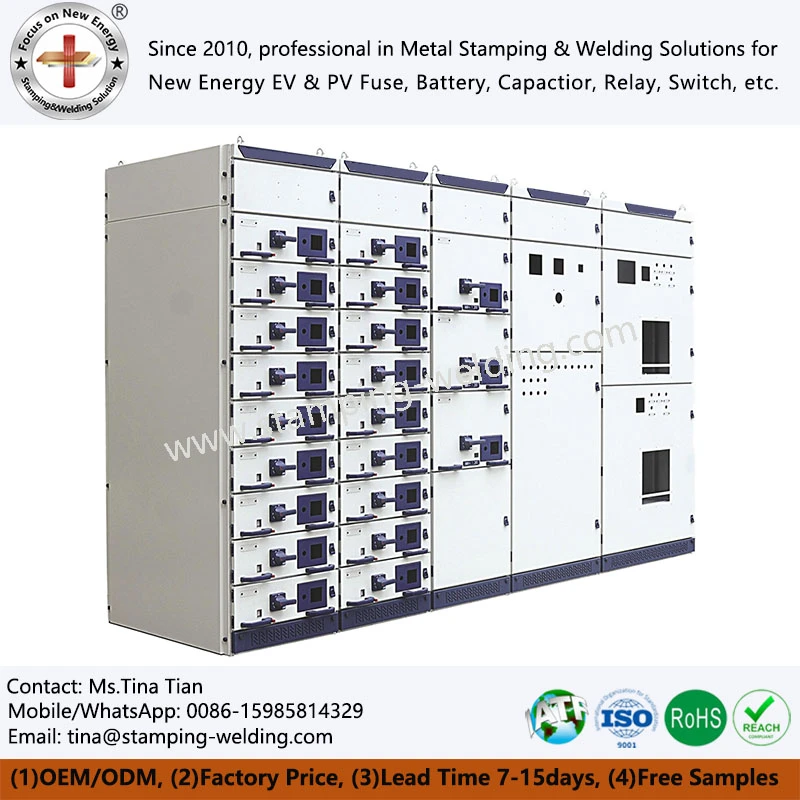
A distribution cabinet is a complete electrical assembly in which circuit breakers, contactors, relays, fuses, metering instruments, busbars, and auxiliary electrical components are installed inside an enclosure according to a specified design. Its primary functions include power distribution, circuit control, measurement, and electrical protection.
Based on voltage level and functional requirements, distribution equipment can be divided into the following categories.
1. High-Voltage Distribution Cabinets
High-voltage switchgear is used in power distribution systems operating above the low-voltage range. Typical applications include substations, power plants, industrial parks, and the power supply systems of large buildings. Common rated voltage levels include 3 kV, 6 kV, 10 kV, and 35 kV, depending on the electrical system design.
Internal components typically include circuit breakers, disconnectors, earthing switches, current transformers, voltage transformers, and protection devices. High-voltage switchgear has stringent requirements for insulation performance, mechanical interlocking, and operational safety.
2. Low-Voltage Distribution Cabinets
Low-voltage distribution cabinets are primarily used in AC systems rated at 1,000 V or below. They are commonly installed in factories, shopping malls, office buildings, hotels, and public facilities. Three-phase 380 V and single-phase 220 V systems are typical applications in many markets.
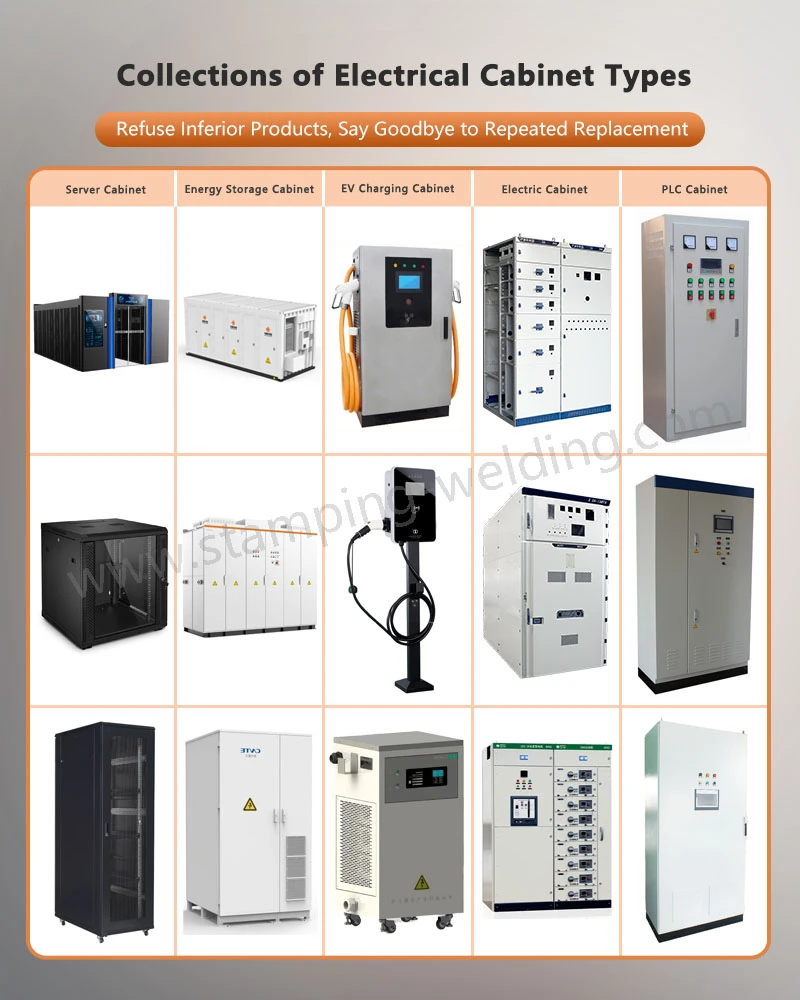
Depending on their structure and function, low-voltage distribution cabinets can adopt fixed or withdrawable designs. GGD is generally classified as a fixed low-voltage switchgear series, while GCK, GCS, and MNS are commonly used withdrawable low-voltage switchgear series. These models differ in enclosure structure, functional units, installation methods, and applicable operating conditions. Final selection should follow project specifications and the manufacturer's technical documentation.
3. Function-Specific Cabinets
According to the connected equipment and control requirements, distribution equipment can also be classified into power distribution cabinets, lighting distribution cabinets, capacitor compensation cabinets, metering cabinets, variable-frequency drive cabinets, and motor control cabinets.
For example, power distribution cabinets supply and control motors, pumps, fans, and other equipment. Capacitor compensation cabinets improve the power factor of an electrical system, while variable-frequency drive cabinets incorporate drives and associated protection components to meet specific motor operating requirements.
4. Outdoor Distribution Cabinets and Compact Substations
Outdoor distribution cabinets are installed in exposed environments. Their designs may require rain protection, dust protection, corrosion resistance, and temperature management according to site conditions.
A compact substation integrates a transformer, high-voltage distribution equipment, and low-voltage distribution equipment within an enclosure. It is a complete substation assembly and should not be treated as equivalent to an ordinary outdoor distribution cabinet.
How to Select Distribution Cabinets for Different Applications
Distribution cabinet selection should be based on voltage compatibility, load characteristics, environmental conditions, and appropriate protection configurations.
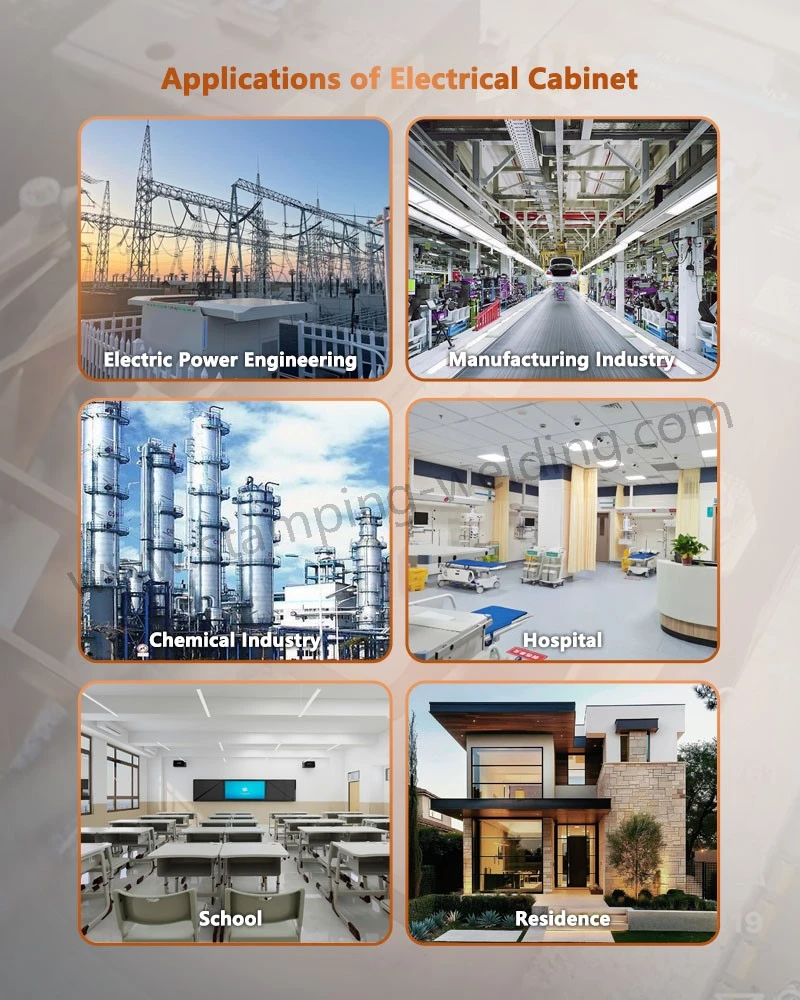
| Application | Common Equipment Types | Key Selection Considerations |
|---|---|---|
| Factory production lines | Low-voltage power cabinets, withdrawable switchgear | Load current, short-circuit protection, circuit maintenance |
| Shopping malls and office buildings | Low-voltage distribution cabinets, lighting cabinets, capacitor compensation cabinets | Circuit allocation, metering, space planning |
| Construction sites | Outdoor distribution boxes, temporary distribution cabinets | Enclosure protection, grounding, residual-current protection |
| Machine tools and industrial equipment | Electrical control cabinets, power control cabinets | Motor power, starting and stopping methods, control logic |
| Substations and power plants | High-voltage switchgear, low-voltage distribution cabinets | Insulation level, protection configuration, interlocking design |
| Data centers | Data center distribution cabinets, DC distribution equipment | Power redundancy, load monitoring, thermal management |
In factory production lines, withdrawable low-voltage distribution cabinets allow individual functional units to be maintained or replaced. However, maintenance must still follow the equipment operating procedures, including isolation, voltage verification, and safety confirmation. A withdrawable design does not automatically mean that all maintenance can be performed without interrupting power.
In commercial buildings, fixed distribution cabinets have a relatively simple structure and are suitable for systems with stable circuit configurations. For outdoor projects, particular attention should be paid to enclosure sealing, drainage, corrosion protection, and temperature-rise conditions.
Data center power distribution systems must also account for the power requirements of UPS systems, server racks, precision air conditioning, and auxiliary facilities. Distribution Cabinets for Data Centers are generally designed with consideration for load density, power redundancy, busbar configuration, and monitoring systems to support continuous data center operation.
Recycling Value and Compliant Disposal of Retired Distribution Cabinets
When a distribution cabinet reaches the end of its design service life, its main components become aged, or it can no longer meet the requirements of the existing electrical system, the operator needs to assess whether repair, modification, or complete replacement is appropriate.
Some materials and components in retired equipment may still have recycling or reuse value. However, safety isolation and technical assessment must be completed before dismantling.
The residual value of used distribution cabinets generally depends on the following factors.
1. Copper Busbars and Metal Materials
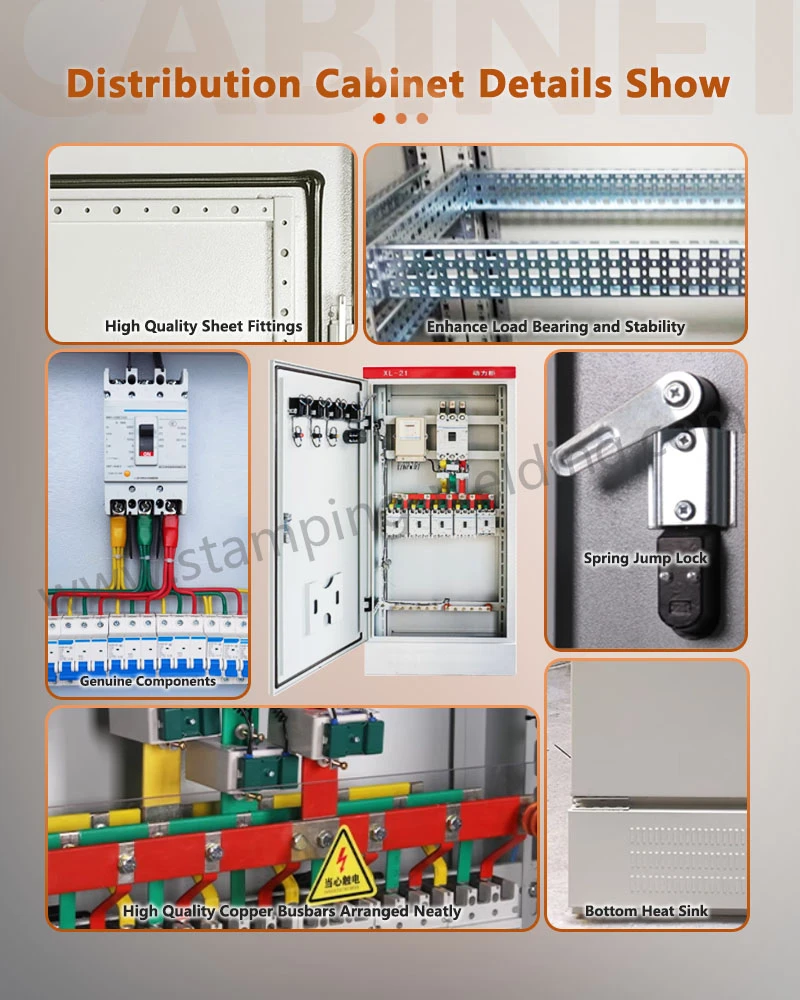
Copper busbars are among the important recyclable materials found in distribution cabinets. Their value depends on copper weight, material grade, dimensions, and prevailing market prices. Enclosure steel, stainless steel, and other metal components can also be sorted and recycled according to their material types.
2. Electrical Components
Circuit breakers, contactors, relays, and meters may have repair or reuse value if their models are identifiable, their physical condition is acceptable, and they pass the necessary inspections.
However, brand reputation or external appearance alone cannot establish the remaining service value of a component. Electrical components responsible for safety and protection functions must undergo professional testing before reuse.
3. Enclosure and Overall Structure
The condition of the enclosure also affects its reuse or recycling value. Relevant factors include deformation, corrosion, the condition of doors and hinges, and the integrity of internal mounting structures.
4. Equipment Documentation and Condition Records
Nameplates, product models, electrical diagrams, maintenance records, and inspection reports help verify equipment parameters and operating history, improving the accuracy of end-of-life assessments.
It is important to note that the recycling price of used distribution cabinets cannot be determined simply by volume or weight. Complete equipment, reusable electrical components, and dismantled metal materials require different valuation methods. Equipment containing capacitors, electronic modules, or other special materials should also be sorted and processed in accordance with applicable environmental regulations.
Retired distribution cabinets, high-voltage switchgear, transformers, and other power facilities must be disconnected, verified as de-energized, discharged where necessary, and dismantled by qualified personnel. Residual electrical charges, stored-energy mechanisms, and other potential hazards must be identified and controlled before disposal to prevent electric shock and mechanical injuries.
Distribution Cabinet Service Life and Maintenance Management
There is no single service life that applies to all distribution cabinets. Actual operating life is affected by ambient temperature, humidity, dust, load level, component quality, and maintenance frequency.
Under normal indoor conditions, equipment can operate for many years if the enclosure remains structurally sound, the load is appropriate, and maintenance is performed on schedule. However, the cabinet's overall service life does not mean that every internal component has the same remaining life. Circuit breakers, contactors, relays, and insulation materials may age at different rates depending on operating cycles, temperature rise, and environmental conditions.
Routine maintenance should focus on the following areas:
- Check the enclosure for corrosion, deformation, failed seals, and mechanical damage.
- Inspect busbars, terminals, and cable connections for looseness, abnormal temperature rise, or discoloration.
- Perform functional checks on circuit breakers and protection devices according to applicable requirements.
- Check insulation materials for aging, cracks, or signs of electrical discharge.
Verify the reliability of grounding connections and inspect the cabinet for dust accumulation, condensation, and foreign objects.
Confirm that smart meters and monitoring modules are collecting data and generating alarms correctly.
If equipment shows deteriorating insulation performance, frequent faults, severe corrosion, or failed protection functions, qualified personnel should conduct an inspection. Repair, modification, or replacement may be necessary depending on the results. Equipment should not be judged fit or unfit for continued operation solely based on its age.
Consult Our Electrical Engineers Today
Industry Development Trends: Intelligence, Modularization, and Lifecycle Management
With the development of industrial automation, data centers, and renewable energy infrastructure, the distribution cabinet industry is moving beyond conventional enclosure fabrication and electrical component installation toward system integration and intelligent operation management.
On one hand, intelligent monitoring technologies are increasingly being adopted in low-voltage distribution systems. Smart meters, sensors, and communication modules can collect operating data such as current, voltage, power, and temperature. This information supports load analysis and fault diagnosis.
On the other hand, modular design improves configuration flexibility and assembly efficiency. Standardized mounting units can reduce repetitive design work and simplify future expansion and maintenance. However, electrical interfaces, component dimensions, and protection coordination must still meet the requirements of the overall system.
In data center and telecommunications applications, power distribution and fiber management equipment are becoming increasingly specialized. Cable Distribution Cabinets are primarily used for cable and distribution connection management, while optical fiber distribution equipment must meet the requirements for fiber splicing, distribution, and line protection. Different products should be independently designed and configured according to their actual functions.
Future development in the distribution cabinet industry will place greater emphasis on electrical safety, structural reliability, operating data management, and maintenance accessibility. For manufacturers, sheet metal fabrication accuracy, welding quality, busbar connections, assembly consistency, and quality traceability remain important factors affecting the quality of complete electrical assemblies.
Conclusion
Low-voltage distribution cabinets are essential components of modern power systems. Their product types, enclosure structures, and electrical configurations must be selected according to voltage level, load characteristics, and installation environment. From residential distribution boxes and industrial low-voltage cabinets to high-voltage switchgear and data center power distribution systems, different products have distinct functions, structures, and safety requirements.
For engineering designers and procurement professionals, key considerations include rated electrical parameters, enclosure materials, busbar specifications, component configurations, protection ratings, and maintenance conditions. Product suitability should not be judged solely by external dimensions or purchase price.
For retired equipment, electrical safety inspections, component condition, recyclable metal materials, and environmental requirements should all be considered during the assessment. Through appropriate equipment selection, scheduled maintenance, and compliant disposal, businesses can manage distribution equipment more effectively throughout its entire lifecycle.
contact us