How to Choose an Energy Storage Backup System for Factories with Unstable Grid Power
Nov 19, 2026
For manufacturing enterprises, the quality of grid power directly affects the operational stability of production equipment. Voltage sags, brief power interruptions, frequent outages, and harmonic interference can trigger equipment alarms, cause control systems to reboot, disrupt production lines, and even lead to the scrapping of semi-finished products or damage to precision machinery.
An energy storage backup system provides emergency power to designated loads during grid anomalies. It can also be integrated with photovoltaic (PV) power generation, peak-valley tariff management, and demand-side control to optimize a facility's energy consumption structure. However, because load characteristics, required backup duration, and power distribution conditions vary from factory to factory, one cannot determine a solution's suitability based solely on battery capacity or equipment price.
From an engineering perspective, selecting an energy storage backup system for a factory should focus on six key areas: load characteristics, power and capacity, switching mechanisms, battery technology, safety design, and long-term operation and maintenance (O&M).
Analyze Load Characteristics to Define the Scope of Backup Power
The first step in selecting an energy storage system is to identify which specific pieces of equipment require backup power, rather than simply configuring the system capacity based on the factory's total installed power.
Common loads in manufacturing enterprises can be categorized as follows:
| Load Type | Typical Equipment | Key Selection Considerations |
|---|---|---|
| Resistive Loads | Lighting, heating equipment | Continuous power, backup duration |
| Inductive Loads | Motors, water pumps, air compressors | Inrush (starting) current, instantaneous overload capacity |
| Precision & Control Loads | PLCs, industrial computers, testing instruments | Voltage stability, harmonics, switching time |
| Mixed Loads | Automated production lines, data acquisition systems | Load fluctuations, power factor, power supply continuity |
Notably, motors and compressors can generate significant instantaneous current upon startup-the magnitude of which depends on the motor type, starting method, and mechanical load. Therefore, the output capacity of the Power Conversion System (PCS) should not be determined solely by the rated power listed on the equipment nameplate; it must also account for startup surges and short-term overload requirements.
For PLCs, industrial control systems, and precision testing equipment, it is crucial to verify their permissible voltage deviation ranges and tolerance for power interruptions. If the equipment cannot withstand the brief power break that occurs during a switchover, consider using an online UPS or an energy storage architecture capable of providing seamless, uninterrupted power.
Calculating Power and Energy Capacity to Avoid Under-provisioning
Power and energy capacity are two distinct parameters to consider when selecting an energy storage backup system:
- Rated Power (kW): Determines the total load the system can support simultaneously, as well as its ability to handle equipment startup surges and transient power fluctuations.
- Energy Capacity (kWh): Determines the duration for which the system can provide continuous power to a given load.
During the design phase, you can estimate the required energy capacity based on the operating power of critical loads and the target backup duration:
Required Nominal Battery Capacity ≈ Critical Load Power × Backup Duration ÷ (System Discharge Efficiency × Usable Depth of Discharge)
For example, if the average power of critical loads is 100 kW and a 2-hour backup duration is required-assuming a system discharge efficiency of 95% and a usable battery depth of discharge (DoD) of 90%-the nominal battery capacity would be approximately 234 kWh. This figure serves only as a preliminary estimate; actual project design must also account for load variability, ambient temperature, battery degradation, auxiliary power consumption, and a safety margin.
Capacity design should also take the following three factors into account:
1. Load Coincidence Factor: Determine the actual simultaneous load based on production shifts and equipment operating patterns, rather than simply summing the nameplate power ratings of all devices.
2. Battery Degradation: Battery capacity changes over time due to charge-discharge cycles, temperature, and age; therefore, a capacity margin should be reserved based on the project's intended lifespan.
3. Future Expansion: If the facility plans to add production lines or expand the scope of backup power, evaluate the scalability of the Power Conversion System (PCS), battery interfaces, electrical distribution space, and control systems in advance.
For factories with large-scale loads and growing backup power requirements, consider implementing an installed modular battery energy storage system. A modular architecture facilitates phased deployment; however, before scaling up, it is essential to verify the compatibility of battery batches, system control strategies, and the conditions for parallel operation.
Selecting a Switching Method Based on Power Interruption Tolerance
Different industrial scenarios have varying tolerances for power interruptions; therefore, the switching method of an energy storage system (ESS) must align with the specific requirements of the load.
| Application Scenario | Power Supply Requirements | Key Considerations |
|---|---|---|
| Semiconductors & Precision Manufacturing | No unexpected power loss allowed for critical control equipment | Online UPS, seamless switching architecture |
| Automated Production Workshops | Minimize equipment downtime | PCS switching time, equipment restart characteristics |
| General Industrial Machinery | Short-term interruptions are acceptable | Overload capacity, backup energy reserves |
| Emergency Lighting & Security | Certain switching latency is permissible | Backup duration, system reliability |
It should be noted that while an energy storage system may support both grid-tied and off-grid modes, this does not guarantee zero-interruption power supply for all loads. Actual switching performance depends on the PCS topology, control strategies, switching equipment, protection configuration, and the inherent tolerance of the loads themselves.
If a facility also intends to leverage peak-valley electricity price differentials to reduce costs, or manage peak demand, it should opt for a solution that includes an Energy Management System (EMS). In such cases, clear priorities for backup power must be established to ensure that batteries are not over-discharged during cost-optimization processes, which could otherwise compromise their emergency backup capacity.
Consult Our Electrical Engineers Today
Selecting Battery Cabinets and System Architecture Based on the Operating Environment
Currently, Lithium Iron Phosphate (LiFePO4) batteries and lead-acid batteries are the most common technology choices for industrial backup power and energy storage projects.
Lithium Iron Phosphate (LiFePO4) Batteries
LiFePO4 batteries offer high energy density, a long cycle life, and superior thermal stability, making them well-suited for industrial projects that require extended backup duration or have constraints on installation space. When deploying a Lithium Iron Phosphate Energy Storage Battery Cabinet, key aspects to evaluate include cell specifications, battery cluster configuration, BMS (Battery Management System) protection strategies, thermal management, and fire safety design. For projects requiring the integration of batteries, inverters, and control systems, a LiFePO4 Battery Energy Storage System Cabinet is a viable option. When selecting such systems, one should look beyond mere battery capacity and also evaluate AC-side output power, DC voltage range, system efficiency, and the capability for both grid-tied and off-grid operation.
Lead-Acid Batteries
Lead-acid batteries offer a relatively low initial procurement cost and are based on mature, well-established technology. However, they are typically bulky and heavy; their cycle life and depth-of-discharge (DoD) capabilities must be assessed on a model-specific basis. For scenarios requiring short backup durations, operating under a limited budget, or where an existing maintenance infrastructure for lead-acid batteries is already in place, these may still be considered during the evaluation process.
Regardless of the battery chemistry chosen, it is essential to verify product test reports, cycle life specifications, operating temperature ranges, and safety certifications. When comparing cycle life data from different manufacturers, one must account for variables such as depth of discharge, ambient temperature, and charge/discharge rates (C-rates).
Determining Indoor or Outdoor Cabinet Solutions Based on the Installation Environment
Energy storage cabinets serve not only as enclosures for batteries and electrical equipment but must also meet requirements for environmental protection, heat dissipation, cabling, maintenance access, and overall environmental adaptability.
Indoor Energy Storage Solutions
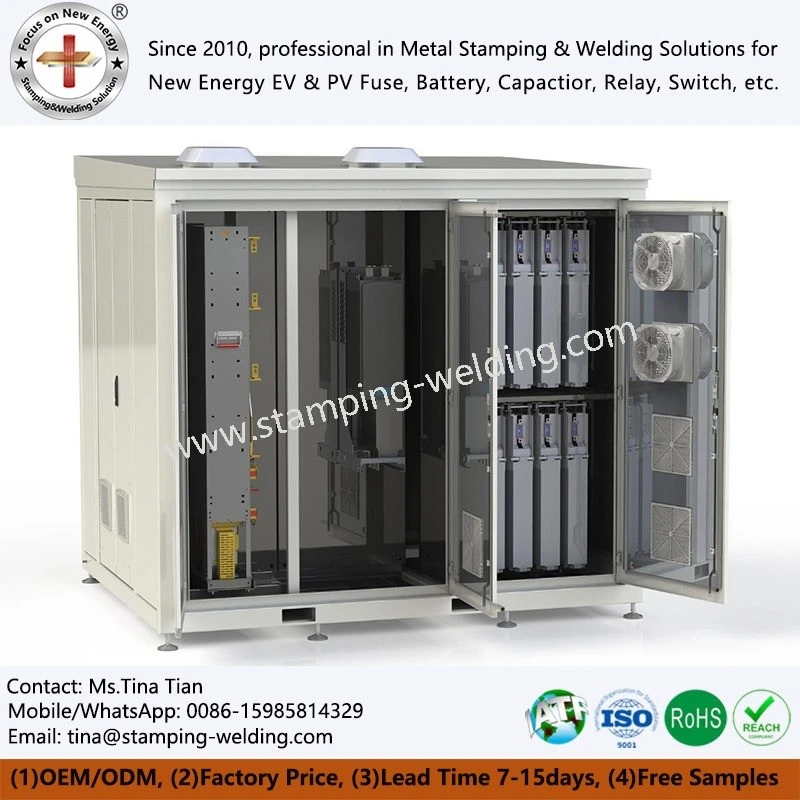
If the equipment is to be installed inside a factory building or a dedicated electrical room, an integrated indoor energy storage architecture-such as a Smart Power Station ESS Integrated Indoor Battery Solar Energy Storage Cabinet-should be considered. Key design considerations include ventilation and heat dissipation, space for equipment maintenance, fire compartmentalization, floor load-bearing capacity, and cable routing.
For projects that integrate photovoltaic (PV) power generation, energy storage batteries, and power conversion equipment, an Industrial Integrated Solar Energy Storage Cabinet (All-in-One ESS) may be an appropriate choice. The specific configuration should be determined based on the PV integration method, load requirements, and grid-connection standards.
Outdoor Energy Storage Solutions
For facilities lacking sufficient indoor space, an outdoor cabinet-type energy storage system is a suitable alternative. When selecting an outdoor cabinet, it is necessary to evaluate factors based on the local climate, including ingress protection (IP) ratings (dust and water resistance), corrosion resistance, thermal management systems, condensation control, and protection against solar radiation. If a project focuses primarily on energy storage paired with photovoltaic (PV) systems, the structural design of the solar battery enclosure cabinets must also account for battery mounting methods, DC connections, cable entry sealing, and future maintenance access.
Integrated Commercial and Industrial (C&I) Solutions
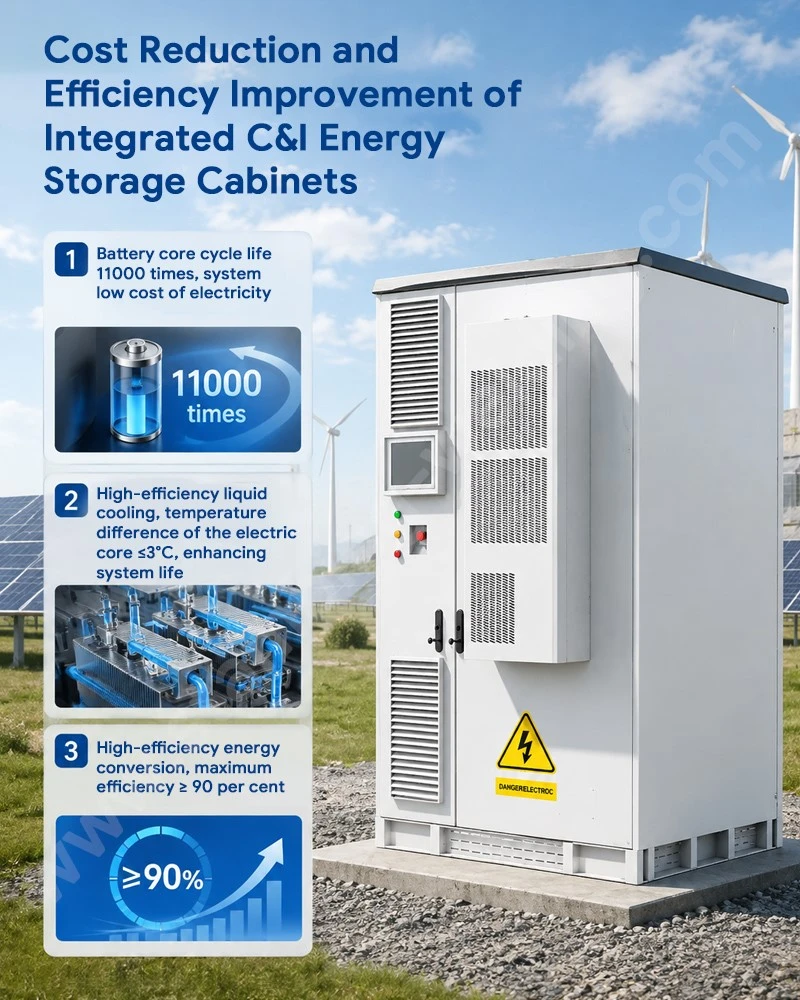
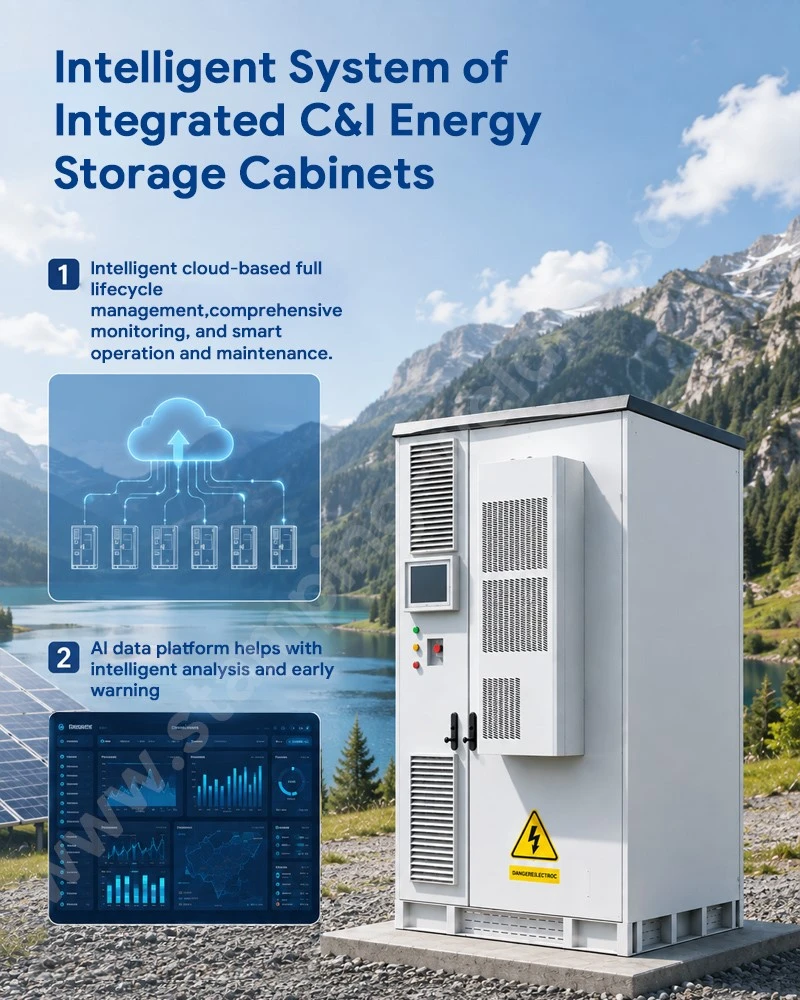
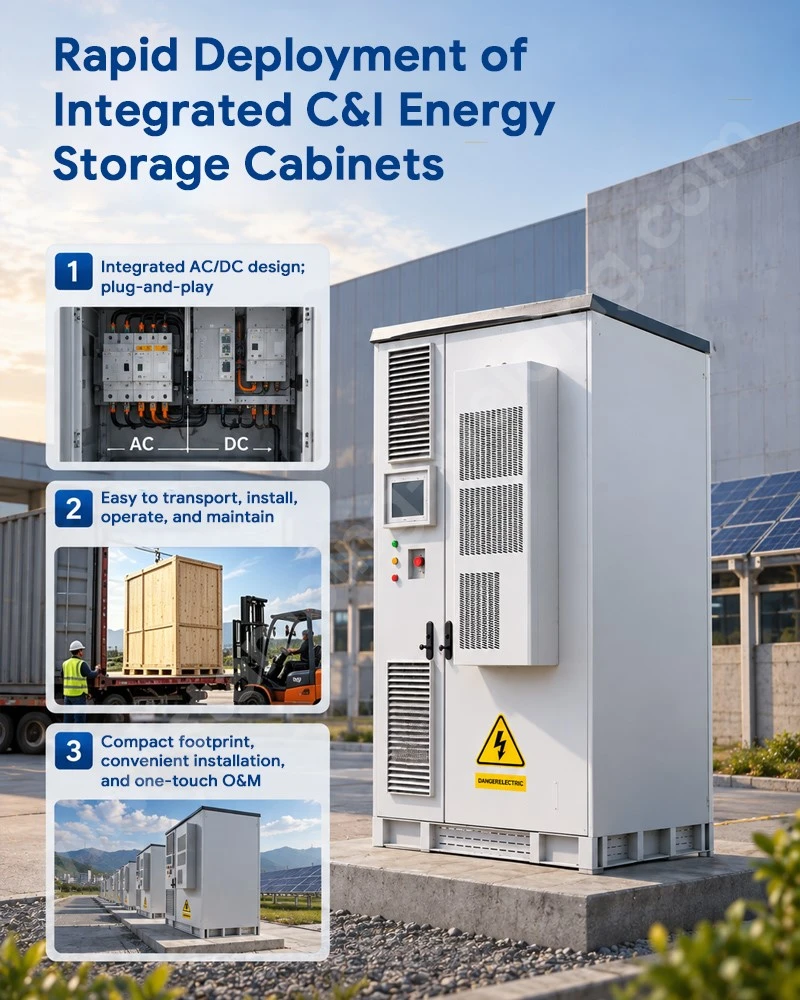
For enterprises with multifaceted requirements-such as peak shaving and valley filling, PV consumption (self-consumption), and backup power-an integrated commercial and industrial energy storage cabinet can serve as a model for evaluating the system's integrated architecture. When procuring such units, it is essential to verify whether the system includes a Power Conversion System (PCS), Energy Management System (EMS), Battery Management System (BMS), power distribution protection, and fire suppression equipment; this helps prevent interface mismatches between components from different suppliers.
Furthermore, some projects may reference cabinet configurations designed for specific battery models, such as those used for the Pylontech US5000. Any such reference must be based strictly on the dimensions, installation requirements, electrical parameters, and compatibility documentation provided by the battery manufacturer; one should never assume compatibility based solely on external appearance or capacity.
Conclusion: Defining Energy Storage Solutions Based on Actual Loads and Operating Conditions
Selecting an energy storage and backup power system for a factory requires starting with the critical loads. This involves calculating power and energy capacity requirements, defining switching (transfer) protocols, selecting appropriate battery technologies and cabinet structures, and verifying electrical protection, fire safety configurations, and long-term O&M requirements. For enterprises facing challenges such as unstable grid power, the integration of photovoltaic (PV) systems, and the need to manage electricity costs, it is essential to establish clear priorities between backup power provision and economic operational optimization. This ensures that the energy storage system (ESS) does not deplete excessive backup capacity during routine daily dispatch.
Prior to project implementation, it is recommended to compile a comprehensive load inventory and single-line diagram, analyze equipment startup characteristics, define target backup duration, and assess the installation environment. Subsequently, the ESS integrator should develop and verify the system design. Only by evaluating the batteries, power conversion system (PCS), control system, enclosures, and power distribution protection as an integrated whole can the energy storage system effectively meet the facility's requirements for power supply continuity.
contact us
For industrial engineering and procurement projects, contact our team with your load requirements, backup duration, installation conditions and technical drawings to discuss a customized LiFePO4 Battery Energy Storage System Cabinet solution for your facility.