Explanation of Energy storage system cabinet
Mar 31, 2026
Selection core: Building a solid safety bottom line with "working condition adaptation"
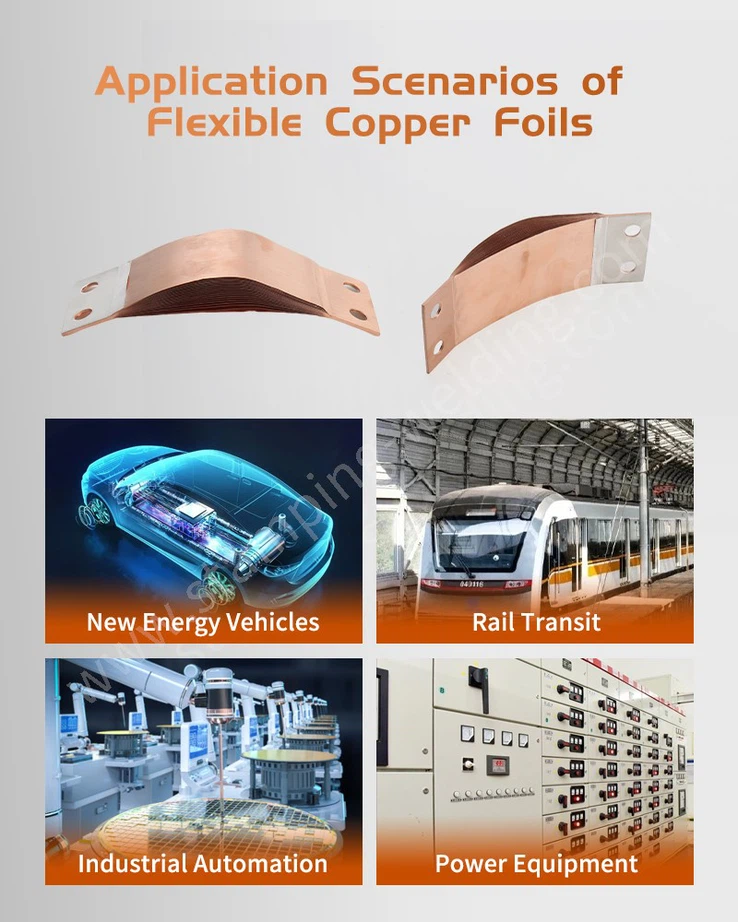
In high-voltage electrical systems such as new energy vehicles, energy storage equipment, and rail transit, Copper flexible busbars are a key hub for ensuring stable current transmission, absorbing vibration, and thermal expansion and contraction. Improper selection can easily lead to serious safety hazards such as heating, fracture, and arc light. There have been cases in the industry where the misuse of substitute products resulted in significant equipment maintenance losses due to metal fatigue after long-term operation. Therefore, the selection of Multilayer copper foil flexible busbars is not simply a matter of parameter stacking. Its core lies in "working condition adaptation", and specific requirements for flexibility, temperature resistance, and corrosion resistance in the operating environment must be prioritized as the first criterion for selection, in order to maintain the safety bottom line of the equipment.
Scenario orientation: selection focus of three typical working conditions
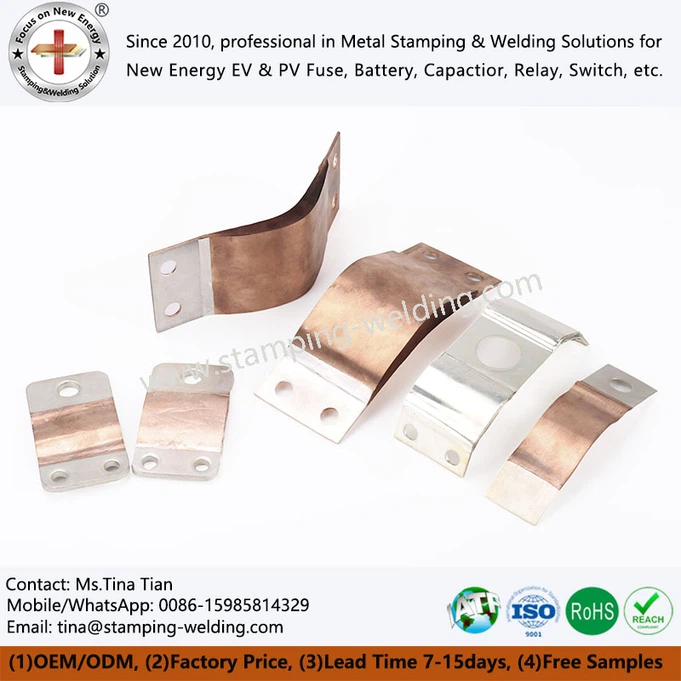
The performance requirements for connectors vary significantly in different application scenarios, and targeted design is needed. In vibration and shock scenarios such as new energy vehicles and rail transit, equipment needs to cope with high-frequency vibrations and frequent start stop impacts. Therefore, Copper flexible busbars with integrated structures should be prioritized, and multi-layer copper foils should be combined at the atomic level using solder free design to effectively disperse vibration stress, achieve micrometer level deformation compensation, and significantly improve bending life.
In high temperature and high voltage scenarios such as energy storage power stations and power plants, which operate under high current conditions all year round, the selection should focus on the thickness and layer combination of copper foil. It is recommended to use a T2 purple copper foil stack design with a specific thickness to ensure that the current carrying capacity of the Copper flexible bar is comparable to that of solid copper bars, while ensuring stable resistance and no local overheating at high temperatures through a flexible structure.
In compact space scenarios such as battery packs and precision electrical equipment, it is often required to achieve efficient conductivity within a very small thickness. In this case, ultra-thin copper foils need to be stacked to form a "copper book page" structure, which not only significantly increases the conductive area compared to solid copper in the same space, but also perfectly adapts to complex installation layouts through customized shapes.
Parameter locking: precise control of material processing and specification dimensions
After clarifying the scenario, it is necessary to accurately lock the core parameters to avoid selection errors. The basic material should preferably be high-purity T2 copper foil with a conductivity of not less than 98% IACS; In terms of surface treatment of Multilayer bus bars, nickel plating has high chemical stability and wear resistance, suitable for high temperature and frequent operation scenarios, while tin plating has excellent welding performance and is mostly used for internal connectors. In terms of specifications and dimensions, the cross-sectional area directly determines the current carrying capacity and must be strictly matched with the working current. At the same time, the position and diameter of the installation holes should be accurately matched with the equipment interface and reasonable tolerances should be reserved to cope with the small displacement caused by thermal expansion, contraction, and mechanical stress.
Process and validation: key indicators determining long-term reliability
The manufacturing process and extreme testing are the ultimate guarantees for the lifecycle of Copper laminated foil busbars. In terms of welding technology, traditional argon arc welding has a heat affected zone that can easily lead to an increase in resistance, while advanced polymer diffusion welding techniques can achieve seamless integrated connections, reducing long-term maintenance failure rates from the root.
In terms of environmental resistance performance, it is necessary to verify whether the product meets the requirements for wide temperature range operation based on actual working conditions, whether it can pass the sine sweep vibration test at a specific frequency, and whether the insulation resistance meets the standard in high temperature and high humidity environments.
Finally, compliant Laminated flexible busbars must rely on supply chains with industry qualifications, and each batch of products must undergo strict physical and electrical performance tests such as withstand voltage, temperature rise, resistance, and push-pull force, and provide detailed material testing reports to verify their compliance with safety standards in the new energy industry.
Contact us
If you need further professional support in the selection and matching of complex working conditions or process validation, please feel free to contact our engineering and technical team at any time. We will provide you with customized Copper flexible busbar solutions and detailed testing data to help your electrical system achieve safe and efficient connections.