Analysis of Standardized Process Flow
Mar 31, 2026
The Dip insulated copper bus bars production line is an automated system specifically designed for surface insulation and protection treatment of busbars, with a tightly connected core process flow. Firstly, pre-treatment processes such as acid washing, alkali washing, or shot blasting are used to thoroughly remove oil stains, rust, and oxide scales from the surface of the busbar. After washing and drying, it enters the heating stage. The mother busbar is heated to a temperature between 180 ℃ and 250 ℃ (depending on the material and powder characteristics), and then quickly immersed in a hopper containing thermoplastic powder such as PVC or PE.
By utilizing the residual heat on the surface of PVC dipping insulated busbar, the powder instantly melts and adheres, and the coating thickness is precisely controlled by adjusting the immersion time and powder particle size. Subsequently, the mother batch with plastic powder enters the curing furnace and undergoes cross-linking curing for 10 to 30 minutes in an environment of 160 ℃ to 200 ℃ to enhance the physical strength and chemical stability of the coating. Finally, the entire processing process is completed by rapidly cooling and shaping through air or water cooling systems.
Composition of key equipment systems
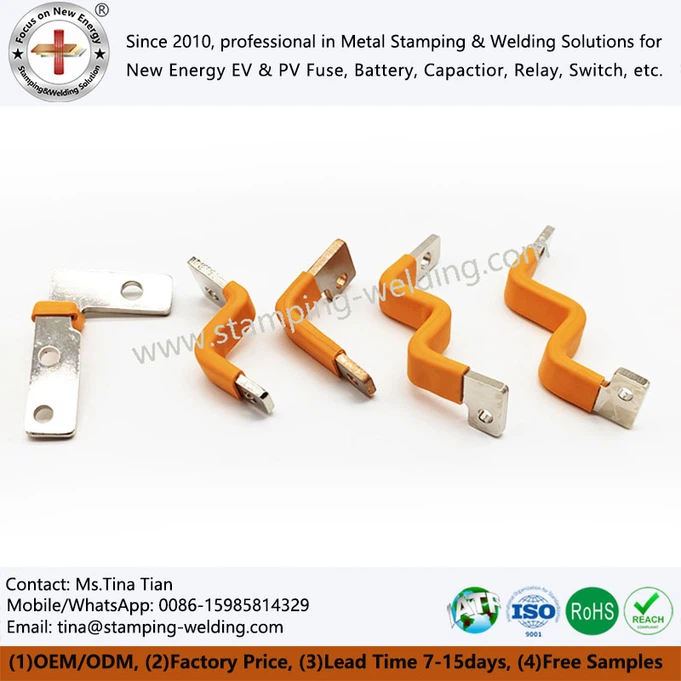
To achieve continuous and high yield production of the Dip insulated copper bus bars process mentioned above, the dipping line is composed of multiple highly collaborative functional modules. The pre-treatment section is equipped with acid washing tanks, alkali washing tanks, water washing tanks, and drying machines to ensure absolute cleanliness of the substrate surface; The heating section usually uses an oven or infrared heating furnace to achieve precise closed-loop control of preheating temperature and time; The core of the dipping section is the dipping tank, which integrates powder fluidization and stirring devices inside to ensure uniform powder suspension and continuous supply; The curing section often uses a curing furnace with a hot air circulation system to ensure a uniform temperature field inside the furnace, allowing the Insulated custom copper bus bar with PVC dipping to fully crosslink. In addition, the entire line is equipped with chains or suspended conveyor systems to seamlessly connect various processes and achieve automated material flow between workstations.
Product performance and technological advantages
The Insulated flexible copper bus bar for power battery pack treated with immersion molding line exhibits significant technical advantages in comprehensive performance. Its primary feature is excellent electrical insulation performance, and the dense and pore free plastic powder coating can effectively block current leakage, greatly improving the safety margin of the electrical system. Secondly, it has strong physical protection capabilities.
The coating has high-strength corrosion resistance, wear resistance, and chemical resistance, which can resist the erosion of complex and harsh environments, significantly extending the service life of the busbar. In addition, the dipping process endows the Plastic dipping copper busbar with a smooth and uniform surface appearance, and supports multi-color customization, possessing a good industrial visual aesthetic. Compared to traditional coating processes, automated dipping lines eliminate manual intervention variables and have extremely high production efficiency and batch consistency.
Expansion of Industry Application Scenarios
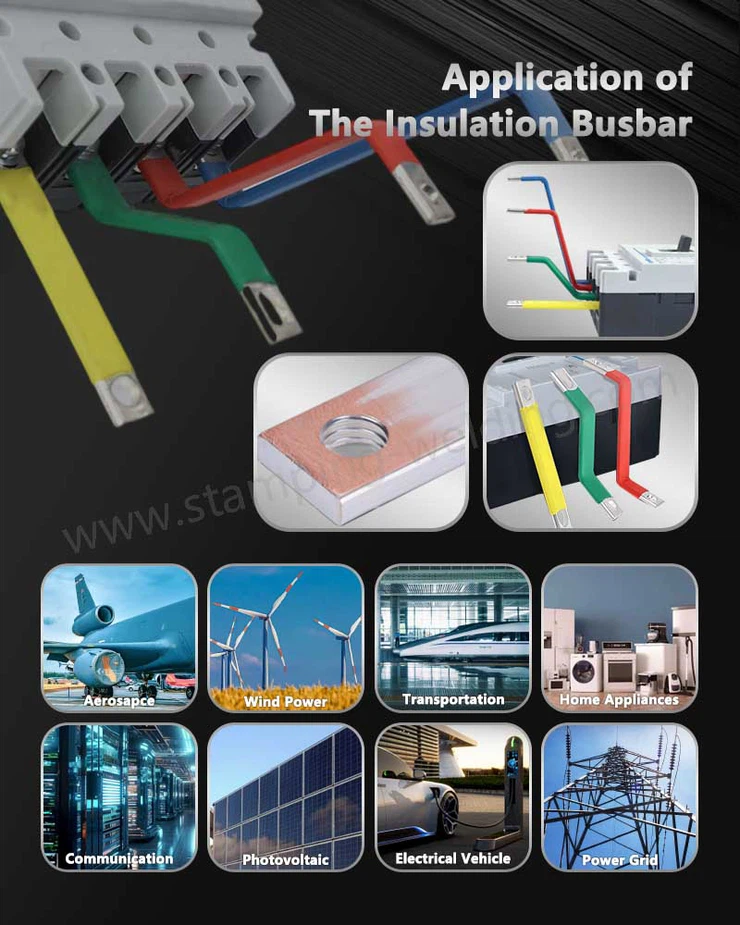
With excellent insulation and protection performance, the Plastic dipping electric copper busbar custom made process occupies an important position in the basic electrical and power industries. Traditional applications mainly focus on the insulation and protection treatment of busbars inside equipment such as distribution cabinets, distribution boxes, transformers, and high and low voltage switchgear. With the rapid development of the new energy industry and high-end equipment manufacturing, the application boundaries of this technology are constantly expanding. In sub fields with stricter requirements for insulation level, weather resistance, and environmental adaptability, such as electrical connectors in new energy vehicle power battery packs and high-voltage conductive components in high-power charging piles, Dipping busbar for connection is playing an irreplaceable role and has become a key basic component to ensure the safe and stable operation of modern power electronic equipment.
contact us
If you need to obtain Dip insulated copper bus bars production line planning solutions or technical details for specific production scenarios, please feel free to contact us at any time. Our professional engineering team will provide you with practical and feasible insulation treatment solutions based on your actual process needs.