Industry Knowledge Analysis on Copper Row Plastic Insulation Processing Technology
May 24, 2026
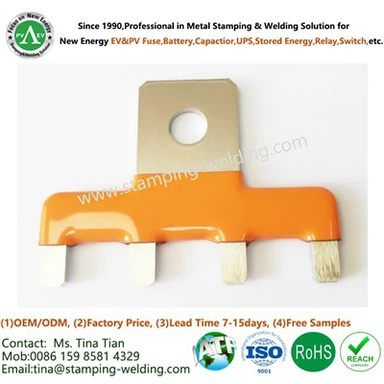
In the field of supporting power systems and electrical equipment, copper busbars have become an indispensable core conductive base material in large current transmission scenarios due to their excellent conductivity, stable ductility and extremely low resistivity. They are widely used in key scenarios such as complete power distribution devices, electrical control cabinets, power primary lines, and grounding systems. Compared with aluminum conductive base materials, high-purity copper materials have more advantages in current carrying capacity, fatigue resistance and conductive stability, and can adapt to complex operating conditions of high voltage and large current for a long time. In order to solve the industry pain points of bare copper bars being prone to oxidation, arcing, and insufficient insulation under humid, dusty, and corrosive working conditions, the industry generally adopts the dipping process to insulate and protect the surface of the copper bars. By fully covering the copper bar with a hot-melt plastic layer, the insulation level and environmental adaptability of the product are greatly improved while retaining the excellent conductive properties of the copper bar. PVC Dipping Insulated Busbar is the mainstream product type under this process and is widely adapted to various industrial electrical distribution scenarios.

process flow
In terms of process flow, the copper row immersion processing includes multiple key links. The first step is to clean the copper bus to remove surface burrs and oil stains to ensure the adhesion of subsequent coatings. Then according to the plastic dipping requirements of the product appearance, use iron wire to hang the copper bar on the plastic dipping bracket. Put the suspended copper bars into the oven to preheat, so that they can absorb enough heat to promote the adsorption of plastic on the surface when immersed in the plastic dipping solution. The preheating temperature and preheating time are determined according to the size of the copper bars. After preheating is completed, immerse the copper bar into the plastic dipping container. The immersion time is determined according to the thickness requirements of the required plastic dipping layer. The dipping liquid material is usually polyvinyl chloride (PVC), which has good weather resistance and electrical insulation properties.
After the dip molding is completed, the product is placed in the oven for plasticizing and molding. The plasticizing temperature is controlled between 180°C and 300°C. The plasticizing time is adjusted according to the size, thickness and hardness requirements of the product. After plasticizing and molding, air cooling is used to cool down until the product returns to normal temperature. Throughout the process, PVC Dipped Insulated Bus Bar and Insulated Flexible Copper Bus Bar for Power Battery Pack respectively address the insulation needs of rigid busbars and flexible busbars in power battery packs. The former focuses on the uniformity and voltage resistance of the hard insulating layer, while the latter achieves reliable adhesion of the impregnation layer while maintaining the flexibility of the copper bar.

technical principles
From the perspective of technical principles and core parameters, the dip molding process preheats the copper bar to a specific temperature and then immerses it in thermoplastic powder coating or molten plastic, so that the plastic melts and evenly adheres to the copper surface. After solidification, an insulation layer with a thickness of approximately 0.1 mm to 0.5 mm is formed. Key technical parameters include coating thickness, processing accuracy and copper purity. The coating thickness directly affects the insulation level, while high-precision processing ensures the fit of the copper bars and connectors, thereby reducing contact resistance. T2 copper is a common base material for plastic-impregnated busbars because its electrical conductivity and ductility are superior to ordinary copper materials and can meet the needs of large current transmission.
The surface of the dipped copper bar should be smooth and flat, without defects such as sagging or bubbles. The coating should be tightly bonded with the base material and the insulation performance should be stable. The insulating protective layer can withstand harsh environments such as moisture and salt spray, effectively extending the service life of the copper bus and reducing the risk of equipment failure. Based on these technical requirements, Plastic Dipping Copper Busbar and Plastic Dipping Electric Copper Busbar Custom Made provide two options: standard and customized. The former is suitable for conventional power distribution cabinet busbars, while the latter is dipped for copper bars with special shapes or special installation spaces.

Finished product testing
Judging from the quality of the finished product and the adaptability to working conditions, the high-quality plastic-impregnated copper busbars have extremely strong adaptability to working conditions. The coating is tightly integrated with the copper substrate, has no bubbles, no falling off, and no cracking problems. The appearance is smooth and smooth, and the weight deviation can be controlled within ±5%, which fully complies with industry quality certification standards. After many tests such as withstand voltage testing, insulation testing, and salt spray testing, the plastic-impregnated insulated copper busbars can adapt to complex and harsh industrial environments for a long time. The equipment failure rate is significantly lower than that of bare copper busbars. It can effectively reduce the operating loss and failure risk of power equipment and extend the overall service life of electrical equipment. At the same time, this process can be adapted to the insulation processing of conventional hard copper busbars and Soft Connection Copper Busbars, taking into account the protection needs of rigid distribution connections and flexible buffer connection scenarios, and its adaptability far exceeds that of traditional surface treatment processes.

contact us
If you need technical solution evaluation, sample trial production or batch supply, please contact our technical team. We will provide matching Insulated BusBar solutions based on your distribution system parameters and insulation requirements.