Analysis of new energy vehicle battery soft busbar industry knowledge
May 23, 2026
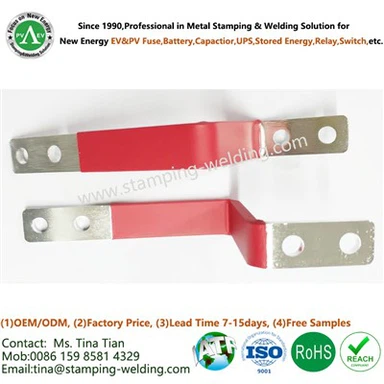
In the high-voltage electrical architecture system of new energy vehicles, the transmission of high-power electric energy from the battery pack to the electric drive assembly no longer relies on traditional solid wires and ordinary wire harnesses, but on flexible conductive connection components with more precise structures and more stable performance. The industry is collectively called battery soft busbars, and is also often called laminated soft busbars or flexible busbars. As the core connection carrier of the vehicle's high-voltage system, the soft busbar assumes the multiple functions of large current conduction, electrical isolation, electromagnetic suppression and structural flexibility adaptation. It can be called the core transmission network of the new energy high-voltage system. Compared with traditional hard copper busbars and ordinary wire harnesses, soft busbars rely on the advantages of low inductance, low temperature rise, and high adaptability brought by the laminated composite structure. They are perfectly adapted to the complex working conditions of high-frequency switching, large current impact, and continuous vibration of new energy vehicles. They are the key basic components to ensure stable power output of the vehicle and accurate operation of the electronic control system. EV battery busbars (new energy vehicle battery busbars) have also become the core standard category for power battery systems.

specific structure
This specific structure directly serves its core electrical function: efficient transmission and electromagnetic management. In terms of transmission, multi-layer flat conductors in parallel provide a large cross-sectional area. Compared with round conductors of the same cross-sectional area, their surface area is larger, which is conducive to heat dissipation and can carry continuous currents of hundreds to thousands of amps. In terms of electromagnetic management, carefully designed interlayer capacitors and compact structures can form a distributed decoupling capacitor network, which effectively suppresses high-frequency voltage spikes and electromagnetic interference generated when power devices switch, provides local energy buffering for sensitive components such as IGBTs in motor controllers, and improves system stability. Placing the soft busbar in the operating environment of the entire vehicle system further highlights its value. There is relative movement or vibration between the battery pack and the electric drive system of new energy vehicles, which makes it difficult for rigid connections to adapt.
However, the flexibility of the soft busbar allows it to bend and fold in a limited space, absorbing installation tolerances and structural deformation during operation, ensuring the long-term reliability of electrical connections. Its flat shape facilitates spatial arrangement in compact battery packs or electrical control boxes to achieve high power density integration. In these automotive applications, Busbar Automotive and Tin-plate Busbar Automotive represent, respectively, general-purpose automotive busbars and tin-plated automotive-specific busbars, the latter of which has additional advantages in corrosion resistance and solderability and is particularly suitable for high-voltage connection points that require frequent plugging and unplugging or are exposed to long-term vibration environments.

manufacturing process
From the perspective of manufacturing process and performance trade-offs, the production of soft busbars involves precision etching, lamination, welding and injection molding processes. The metal layer is patterned by etching to achieve specific current paths and connection terminals. The selection of insulation materials requires a balance between insulation, flexibility, thermal conductivity and long-term aging performance. The design process requires an optimal balance between multiple parameters such as current carrying capacity, inductance value, capacitive effect, mechanical bending life, cost and weight. For example, increasing the number of layers can reduce the equivalent inductance but may affect flexibility; choosing a thinner insulating film can enhance the capacitive effect but be more sensitive to process defects. In new energy electric drive systems, the busbar serves as a connecting conductive component to carry large currents. Its application has widely covered many fields such as electric power, communications, new energy vehicles, energy storage, and military industry. In new energy vehicles, busbars are mainly used in electric drive systems, including the connection of key components such as drive motor assemblies, motor controller assemblies and transmission assemblies.
These busbars form an efficient and reliable power transmission network. In inverter applications, DC-Link's positive and negative copper bars are a classic laminated busbar application scenario. The laminated structure reduces space and equivalent series inductance, thereby improving the efficiency and performance of the inverter. In high-voltage connectors or high-current transfer copper bars, the soft copper bar laminated structure is also used to absorb tolerances and ensure connection reliability. Among these technical directions, Tin Plated Copper BusBar for EV is specially designed for electric vehicle high-voltage systems. Its tin-plated layer improves oxidation and corrosion resistance while ensuring low contact resistance; busbar electric vehicle and ev battery busbar define the typical application form of soft busbar in electric vehicles from two dimensions: vehicle level and battery pack level respectively.

future trends
With the rapid development of the new energy vehicle industry and the increasing trend of electrification, the application range of soft busbars, as an important component in power transmission systems, is constantly expanding. From the material point of view, copper busbars are more commonly used because of their excellent electrical conductivity and mechanical strength, and surface treatment processes (such as tin plating) further improve their corrosion resistance. Whether it is the busbar electric vehicle as the core, or the soft copper bar stack used for high-voltage connectors or high-current transfers, the significance of its existence is to simultaneously solve multiple engineering challenges such as high-current transmission, space adaptation, vibration tolerance, and electromagnetic interference suppression through unique material and structure integration. In the future, with the iteration of technology, soft busbars will play a more critical role in improving the overall efficiency and long-term operation stability of electric drive systems.

contact us
If you need technical solution evaluation, sample trial production or mass supply, please contact our technical team. We will provide a matching EV Capacitor Busbar solution based on your electric drive system parameters and assembly requirements.