Analysis of laminated busbar industry knowledge
May 24, 2026
definition
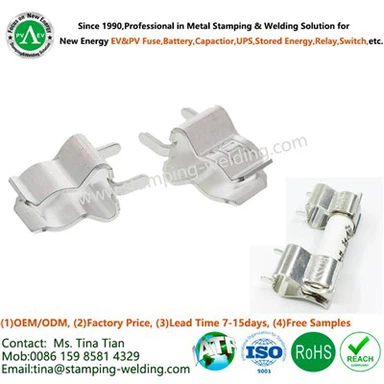
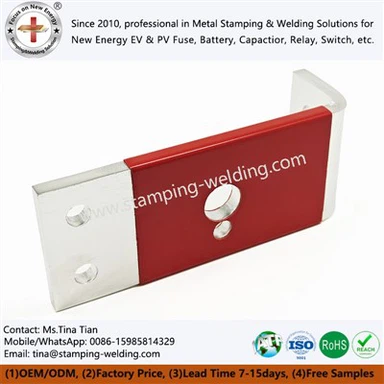
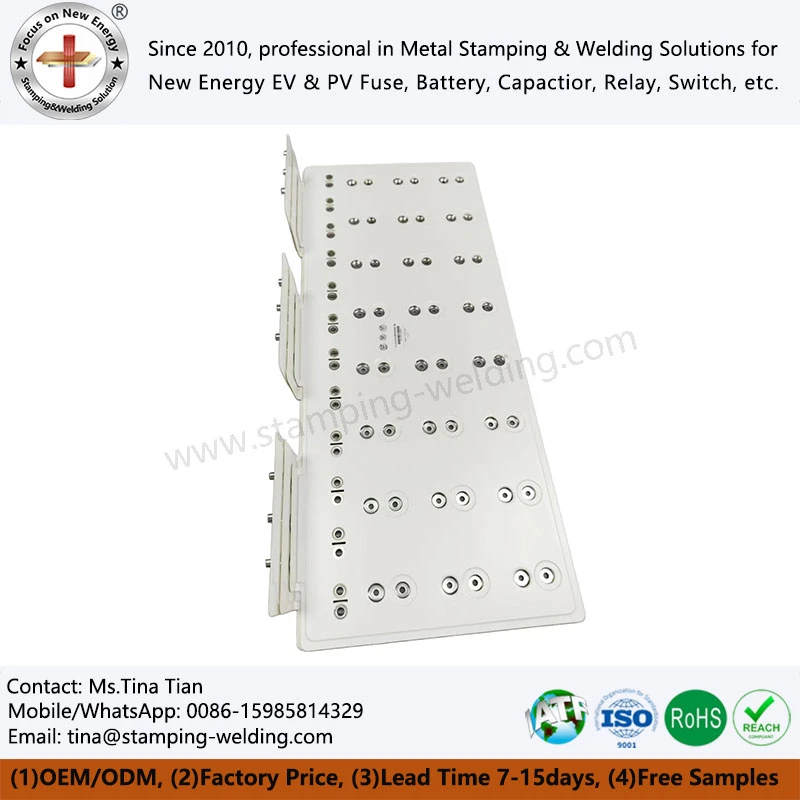
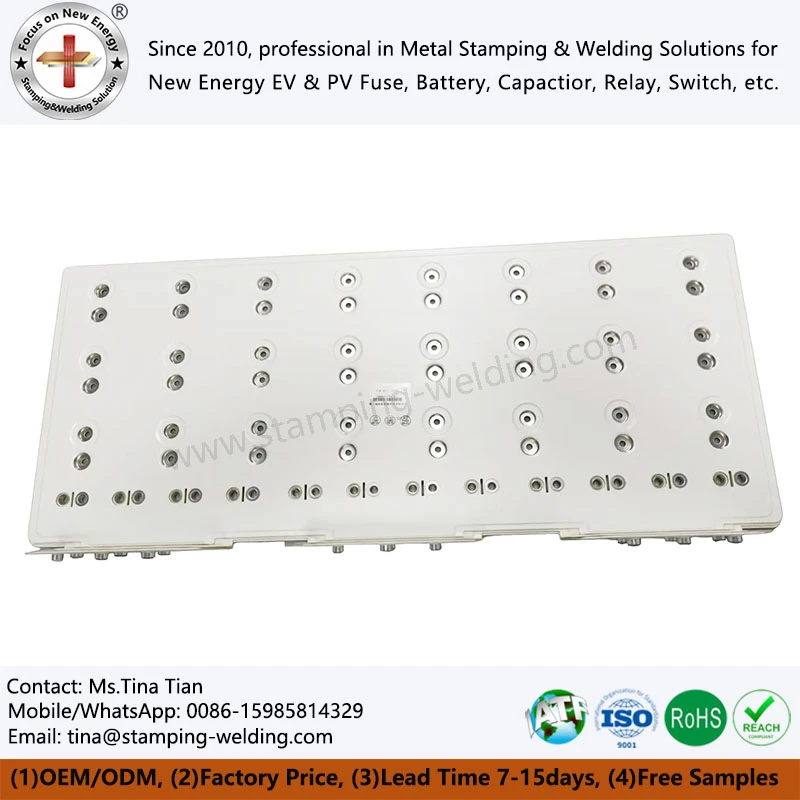
Laminated busbar, also known as composite busbar, is a low-inductance, modular multi-layer composite structure connection bar formed by alternate lamination of conductive layers and insulating layers through lamination technology. Its basic structure consists of a planar conductor layer, a planar dielectric and structural parts. Lamination or hot pressing technology is usually used to integrate multi-layer conductors and insulating materials into a whole. The conductive layer is usually made of metals with excellent conductivity such as pure copper, brass and aluminum alloys, while the insulating layer is made of materials with high dielectric coefficient and high breakdown voltage such as epoxy resin, polyester and aramid.
The low inductance characteristics of laminated busbars are mainly based on the principle of proximity effect: when the current source path and the ground plane or another conductor layer are stacked on each other, and the distance between the two is much smaller than the width of the busbar, the high-frequency current will be mainly distributed on the internal plane of the adjacent conductor, and part of the high-frequency magnetic fields cancel each other out, thereby effectively reducing the equivalent loop inductance. In engineering applications, Laminated Copper Bar and Laminated Copper BusBar serve as the basic form of laminated busbars, providing compact and low-inductance power distribution solutions for various high-power-density power electronic systems.
Structures characteristics
In terms of performance characteristics, laminated busbars have high reliability and high safety. Insulation layers between multiple conductor layers provide electrical isolation and short-circuit protection, and the structure is sturdy, heat-resistant and wear-resistant. Its simple and compact design can use a small space to connect high-current and high-voltage components, thereby reducing the overall system cost. The laminated busbar has low impedance characteristics, which can improve the installation normal rate; low stray inductance and impedance can reduce voltage loss, reduce electromagnetic noise and suppress electromagnetic interference. The tailor-made modular structure provides a variety of interface options for easy installation and on-site service. The modular design makes assembly simple and fast. The laminated busbar achieves high current-carrying capacity with low voltage drop. Its laminated structure and thermally conductive insulating materials are conducive to heat conduction, making heat dissipation easier and temperature rise smaller.
It is particularly worth pointing out that for IGBT applications, laminated busbar technology can effectively suppress overvoltage spikes and reduce stray inductance by optimizing current path design and capacitor layout. The optimized busbar stray inductance can be as low as 21nH, which can significantly reduce the use of absorption capacitors, reduce system volume, and improve electromagnetic compatibility characteristics. In device-parallel applications, the static current-sharing performance of discrete devices when connected in parallel can be greatly improved by accurately positioning the AC bus point to match the self-inductance and mutual inductance of the parallel path. In these high-performance application scenarios, Laminated Copper Bar for IGBT-based Motor Drive and Capacitor Laminated Copper Bar for IGBT-based Motor Drive are specially designed for low-inductance connections between IGBT modules and capacitor banks and have become an indispensable part of the variable frequency drive system.

application fields
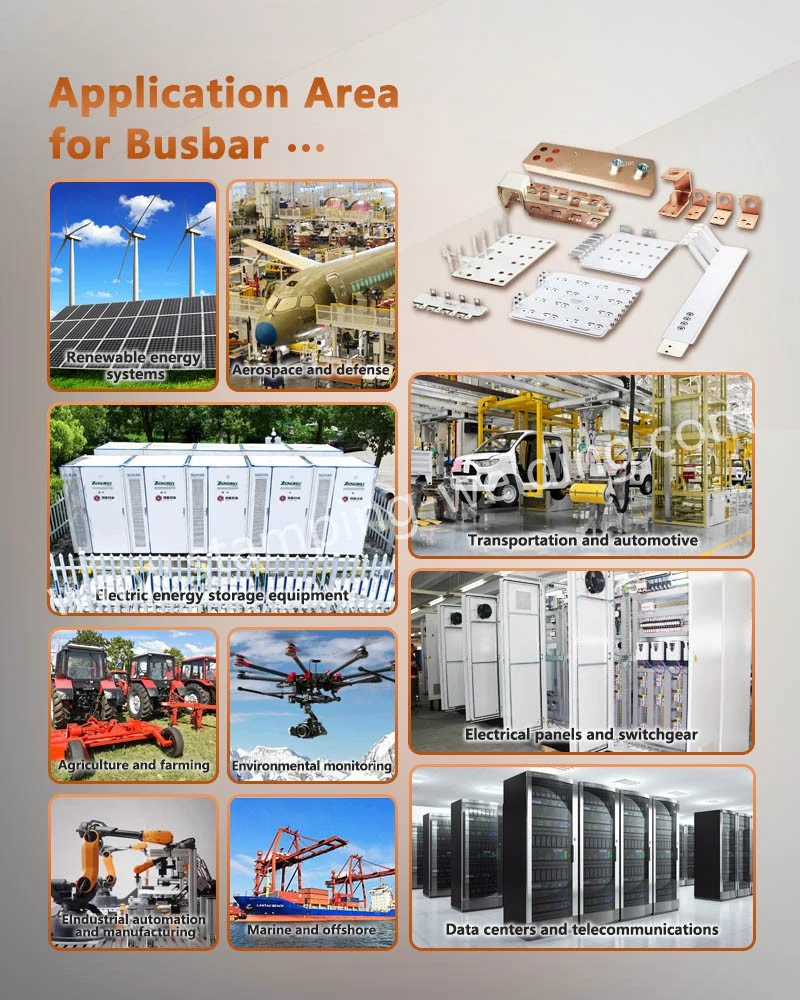
In terms of application fields, laminated busbars have been widely used in many fields due to their excellent electrical performance, heat dissipation performance, compact structure and high reliability. In the field of power electronics and energy, it is mainly used to connect IGBTs and capacitor banks in high-power converter systems to suppress overvoltage, power switching systems, power generation systems, and UPS systems. In the field of transportation, it is widely used in battery pack connections and power conversion modules for electric and hybrid traction equipment, rail transit, and new energy vehicles. The strong development of the electric vehicle industry has become an important driving force for market growth.
In the field of information and communication, it is suitable for cellular communication base stations, large-scale network equipment, telephone switching systems, and large and medium-sized computers. In industrial and special fields, it is used in welding systems and military equipment systems. Laminated Copper Bar for High Current Inverter and Laminated Copper Bar for High Current Circuit Board IGBT meet the special needs of high-current inverter and circuit board-level IGBT integration, providing high current carrying capacity and low parasitic parameter connection solutions; while Laminated Copper Bar for Spacecraft Power Inverter caters to the extreme environmental adaptability and ultra-high reliability requirements of aerospace-grade power inverter, representing the technical level of laminated busbar in high-end applications.
technology development
In terms of related research and technology development, for the low-inductance laminated busbar design of high-power converters, research is being conducted to reduce stray inductance by optimizing the current path to avoid loops and optimizing the capacitor arrangement. In terms of parasitic parameter analysis and current sharing optimization, the impact of parasitic parameter asymmetry of discrete device parallel laminated busbars on current sharing was studied, and static current sharing was improved by optimizing the bus point design to match self-inductance and mutual inductance. In terms of new processes and materials, research includes copper-aluminum bimetal cold-rolled composite processes that take into account performance and cost, as well as new multi-layer insulated composite busbar technology designed to improve bending performance, thermal conductivity and high and low temperature resistance.
In addition, national or industry standards have been issued for laminated busbars used in power electronics to regulate their production and inspection. Among these innovative directions, Laminated Copper Bar for Mounting Structure of Capacitor Bank focuses on the integration of the capacitor bank's mounting structure. By combining the busbar with the support structure, it further reduces system stray inductance and improves mechanical reliability; Laminated Copper Bar for High Frequency Welding Power IGBT targets the fast switching characteristics of IGBT in high-frequency welding power sources and provides a dedicated laminated busbar solution with extremely low loop inductance and excellent heat dissipation performance.
contact us
If you need technical solution evaluation, sample trial production or batch supply, please contact our technical team. We will provide a matching Laminated Bus Bar solution based on your system voltage level, current carrying capacity and stray inductance requirements.