How to Extend the Service Life of Aluminum Photovoltaic Bracket Accessories
Sep 17, 2026
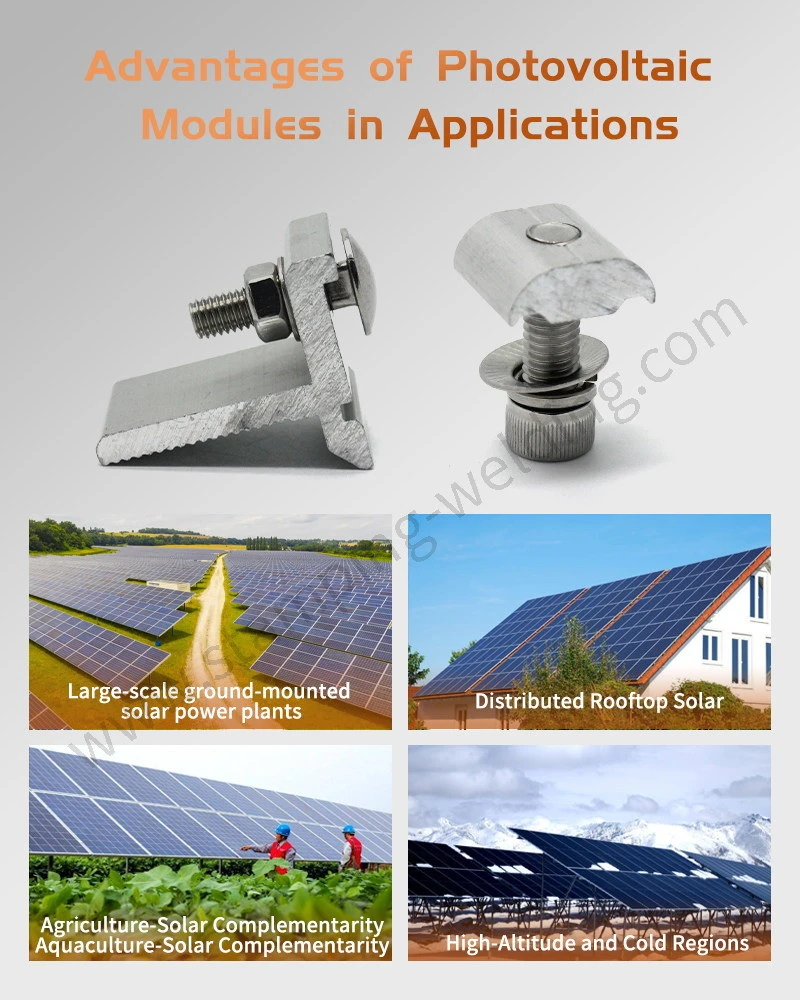
In solar photovoltaic (PV) systems, the mounting structure plays a critical role in securing modules, withstanding wind loads, and transferring loads to the foundation. While PV modules are often regarded as the system's "heart," the various mounting accessories-such as clamps, rail connectors, bolts, and gaskets-act as the "joints" and "ligaments" that maintain structural integrity and ensure long-term, stable operation. Despite their small size, these components are decisive factors in whether a PV plant can operate safely and efficiently throughout its design lifespan of 25 years or more.
Among the various materials used for mounting systems, aluminum alloys (particularly the 6063-T5/T6 series) have become the mainstream choice in the global market due to their high strength-to-weight ratio, excellent corrosion resistance, ease of fabrication, and cost-effectiveness. However, many project owners and installers fall into the misconception that "aluminum alloys never rust," leading them to neglect necessary maintenance and protective measures. In reality, while a dense oxide layer naturally forms on the surface of aluminum alloys, this layer can be compromised in specific environments-such as areas with high humidity, heavy salt spray, industrial pollution, or prolonged water accumulation-potentially leading to corrosion, pitting, and even structural failure. Therefore, a scientific understanding of corrosion mechanisms and the implementation of effective protective measures are essential to extending the service life of mounting accessories.
This article systematically analyzes the five key factors contributing to the aging of aluminum alloy PV mounting accessories. It also offers practical strategies for extending service life-covering material selection, installation standards, and routine maintenance-to help ensure your PV plant achieves a truly "worry-free 25-year" lifespan.
What factors are quietly shortening the lifespan of PV mounting accessories?
Galvanic Corrosion-The Most Common "Invisible Killer"
When aluminum alloy components come into direct contact with stainless steel bolts, carbon steel grounding wires, or copper cable lugs in environments exposed to rain, condensation, or salt spray, a galvanic cell circuit is formed. Because the electrode potential of aluminum is significantly lower than that of stainless steel or carbon steel, the aluminum acts as the anode and corrodes preferentially, producing a white powdery oxide (commonly known as "white rust"). In severe cases, this leads to loose connections and a drastic reduction in load-bearing capacity. Install insulating gaskets (made of materials such as nylon, EPDM rubber, or PTFE) between all dissimilar metal contact surfaces to break the electrochemical circuit. For grounding connections, use aluminum or tinned copper lugs and apply conductive paste to prevent direct copper-aluminum contact. In coastal areas or regions with heavy industrial pollution, it is recommended to use bolts with insulating sleeves or bimetallic washers (such as aluminum-stainless steel transition washers).
Crevice Corrosion and Pitting-Hidden "Ulcers"
If water, dust, or salt deposits accumulate in the crevices-such as between the bolt head and the profile surface, or at the overlap between the clamp and the rail-an oxygen concentration cell forms. The area inside the crevice has low oxygen content and acts as the anode, undergoing localized dissolution, while the area outside has high oxygen content and acts as the cathode, accelerating corrosion within the crevice. Once this type of corrosion begins, it often spreads deeply in an "ulcer-like" manner; because it is difficult to detect, it poses a significant safety risk. During installation, pre-drill drainage holes (6–8 mm in diameter) at locations prone to water accumulation, such as profile ends and areas beneath clamps, to ensure timely rainwater runoff. Seal crevices using neutral silicone sealant (acidic sealants are strictly prohibited as they corrode aluminum), but inspect the sealant regularly for aging or cracking.
Every six months, rinse the mounting system using a high-pressure water gun (at standard operating pressure) or a neutral cleaning agent, paying special attention to cleaning crevices and the internal cavities of the profiles.
Stress Corrosion Cracking (SCC)-A "Time Bomb" in Cold, Humid Regions
In environments characterized by high humidity, industrial acid rain, or coastal salt spray, high-strength aluminum alloys (such as 6061-T6 and 6063-T6) may undergo intergranular stress corrosion cracking when subjected to sustained tensile stress. This failure mode is sudden; components often fracture without warning, leading to accidents involving falling assemblies. T6-temper (peak-aged) aluminum alloys are preferred, as they offer superior stress corrosion resistance compared to T5-temper alloys. Bolt preload must be strictly controlled to avoid excessive tensile stress caused by overtightening. The use of a torque wrench is recommended, adhering to manufacturer-specified torque values (e.g., 20–25 N·m for M8 bolts). For projects in coastal areas with high salt spray exposure, it is recommended to use profiles with an anodized coating thickness of ≥25 μm (AA25) or apply a fluorocarbon (PVDF) coating to further enhance corrosion resistance.
Mechanical Wear and Fretting-"Chronic Fatigue" Induced by Wind Vibration
Photovoltaic power plants are exposed to the natural environment for extended periods. Wind-induced vibration (particularly at long-cantilever clamps) and thermal expansion/contraction caused by diurnal temperature fluctuations can induce minute relative sliding at bolted connections. This fretting wear gradually erodes the oxide layer, exposing fresh aluminum surfaces and triggering corrosion. Simultaneously, fretting causes a loss of bolt preload and exacerbates loosening, creating a vicious cycle of "wear–loosening–accelerated wear." Anti-loosening nuts (such as nylon-insert lock nuts) or thread-locking adhesives (e.g., Loctite 243) should be used to ensure bolts remain secure under vibration. Large flat washers should be installed beneath bolt heads and nuts to distribute stress and minimize localized indentation on the profile surface. After installation, a "torque mark" should be drawn with a paint marker across the interface of the bolt head and the profile to facilitate the rapid detection of loosening during inspections.
Three Core Strategies to Extend Service Life
Material Selection and Surface Treatment-Combating Corrosion at the Source
Option 1: Anodizing. Recommended coating thickness is ≥AA15μm (standard outdoor environments) or AA25μm (coastal or heavily polluted areas). High-quality anodic oxide films offer high hardness and wear resistance, as well as self-healing capabilities (the interior re-oxidizes if damaged). Option 2: Powder Coating. Use polyester (PE) or polyvinylidene fluoride (PVDF) powder coatings with a thickness of 60–120μm. PVDF coatings offer excellent weather resistance, making them ideal for regions with high UV radiation. Option 3: Bolt Selection. The use of standard carbon steel bolts is strictly prohibited for outdoor projects (even galvanized ones will fail within 5–10 years). A2-70 (304) or A4-80 (316) stainless steel bolts are recommended. For coastal projects, 316-grade stainless steel is the preferred choice; its molybdenum content significantly enhances resistance to chloride-induced pitting corrosion.
Installation and Maintenance-Details Determine Success
Excessive tightening can strip threads or crush profiles, while insufficient tightening leads to looseness. Always use a preset torque wrench and calibrate it regularly. Reference torque values: M6 (8–10 N·m), M8 (20–25 N·m), M10 (35–40 N·m). Professional inspections are recommended at least twice a year (before and after the rainy season). Key inspection points include checking for loose bolts (verify using alignment marks), aging or cracked gaskets, clogged drainage holes, and detached sealant. Clean using fresh water or a neutral detergent (pH 6–8) with a soft-bristled brush; strictly avoid acidic or alkaline cleaners (such as oxalic acid or caustic soda) and steel wool to prevent damaging the oxide film.
Structural Design Optimization-Prevention Over Remediation
Adding support posts to the mid-span of long rails (e.g.,> 6 m) can significantly reduce deflection and wind-induced vibration stress. Select profile cross-sections with internal drainage channels or pre-drill drainage holes at the lowest points of the profiles to prevent water accumulation within the cavities. For areas prone to dust accumulation, the tilt angle should be appropriately increased (e.g., from 15° to 20°)-while maintaining power generation output-to leverage rainwater for self-cleaning and mitigate the corrosive effects on the surface caused by dust adhesion.
Specialized Design for Environmental Adaptability and Industry-Standard Verification
For high-salinity/coastal areas:
Use marine-grade aluminum alloy (e.g., 6061-T6) with double-layer electroless nickel-phosphorus plating (25μm thickness), or a composite coating of hot-dip galvanizing plus powder coating.
For high-UV areas (high-altitude regions):
Select fluorocarbon paint (PVDF content ≥70%) with added UV absorbers (e.g., UV-531).
For areas with significant temperature fluctuations:
Use alloys with low coefficients of thermal expansion (e.g., 6063-T6) and incorporate slotted holes to accommodate thermal expansion and contraction.
Salt spray testing is conducted in accordance with the Neutral Salt Spray (NSS) method specified in GB/T 10125, requiring no base metal corrosion after 1,000 hours. UV aging tests are performed according to ISO 4892-3 (using UV-A 340 lamps) for 2,000 hours, with a required coating color difference value (ΔE) of ≤2.0. Mechanical load testing follows IEC 61215 standards, covering static loads (2,400 Pa) and dynamic loads (1,000 Pa, 10,000 cycles).

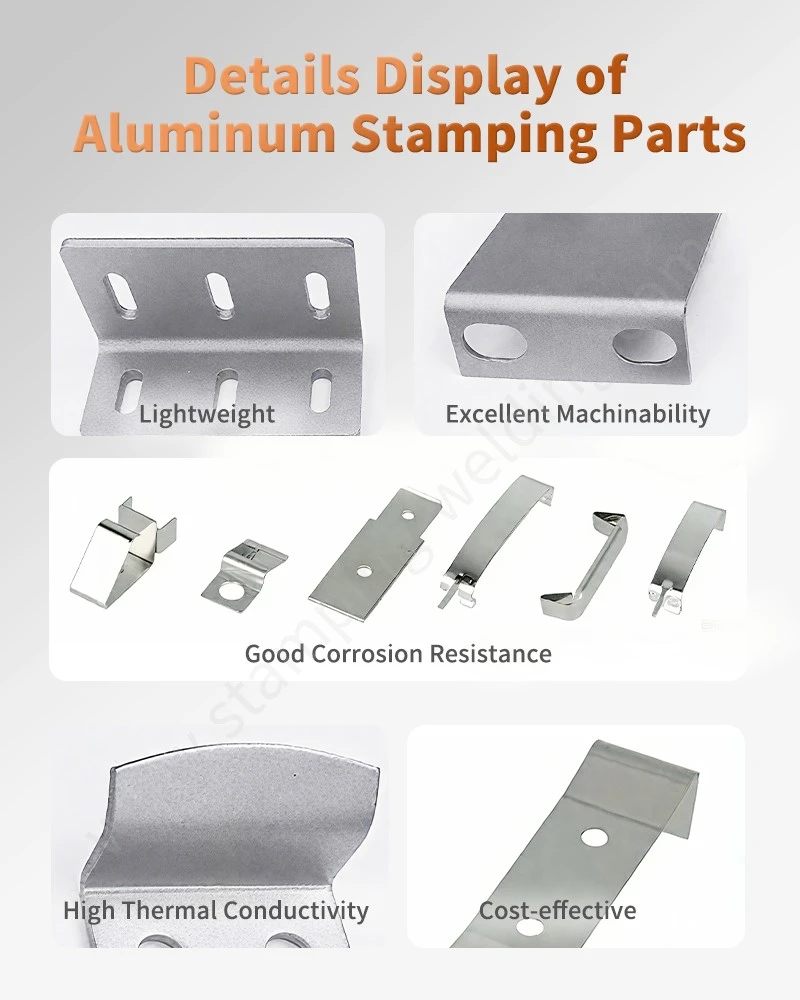
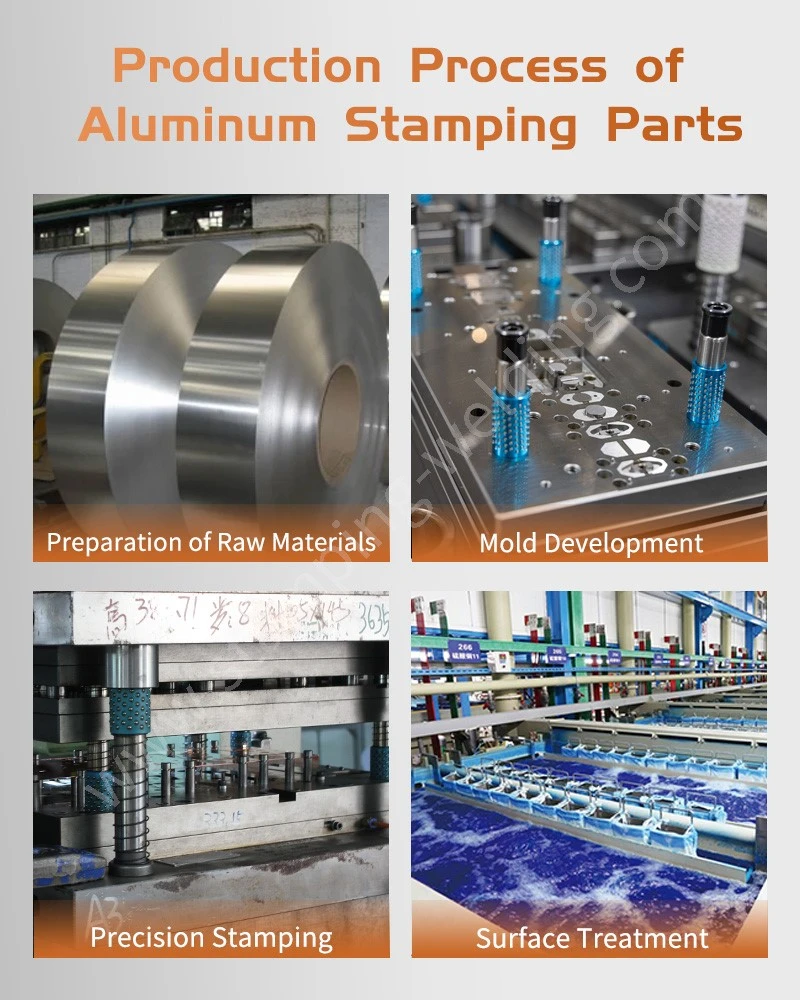
Typical Application Scenarios for Aluminum Alloy Stamped Parts in the Photovoltaic Industry
The mounting system primarily consists of main beam/purlin connectors and diagonal brace mounts, designed to achieve high tensile strength (≥230 MPa) and withstand wind pressure (e.g., 2400 Pa) and snow loads (e.g., 5400 Pa).
Module fixation components mainly include mid-clamps, end-clamps, and clamp spring clips; they feature elastic deformation of ≥1 mm and fatigue resistance (withstanding 100,000 cycles without fracture).
Electrical connection components include grounding clips (conductive clips) and cable clips, offering conductivity ≥55% IACS and contact resistance ≤0.5 Ω (to ensure grounding continuity).
Tracking system components consist of slew drive connectors and bearing housings, characterized by wear resistance (surface hardness ≥HV500) and high precision (tolerance ±0.1 mm).
Inverter/combiner box housings primarily comprise heat sinks and mounting brackets, featuring thermal conductivity ≥150 W/(m·K) and meeting the IP65 protection rating.
Through scientific material selection, standardized installation, and regular maintenance, you can extend the service life of aluminum alloy PV mounting components from the standard 15 years to over 25 years-perfectly aligning with the design life of the PV modules themselves. This represents not merely a technical investment, but a strategic safeguard for the power plant's long-term return on investment.
If you are planning a new PV project or looking to upgrade the corrosion resistance of an existing plant, please contact our engineering team. With over a decade of experience in the design and manufacture of PV mounting components, we offer: customized anti-corrosion solutions tailored to specific project environments (such as coastal areas, industrial zones, or alpine regions); selection of high-corrosion-resistance (C4/C5) aluminum profiles and stainless steel hardware; and installation guidance along with torque specification manuals.
Contact us today to receive a tailored solution and ensure your PV power plant achieves truly worry-free operation for 25 years.
Contact Us