Introduction to Heat Shrinkable Busbar Insulating Tape Product Types and Categories: From General Protection to Customized Solutions
Apr 26, 2026
In high and low voltage switchgear, substations, and high-voltage power distribution systems for electric vehicles, bar insulation is a crucial element in ensuring electrical safety and equipment compactness. Heat Shrinkable Busbar Insulating Tape, a type of polymer insulation product that shrinks and adheres tightly to the surface of the bar through heating, has been developed into various material types and specialized categories. This article, guided by product classification, introduces the technical characteristics, applicable scenarios, and selection criteria of different heat-shrinkable insulated bars.

Classified by material
Currently, heat-shrinkable insulated busbars on the market are mainly divided into three types of base materials:
- Polyolefin type: Represented by Heat Shrink Tube Polyolefin Bar, it has excellent electrical insulation properties (dielectric strength ≥25kV/mm), good flexibility, and aging resistance. This type of product typically has a shrinkage temperature of 100℃~125℃, and after full shrinkage, the wall thickness is uniform. It is suitable for reinforcing the insulation of switchgear busbars at voltage levels of 10kV and below.
- PVC type: PVC Insulation or Copper Busbar. PVC Insulation usually uses pre-formed heat-shrink tubing or extruded PVC sheaths. Compared to polyolefin, PVC material is lower in cost and has better chemical corrosion resistance, but its temperature resistance is lower (usually ≤105℃), and flame retardant properties need to be achieved by adding flame retardants. Busbar with PVC Insulation is commonly used in low-voltage distribution cabinets or temporary insulation protection applications.
- PE type: PE Heat Shrink Tube Insulated Busbar is made of polyethylene material, which has higher low temperature impact resistance (normal operation at -55℃) and excellent resistance to environmental stress cracking, making it suitable for bar insulation in outdoor or cold-region substations.
Classified by structure and molding method
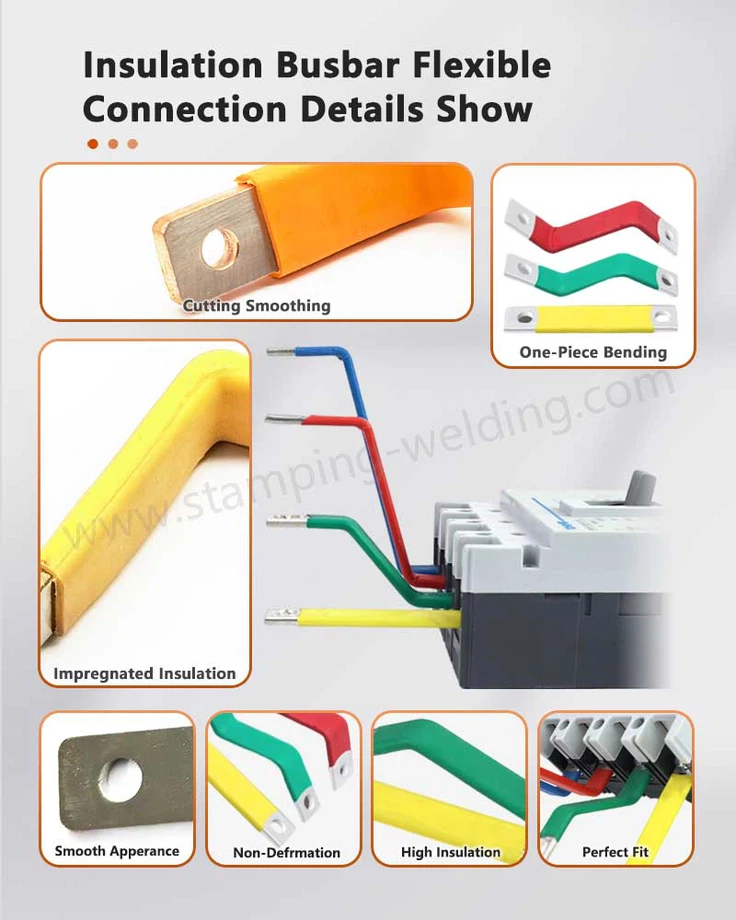
- Heat Shrink Tubing Type: This is the most common type, such as Heat Shrink Tubing and Busbar Sleeves Insulation. The factory prefabricates flat or round heat shrink tubing according to the bar width and thickness, which is then fitted on-site and heated to shrink. Heat Shrink Sleeves BusBar is also available with an adhesive double-wall structure; the inner hot melt adhesive flows during shrinkage, achieving a complete seal and preventing moisture from seeping in along the bar ends.
- Insulation Sheet Wrapped Type: Busbar Insulation Sheet is a sheet-like heat shrink material suitable for irregularly shaped bars or joints. It is cut on-site, wrapped around the bar, and then heated with a heat gun to shrink and adhere. This type of product is particularly suitable for local insulation reinforcement at bar bends and overlaps.
- Solid Insulation Tubing Type: Solid Insulation Tubing Busbar uses cross-linked polyolefin or silicone rubber materials and has a thicker wall (typically 2-4mm). It can directly replace the stacking of multiple layers of heat shrink tubing and is used in high-voltage (35kV) or applications with extremely high mechanical protection requirements.
Special categories are categorized by application area
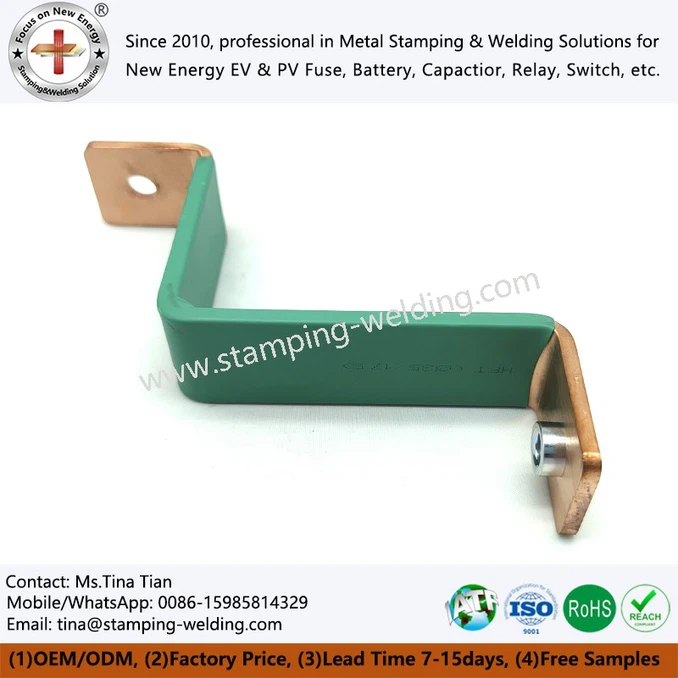
- Distribution Busbar Insulation: PVC busbar heat-shrink sleeves are widely used in 400V low-voltage switchgear, providing both insulation and phase color markings (yellow, green, red, blue, black). Bar insulating tubing is used in 6kV~35kV medium-voltage switchgear, typically requiring flame retardant ratings of VW-1 or FT1.
- Electric Vehicle High-Voltage Connections: In electric vehicle battery packs and high-voltage distribution boxes, EV Battery Connectors and Battery Terminal Bus Bars require high-temperature resistant and vibration-resistant insulated bars. Insulated copper busbars with heat-shrink tubing typically use double-layer polyolefin heat-shrink tubing, with an orange outer layer indicating high-voltage hazards and an inner layer providing insulation. The heat-shrink tubing for EV Battery Connectors must also meet UL 94 V-0 flame retardant and 125℃ heat resistance standards.
- Customized Solutions: For non-standard sizes or special shapes of bars, customized busbar insulating tubing can be pre-expanded, cut, and marked according to customer-provided drawings, significantly improving on-site installation efficiency.
Selection Comparison and Industry Trends
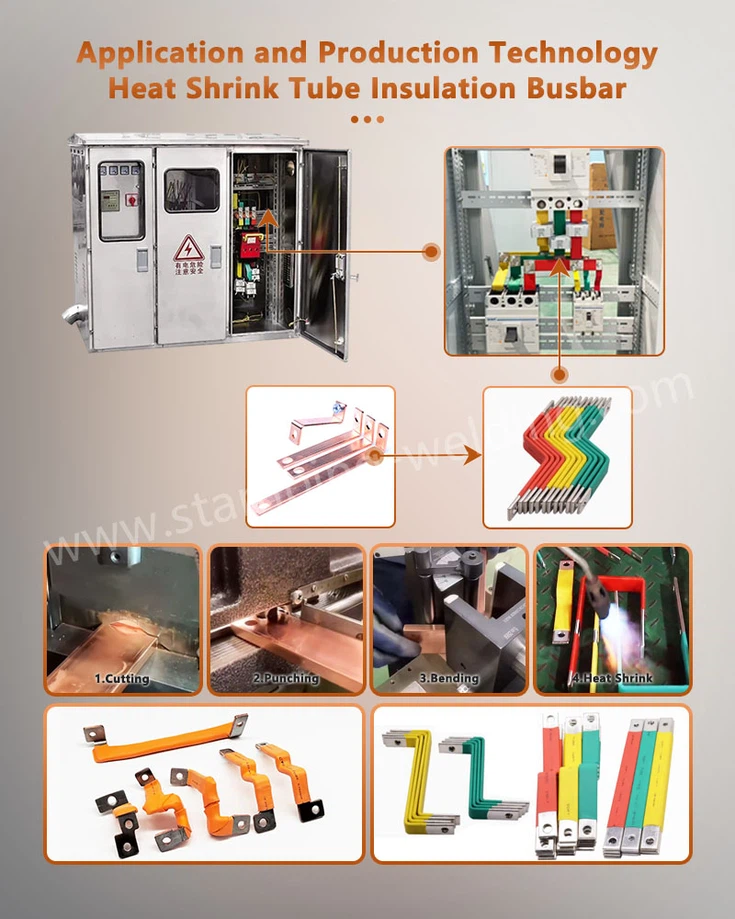
The core differences between different product categories lie in: temperature resistance rating (105℃ for ordinary polyolefins, 135℃ for high-temperature types), shrinkage ratio (2:1, 3:1, or 4:1), whether adhesive sealing is included, and color requirements. For example, "Heat Shrink Bar" refers to all heat-shrinkable busbar insulation products, while "PE Heat Shrink Tube Insulated Bar" is specifically designed for low-temperature environments. In the new energy vehicle sector, the heat shrink tubing used with EV Battery Connectors must pass needle flame and electrolyte corrosion resistance tests, which is significantly different from traditional power heat shrink tubing.
With the miniaturization of switchgear and the upgrading of high-voltage platforms in electric vehicles, Heat Shrinkable Busbar Insulating Tape are developing towards thinner walls, higher shrinkage ratios, and functional integration (such as inner temperature-sensitive color-changing layers and outer semi-conductive layers). Users can choose the most suitable product type from the above categories based on their actual voltage level, environmental conditions, and installation process requirements.
Contact Us
For samples of Heat Shrinkable Busbar Insulating Tape of different materials and specifications, or for customized solutions, please feel free to contact us.