Key points of Copper end cap fitting process and materials for photovoltaic and new energy vehicles
Apr 09, 2026
Typical processing techniques for Copper end cap fitting
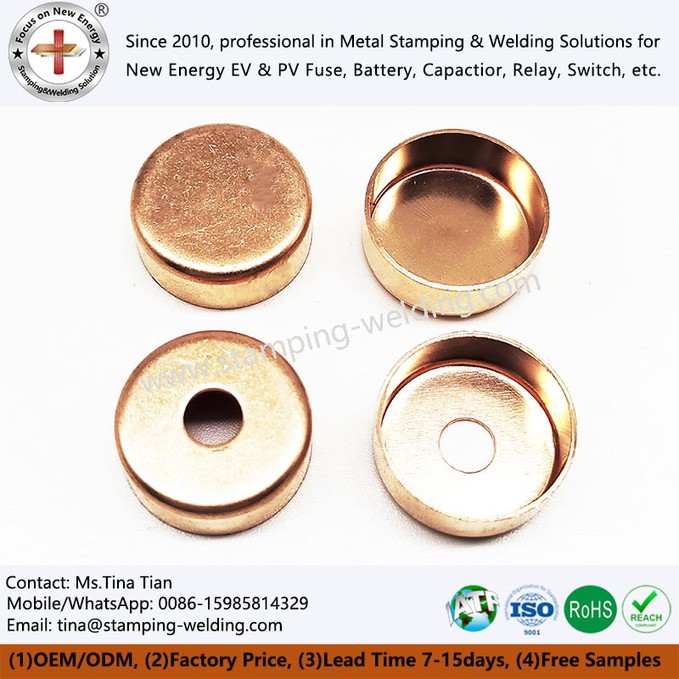
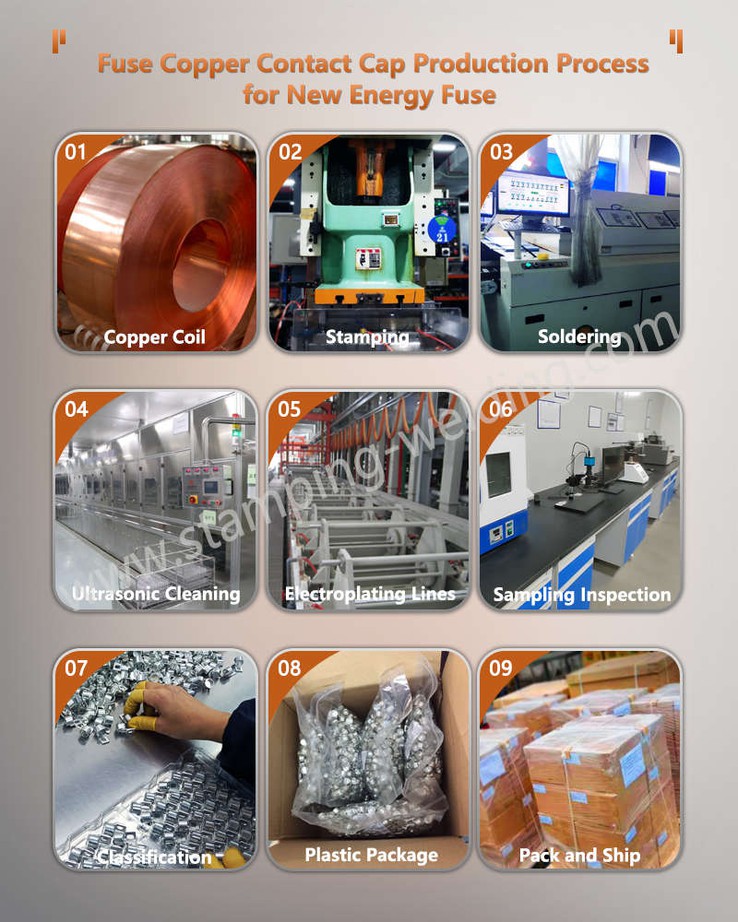
Copper press fit end caps are often produced using a combination of stamping and electroplating processes, with a mature and stable overall process that balances production efficiency and product performance. The conventional manufacturing process mainly includes key steps such as stamping, surface cleaning, electroplating treatment, precision forming, and finished product inspection of Custom copper caps, which can meet the requirements of conductivity, corrosion resistance, and structural strength in photovoltaic scenarios.
Detailed explanation of Copper end cap fitting core process
Firstly, the copper sheet is processed into an End cap copper base shape that meets the design specifications through the stamping process, ensuring dimensional and external accuracy; Subsequently, cleaning treatment is carried out to remove surface oil stains, impurities, and oxide layers, providing a good substrate for subsequent coating. Then, the conductivity and corrosion resistance of the Copper metal end cap are improved by tin plating or nickel plating, and the structural features such as protrusions and mounting holes are perfected through the forming process. Finally, the conductivity, corrosion resistance, and mechanical strength of the finished product are tested and qualified before it can be put into use.
Logic of Material Selection for Copper pipe cap in New Energy Vehicles
The material selection for the Copper pipe end cap of new energy vehicles is mainly determined based on the current carrying capacity, working environment, and industry standards. Copper has become the mainstream substrate for such components due to its excellent conductivity and low contact resistance. In practical applications, high-purity copper or copper alloys are often used to improve mechanical strength while ensuring conductivity.

The influence of working conditions and standards on materials
The onboard environment of new energy vehicles is characterized by high temperatures, vibrations, and potential corrosive media, which directly affect the material performance requirements of Fuse copper caps. In addition to basic conductivity, materials also need to have good heat resistance, corrosion resistance, and structural stability. The final selected material and specific indicators must match the fuse design requirements and relevant automotive industry standards and regulations.
Contact us
If you have customized or procurement needs for Copper end cap fittings in the field of photovoltaics or new energy vehicles, please feel free to contact us for consultation at any time. We can provide corresponding process solutions and material selection support based on different working conditions standards, and provide you with professional and reliable supporting solutions.