Strategic insights into the EV BusBar market: competitive landscape, growth factors and investment prospects
Apr 17, 2026
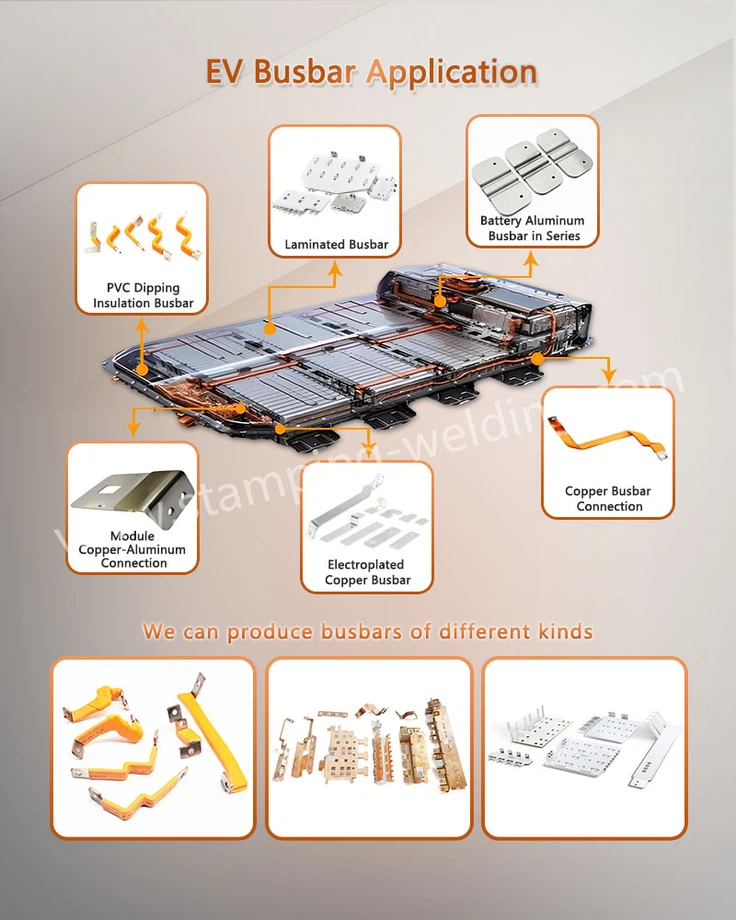
As the core conductive component in the high-voltage electrical architecture of electric vehicles, the busbar for new energy vehicles assumes the key function of transmitting high voltage and high current between battery packs, motors, inverters, on-board chargers (OBC) and high-voltage power distribution units (PDU). With the accelerated popularization of 800V high-voltage platforms, traditional wire harness connections are no longer able to meet the increasingly stringent electrification needs. The busbar has become the cornerstone of building a vehicle's high-voltage energy transmission channel with its low impedance, high current-carrying capacity and excellent heat dissipation performance. Especially in the current pursuit of ultimate efficiency and safety, the design of BusBar Car is no longer limited to simple conductive connections, but has evolved towards high integration, lightweight and excellent electromagnetic compatibility (EMC) performance, which directly affects the vehicle's dynamic response and system stability.
Market segmentation and technology evolution
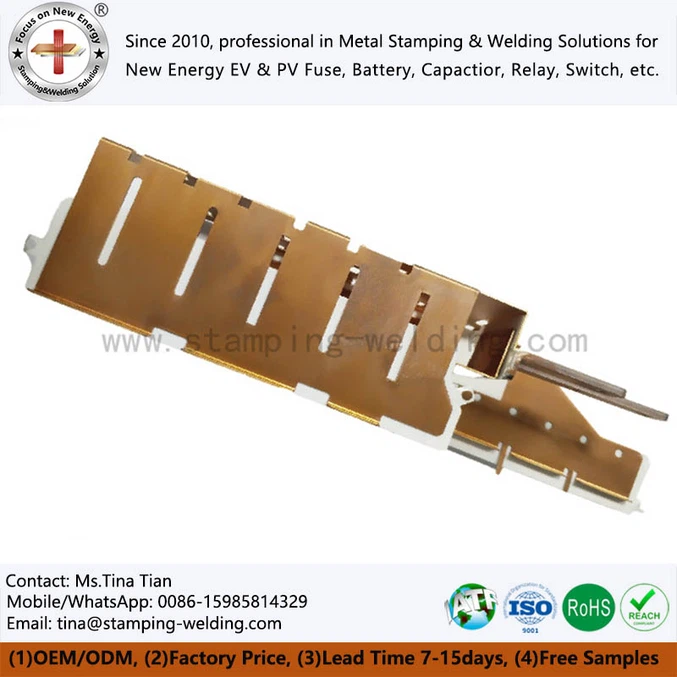
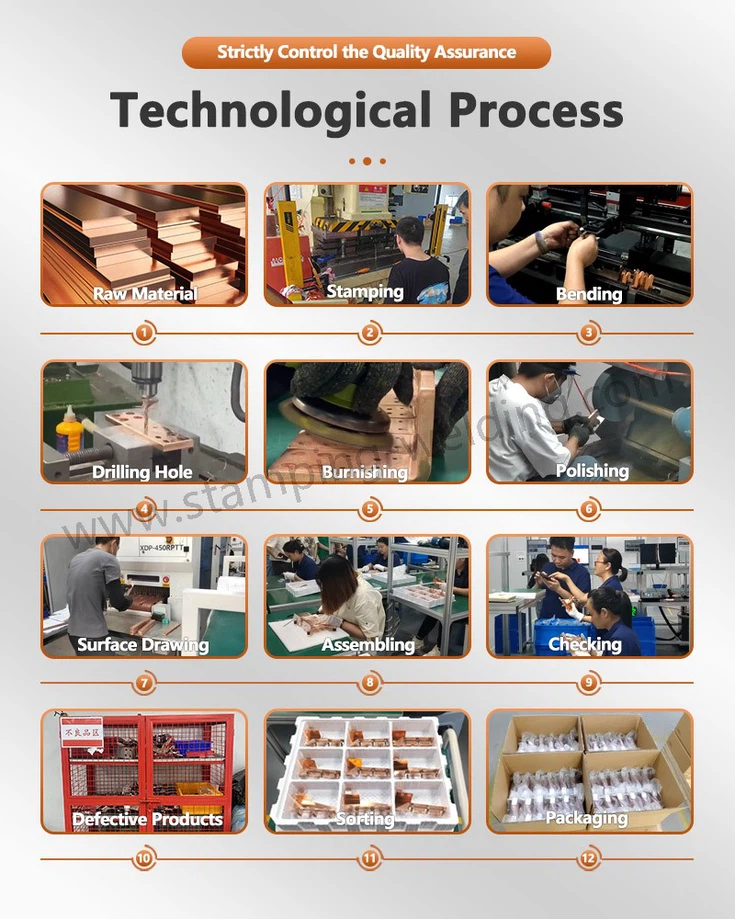
From the perspective of product materials and applications, the market is mainly divided into two camps: copper busbar and aluminum busbar, and widely covers pure electric vehicles (BEV) and plug-in hybrid electric vehicles (PHEV). Copper busbars dominate due to their excellent conductivity, but aluminum busbars are gradually emerging due to the trend of cost reduction and efficiency improvement due to their lightweight advantages. In the context of the full penetration of high-voltage fast charging technology, the technical requirements of New Energy Vehicle Film Capacitor BusBar are constantly rising. They not only have to withstand higher voltage impacts, but also need to achieve efficient thermal management in a compact space. This technological iteration has promoted the industry's transformation from single component supply to modular and systematic solutions, prompting manufacturers to carry out in-depth innovations in processes such as stamping, bending, welding and insulation coating.
Development opportunities and future trends
Looking to the future, the regional layout of the global supply chain provides a broad space for expansion for companies with overseas capabilities, while the explosion of emerging scenarios such as energy storage and power swapping has opened up a "second growth curve" for the industry. Continuous breakthroughs in materials science and manufacturing processes, such as ultrasonic welding, laser welding and the application of new composite materials, are reshaping cost structures and performance boundaries. In this context, the optimization of surface treatment processes such as Tin-plate Busbar Automotive and the performance of Tin Plated Copper BusBar for EV in terms of anti-oxidation and contact resistance control will become an important starting point for companies to build a technological moat and help them occupy a place in the high-end market.
Challenge analysis and risk warning
Despite its promising prospects, the industry still faces multiple challenges such as raw material price fluctuations, rapid technology iteration and stringent certification standards. Fluctuations in the prices of bulk commodities such as copper and aluminum directly impact the cost control system, while OEMs' ultimate pursuit of electrical safety and mechanical performance forces companies to continuously increase investment in research and development. Especially in the safety design involving busbar electric vehicles, any slight defect may lead to serious quality accidents. Therefore, it is particularly critical to establish a full-process quality traceability system and digital inspection capabilities. In addition, the uncertainty of the international trade environment also brings potential risks to the stability of the global supply chain.
contact us
Our company is deeply involved in the field of electrical connections and focuses on providing high-performance, high-reliability busbar solutions for new energy vehicles. Our EV BusBar cover key components for high-voltage electrical connections, using high-quality materials and advanced technology, and are committed to meeting the ever-escalating needs of vehicle electrification. For more product details or technical support, please feel free to contact us.