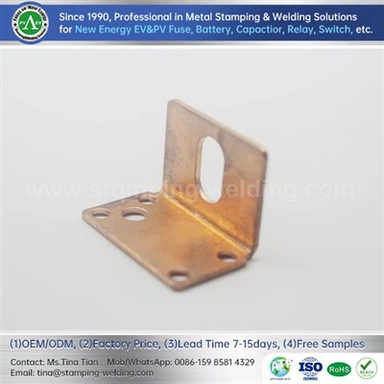
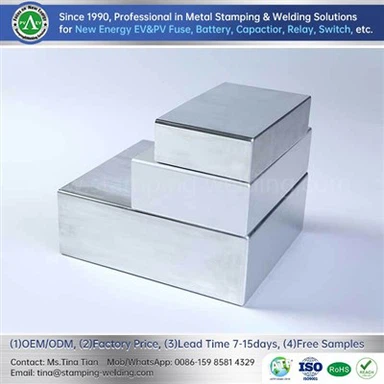
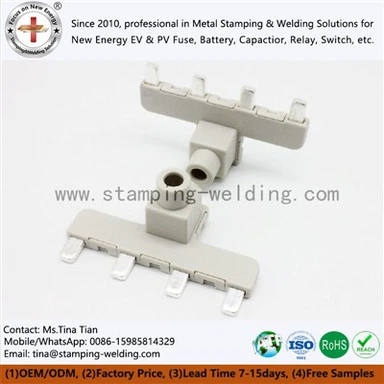
Trend analysis of Automotive ground bus bar technology
Mar 13, 2026
Industry application background and core requirements
In recent years, the rapid development of hybrid and electric vehicle industries has put forward two core requirements for motor drive systems, which have directly promoted the technological iteration and application upgrade of Automotive ground bus bars: firstly, to promote the high voltage of the system, thereby achieving high output power and efficient operation of the motor; The second is to upgrade towards miniaturization, helping the vehicle reduce energy consumption and optimize spatial layout. In the frequency converter module of the motor drive system, the filtering capacitor for smoothing the DC voltage is the core component.
Previously, the industry commonly used high-capacity and cost controllable aluminum electrolytic capacitors to meet basic needs. But with the continuous innovation of capacitor dielectric film technology and breakthroughs in thin film technology, Automotive busbar PET insulation, which has advantages such as high voltage resistance, low loss, high ripple current carrying capacity, and long life, has once again become the core selection for industry evaluation and application, gradually adapting to the upgrading needs of new energy vehicle drive systems.
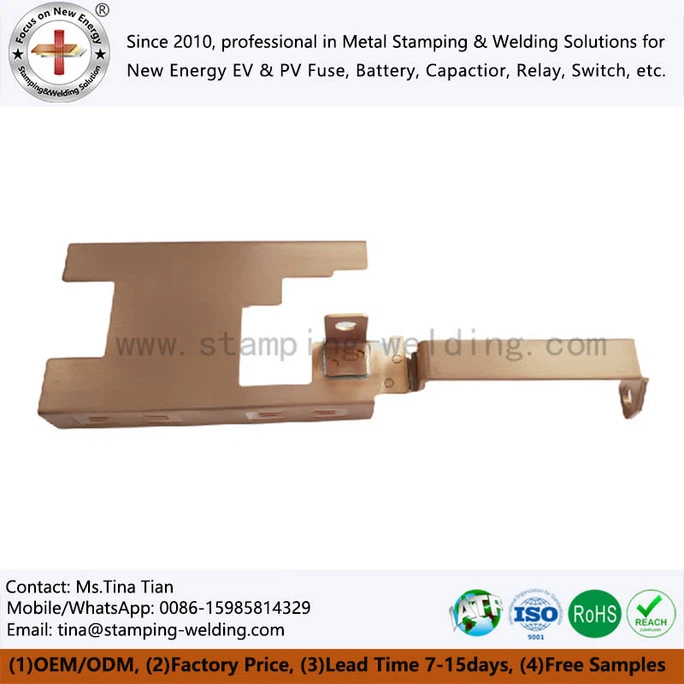
Core product features of Automotive ground bus bar
Busbar automotive, applied in the field of new energy vehicle motor drive, mainly uses polypropylene plastic film as the dielectric substrate, and forms internal electrodes by evaporating metal on the polypropylene film. It belongs to the metalized film capacitor category and is suitable for complex vehicle operating conditions with excellent electrical performance, safety, and reliability.
The core characteristics of the Car battery bus bar are highlighted as: strong capacitor stability, unaffected by temperature fluctuations, and able to maintain stable working conditions; Excellent voltage resistance performance, perfectly matched with high voltage working scenarios of motor drive systems; Extremely low self loss, can effectively suppress working heat, and help the system save energy and reduce consumption; High frequency response sensitivity and outstanding filtering effect; High ripple current tolerance and high unit volume current density; Comes with self-healing function, greatly improving operational security; In the high-temperature environment of the vehicle, it can achieve maintenance free operation for more than 10 years, meeting the reliability requirements for long-term use of the entire vehicle.
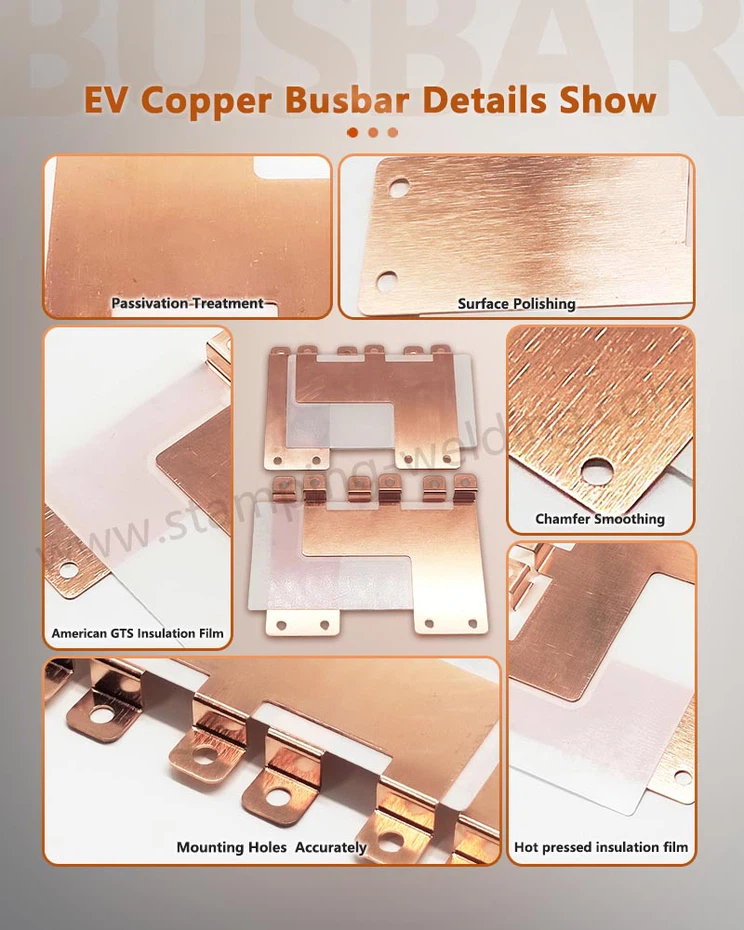
Core directions for industry development and technological upgrading
With the widespread adoption of hybrid and electric vehicles, the whole vehicle and core components are developing towards low cost and miniaturization. Auto bus bars also need to optimize their performance synchronously to match the pace of industry upgrades.
At present, the industry is focusing on five performance upgrade directions to promote the iteration of New energy vehicle film capacitor busbar technology: achieving product miniaturization and compressing overall volume through dielectric film thinning process; Relying on innovative vapor deposition technology to enhance the voltage resistance and service life of products; Reduce equivalent series resistance (ESR) and enhance high ripple current carrying capacity; Optimize component material formulas to enhance the overall reliability of EV busbars; Improve internal structural design, enhance heat dissipation performance, and adapt to high load long-term working conditions.
Previously, although traditional polypropylene film capacitors had excellent electrical performance, they were limited by their volume and unit volume capacitance shortcomings, and their application scenarios were restricted. However, with breakthroughs in dielectric film and vapor deposition technology, their demand in the field of new energy vehicles has rapidly increased.
Detailed explanation of core technology trends
At present, the core technology upgrade of Automotive power connectors for new energy vehicle motor drive is focused on two key directions, which directly determine product performance and adaptability.
One of them is the ultra-thin dielectric film, and the film thickness is the core factor affecting the volume of capacitors. Under the same capacity, halving the film thickness can reduce the product volume to one fourth of the original. Currently, polypropylene dielectric films have achieved ultra-thin thickness of 2.5 μ m, and thinner film materials are still being continuously developed; At the same time, in conjunction with the ultra-thin film material and the synchronous upgrade of vapor deposition pattern technology, by optimizing the vapor deposition metal pattern and retaining the safety mechanism function of the small section fuse, the voltage resistance performance and service life are further improved while achieving miniaturization.
The second is Power busbar's high ripple current adaptation technology. Polypropylene itself is a low loss material, but the fuse structure in traditional vapor deposition patterns increases resistance, leading to increased heat generation during high ripple current operation. The industry has developed new vapor deposition patterns to balance high voltage resistance and high ripple current carrying capacity, while accurately controlling the thickness of the vapor deposition metal film, completely solving the heat generation problem and adapting to the high current operation requirements of motor drive systems.
Contact us
If you have any needs for Automotive ground bus bar selection, customized development, or technical adaptation for new energy vehicle motor drive systems, please feel free to contact us at any time. We can rely on mature dielectric film and vapor deposition technology to provide you with professional technical solutions, selection suggestions, and efficient docking services, helping you with project implementation and product upgrades.