Detailed Explanation of PVC Dipping Cover Copper Busbar Dipping Process, Pressure Resistance Rating, and Flame Retardant Properties
Jun 14, 2026
Process overview
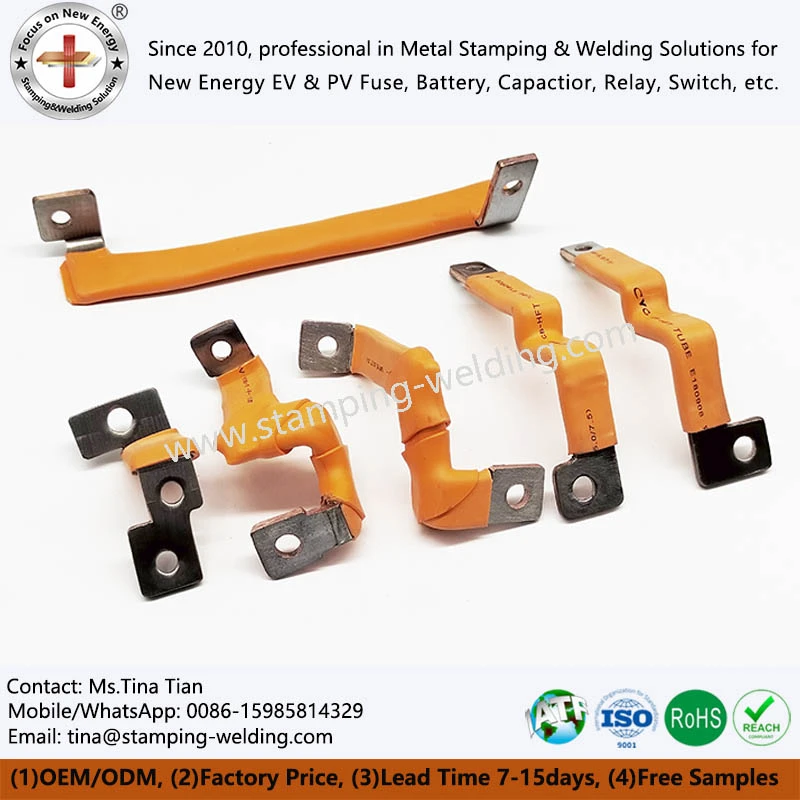
PVC Dipping Cover Copper Busbar utilizes polyvinyl chloride (PVC) material to achieve overall insulation coverage of copper bars, and has become one of the mainstream processes for bar insulation processing in power distribution, energy storage, and other fields. The substrate used for dip coating is polyvinyl chloride (PVC), which has strong cohesion and a dense molecular structure, laying a solid foundation for the molding quality of the outer insulation layer of the bar.
Process flow
The complete copper busbar dip coating process follows a standardized procedure. Initially, burrs and oil stains on the workpiece surface are cleaned to ensure proper coating adhesion. Then, based on the workpiece's dimensions, it is fixed to the dip coating support using hanging wires. Next, it is placed in an oven for preheating and heat storage; the preheating temperature and duration are flexibly adjusted according to the workpiece specifications to ensure sufficient absorption of the dip coating solution. After preheating, the workpiece is immersed in the dip coating container, with the immersion time determined by the preset insulation layer thickness. After dip coating, it is again placed in an oven for plasticizing and shaping, with the plasticizing temperature controlled between 180℃ and 300℃. Specific parameters are adjusted based on workpiece size, coating thickness, and hardness requirements. After plasticizing, the workpiece is naturally cooled to room temperature using air cooling. After removing the hanging wires, it is neatly placed on a clean, dust-free work surface. The entire process is closed-loop and controllable.
Flame retardant standards
These types of insulated busbars are generally tested according to the UL94V-0 flame retardant standard. If the project owner has specific flame retardant level requirements, these must be clearly indicated in the construction drawings. UL94V-0 has clear judgment criteria: after the test flame is removed, the duration of continuous open flame combustion of all samples must not exceed 10 seconds; for a group of five samples, after ten ignition tests, the total duration of open flame combustion must not exceed 50 seconds; there must be no situation where the sample combustion spreads to the clamping fixture, regardless of whether it is open flame combustion or smoldering; after the test flame is removed for the second time, the duration of smoldering must not exceed 30 seconds.
Scene adaptation
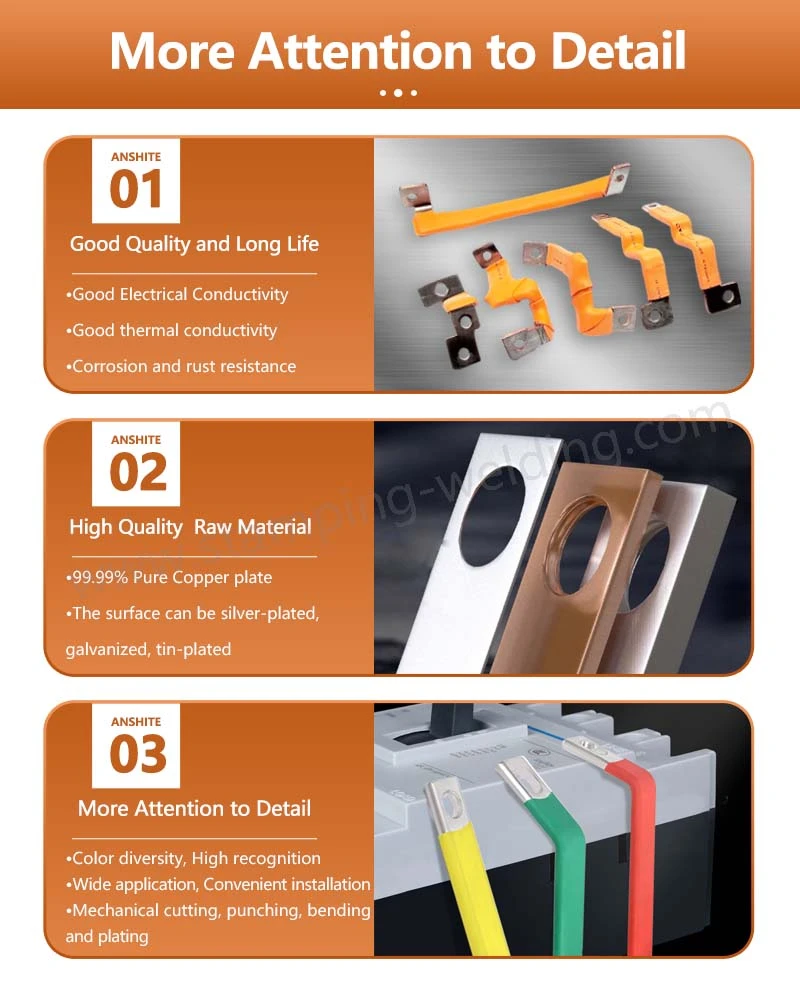
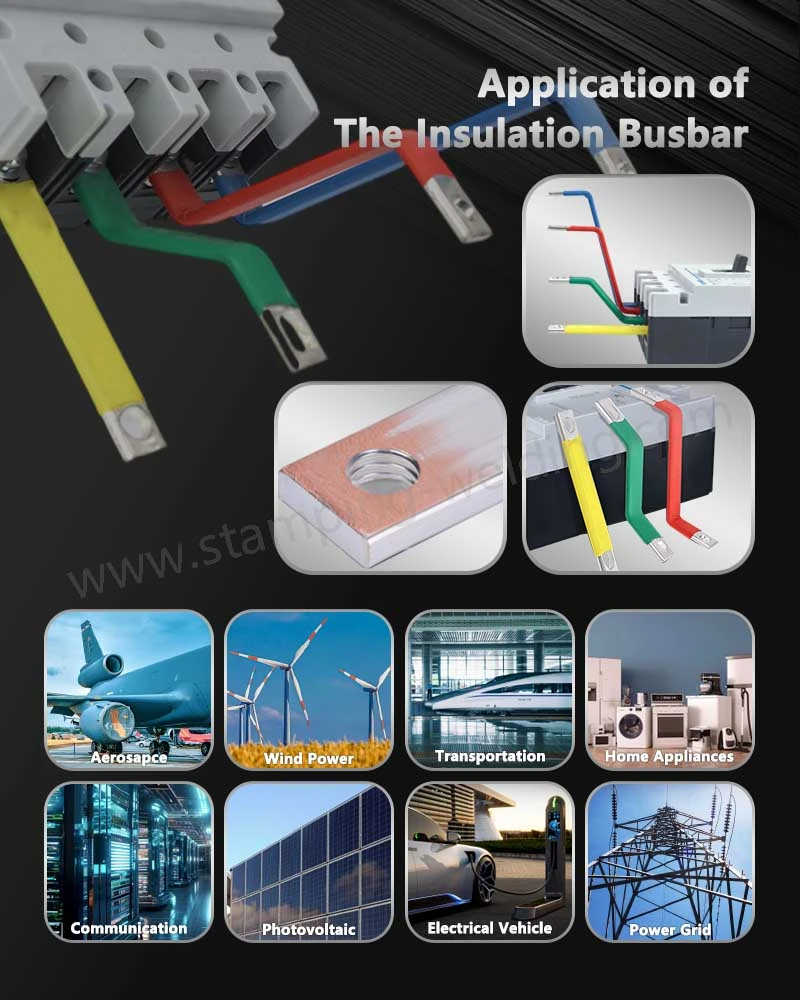
Diverse insulated bar processing technologies can adapt to different application scenarios. PVC Dipping Cover Copper Busbar rely on mature dip-coating technology to achieve reliable bar isolation, while Bar Isolation uses an outer plastic coating to avoid phase-to-phase short-circuit hazards. Dip Insulated and Plastic Dipping Copper Bars can be customized for different electrical equipment structures, while Insulated Flat Copper Bars are suitable for internal cabinet layout and installation. In energy storage scenarios, Battery Bus Bars and PVC Dipping Insulated Battery Bar Connectors can adapt to the assembly requirements of power battery packs, while PVC Dipped Laminated Flexible Coppers and Insulated Flexible Copper Bus Bars for Power Battery Packs can meet flexible connection installation requirements.
Contact Us
For customized PVC Dipping Cover Copper Busbar solutions based on pressure resistance, flame retardancy rating, and installation conditions, please feel free to contact us.