Analysis of the core characteristics and standard layout process of copper grounding busbar
Jun 14, 2026
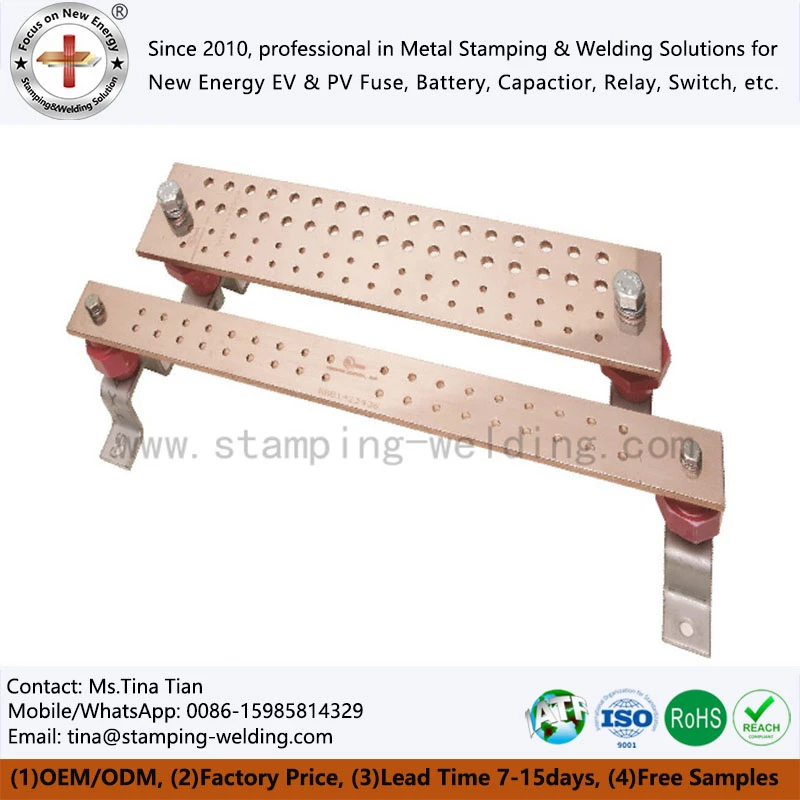
In the construction of power distribution and electrical safety systems, grounding devices are core supporting facilities that ensure stable equipment operation and avoid potential electrical safety hazards. Among them, the grounding bar is the key conductor of the entire grounding system. Among the mainstream copper grounding conductors used in the industry, the copper grounding busbar, with its stable conductivity, has become the preferred material in building electrical and industrial power distribution fields. As a dedicated conductor integrating various grounding points in an electrical system, the grounding busbar is mostly made of copper or aluminum. It can uniformly collect leakage current and fault current from equipment and the building structure and conduct them to the ground, preventing safety accidents such as electric shock and equipment breakdown from the source. Its protective principle can be regarded as an extension of the lightning protection system, comprehensively strengthening the safety defense line of the electrical system.
Core Functions
According to technical standards in the electrical construction industry, grounding busbars possess multiple core practical functions, comprehensively adapting to the electrical safety needs under complex working conditions. Their advantages are as follows:
- Fault Current Dispersion: It can promptly divert abnormal fault currents generated during the operation of electrical equipment, effectively preventing high-voltage current from impacting and damaging the equipment's core structure. This protects the main structure of the electrical equipment from a hardware perspective, reducing the probability of downtime and equipment burnout.
- Potential Equalization Protection: It can balance the potential differences between various electrical devices, eliminating the potential hazards of electric sparks and arcs caused by potential differences between devices. This effectively avoids safety risks in flammable, explosive, and enclosed electrical scenarios, ensuring a safe and stable overall power environment.
- Lightning Discharge Protection: The Grounding Copper Busbar provides a low-impedance discharge path for lightning surge currents, significantly improving the lightning protection capabilities of buildings and electrical equipment. It quickly diverts the instantaneous large current generated by lightning strikes, preventing accidents such as lightning breakdown and equipment damage.
- Electromagnetic Interference Suppression: It can effectively weaken signal interference caused by external electromagnetic radiation, ensuring the operational accuracy and stability of precision electrical equipment and intelligent control systems. It is widely adaptable to various high-precision and high-sensitivity power distribution operation scenarios.
Laying specifications
For different installation scenarios, the industry has established standardized construction parameters: for indoor grounding equipment installed exposed along walls, the installation height must be 300mm from the ground; for outdoor buried busbars, the burial depth must not be less than 600mm. During the installation and fixing process, insulating supports must be installed every 1.5 meters to complete the fixing. Critical parts such as line bends and interface connections must undergo professional anti-corrosion treatment. In electrical cabinet assembly scenarios, the ground bus bar electrical panel is compatible with the internal power distribution grounding layout of the cabinet, while the Grounding Bar Holes design with customized holes further enhances the adaptability and fixing stability of the busbar installation.
Connection process
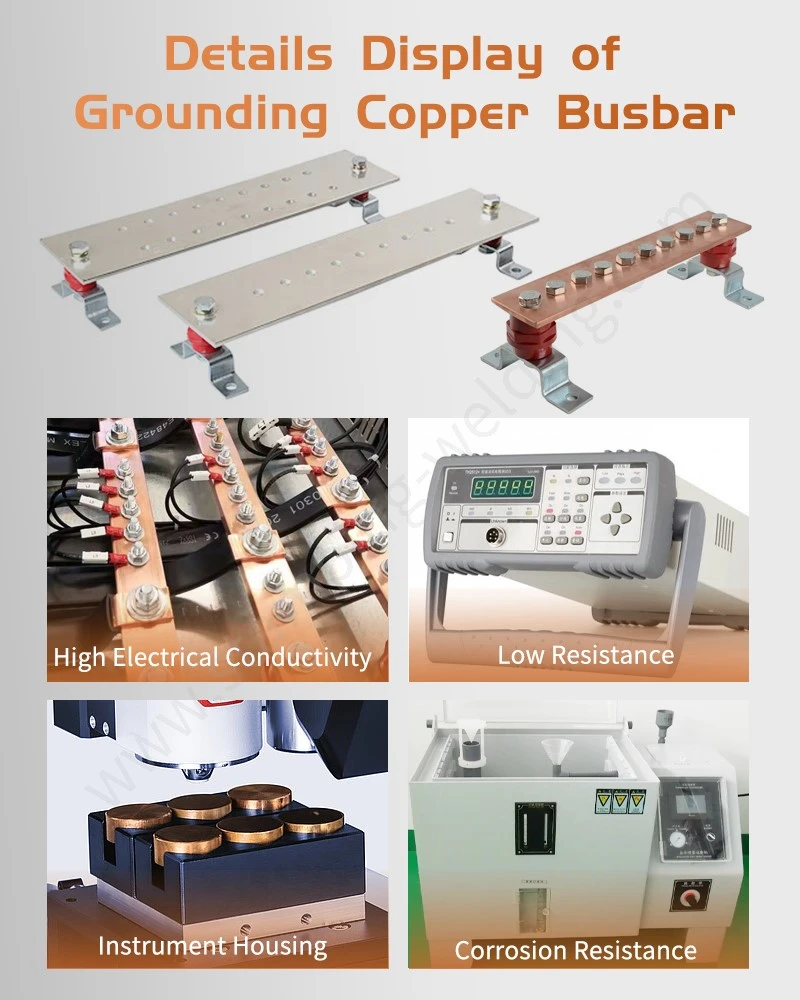
Copper grounding busbar connection technology is a crucial step in ensuring grounding performance. Construction must employ hot-melt welding or specialized connection clamps to ensure tight fit and good conductive contact at the interfaces, preventing grounding failures caused by loose connections or incomplete connections. In detailed power distribution scenarios, the compatibility of different specifications of dedicated busbar products varies significantly. Copper Bus Bars for Earthing Systems focus on specific grounding scenarios, Power Distribution Bus Bars emphasize power transmission and distribution systems, Backplane Bus Bars are mostly used for integrated power distribution structures on equipment backplanes, and Copper Bus Bar Tapped can meet the needs of multi-interface branch wiring and adapt to complex multi-path power distribution conditions.
Contact Us
For assistance with adapting to different power distribution conditions, accurately selecting compliant and high-quality copper grounding busbar, or seeking professional construction process consultation and implementation solutions, please feel free to contact us for one-on-one technical support and customized services.