Understanding the sealing design of New energy aluminum battery cases in one article
Apr 02, 2026
New energy aluminum battery cases structure and sealing core preconditions
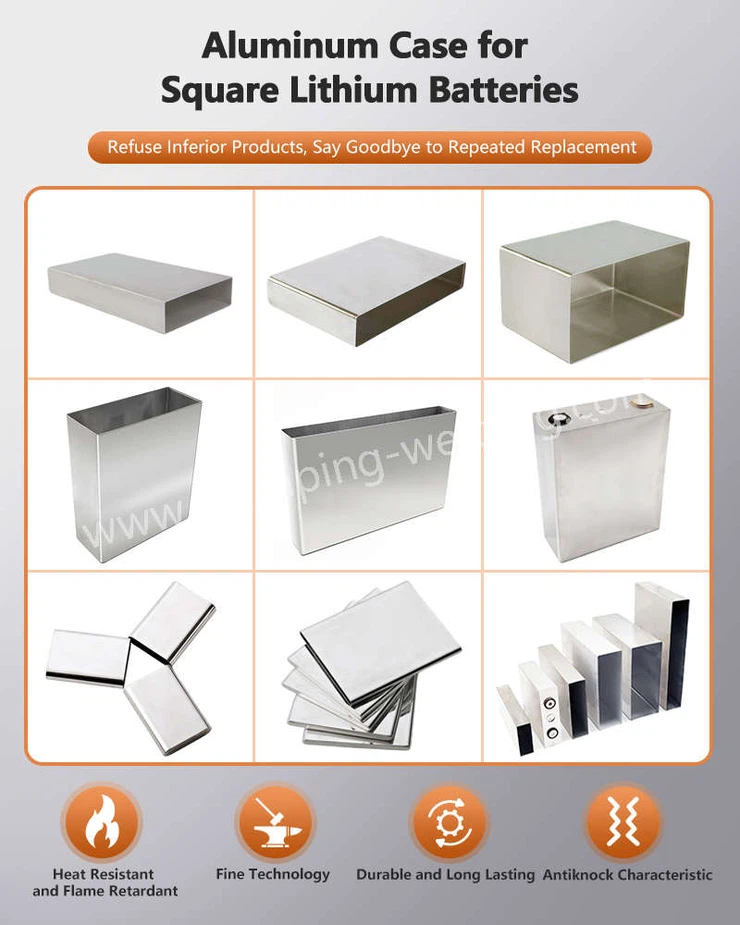
Automotive battery aluminum case have become the mainstream choice for electric vehicle power battery casings due to their advantages of lightweight, convenient processing, and strong integration. Their structure mainly consists of an upper cover, a lower tray, and a bottom guard plate. Currently, the design of integrated water-cooled plates has become the industry mainstream, and the lower tray is mostly composed of a frame and a water-cooled plate combination.
From the perspective of materials, the main materials of the power battery housing are mainly steel and aluminum alloy. Compared with steel, aluminum alloy not only has outstanding advantages in lightweight, but also has simple extrusion process, low tooling cost, and high casting integration, which is more suitable for the needs of electric vehicle lightweighting and energy efficiency improvement.
From the perspective of manufacturing process, before entering the battery assembly workshop, Aluminum case for new energy cars needs to complete the preparation of the upper cover and lower tray. Some models also integrate a bottom guard plate into the tray assembly. The structural design of these three components directly determines the rationality and sealing effect of the sealing interface.

Analysis of key sealing interface
The reasonable identification and design of sealing interfaces are the core guarantee for the sealing performance of New energy aluminum battery cases. Combined with the shell structure and assembly process, it mainly includes five key sealing interfaces.
One is the matching sealing interface between the upper cover and the lower tray. As the core sealing link, it needs to adapt to the normal temperature operation and after-sales maintenance needs of the battery workshop, which is the key and difficult point of sealing design.
The second is the sealing interface of the aluminum profile frame splicing joint, which relies on self sealing linear connection technology to ensure the sealing effect, and manufacturing stability is the key.
The third is the sealing interface between the aluminum profile frame and the water-cooled plate, which is divided into two designs: integrated and non integrated. The integrated water-cooled plate needs to form a circular sealing interface with the frame, and the sealing requirements are consistent with the Lithium battery aluminum case as a whole, without considering after-sales maintenance; Non integrated water-cooled plates do not participate in shell sealing and are only assembled as internal components of the package.
The fourth is the sealing interface between the aluminum profile frame/water-cooled plate and the bottom guard plate, which is also divided into two designs. In the integrated water-cooled plate scenario, the bottom guard plate only needs to protect solid foreign objects, and the hydrophilic insulation material needs to be additionally designed with waterproofing; In non integrated scenarios, the bottom guard plate needs to form a complete seal with the frame, and the sealing requirement should be consistent with the top cover.
The fifth is the sealing interface of fasteners and mechanical connectors. The core principle is to reduce the number of sealing components. Connectors that cannot meet the sealing requirements need to be designed with built-in sealing rings through secondary development.
Core sealing scheme design
Based on the structure, material characteristics, and sealing interface requirements of Prismatic aluminum case power battery, the sealing scheme for aluminum power battery shells should take into account sealing performance, manufacturing convenience, cost control, and after-sales needs. The mainstream design scheme should match the structural characteristics of each component of the shell. The sealing between the upper cover and the lower tray is the main sealing interface, and a continuous closed sealing path is required.
CIPG type sealing materials are preferred, which have low cost, convenient construction, and are easy to disassemble after sales. Through experimental verification, the sealing effect is best when the compression amount of the sealing material is controlled at 30% to 50% and the bolt spacing is set to 90mm.
At the joint of the aluminum profile frame, CMT self sealing linear connection technology is preferred. This technology has low heat generation and can achieve continuous long line welding, which can ensure the dimensional accuracy after welding and maintain stable sealing performance by relying on the melting depth of the base material after polishing.
The sealing between the aluminum profile frame and the water-cooled plate requires first ensuring the self sealing of the water-cooled plate. The integrated aluminum plate upper and lower brazing and splicing design is preferred to balance the thermal conductivity and self sealing performance of the Aluminum battery casing. Then, a complete lower tray structure is formed through reasonable splicing.
The sealing of the bottom guard plate needs to be combined with the design scheme of the water-cooled plate. In the integrated water-cooled plate scenario, no additional sealing is required, only solid foreign objects can be protected; In non integrated scenarios, it is necessary to design according to shell sealing standards to meet waterproof and foreign object protection requirements.
Core conclusions of sealing design and industry application inspirations
The sealing design of Rechargeable aluminum shell needs to be based on structural analysis and identification of the sealing interface, deeply integrating the shell structure design with the sealing scheme in order to balance safety, reliability, and practicality. By precise analysis of key sealing interfaces, combined with material characteristics and manufacturing processes, and using suitable sealing materials and connection technologies, risks such as water ingress and gas leakage can be effectively avoided, ensuring long-term stable operation of power batteries.
Currently, with the increasing demand for range and safety in electric vehicles, the sealing design of EV car battery shells needs to continuously optimize details, apply mature sealing technologies and design methods to subsequent project development, and combine with the trend of lightweight and integrated development to further enhance the long-term reliability and operability of the sealing system, safeguarding the safety of electric vehicle power batteries.

Contact us
If you have any consulting, customization or technical docking needs related to the selection or design of New energy aluminum battery cases, please feel free to communicate with us at any time. We will rely on our professional technical capabilities to provide you with suitable solutions and help you efficiently advance your project.