The secret of the structure and pressure relief protection of the Power battery cover plate for new energy vehicles
Apr 01, 2026
Core positioning and basic requirements of Power battery cover plate for new energy vehicles
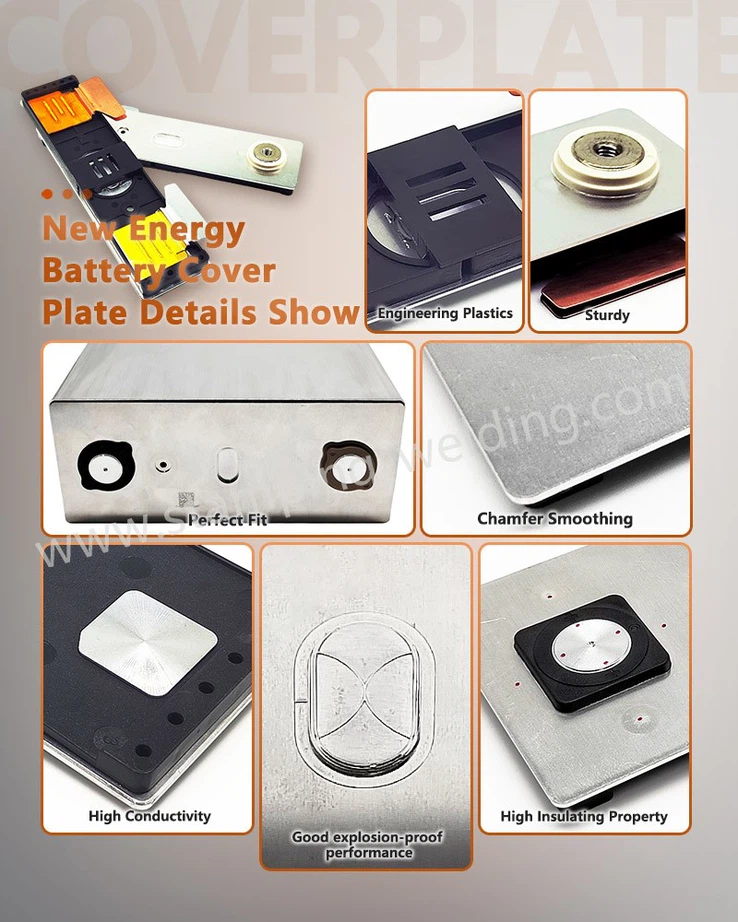
The Battery aluminum safety cover set is the core component of the battery casing, mainly used to wrap and protect the internal structure of the battery, and adapt to various new energy batteries such as lithium batteries, lithium cobalt oxide batteries, nickel hydrogen batteries, etc. As a "protective barrier" for batteries, it needs to have sufficient strength and wear resistance to resist external environmental erosion and collision impact, and avoid internal structural damage; At the same time, it is necessary to have certain thermal conductivity to assist in battery heat dissipation and ensure stable operation of the battery within a reasonable temperature range. With the rapid iteration of the new energy vehicle industry, the performance requirements of Aluminum cover plate for batteries are constantly upgrading, further strengthening functional integration on the basis of protection, and adapting to the battery needs of higher energy density and more complex usage scenarios.
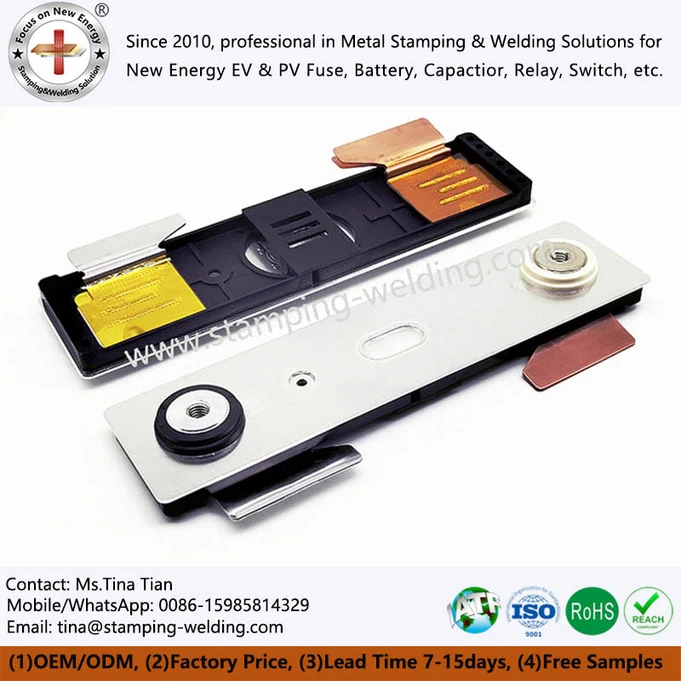
Structural characteristics and core value of Power battery cover plate
Among various types of new energy batteries, the Copper and aluminum bimetal bipolar plate structure is the most complex and precise. It not only plays a key role in energy transmission, but also serves as the core carrier for explosion-proof and pressure relief. Its value is about twice that of the battery shell. The Lithium battery top cap is integrated with more than 10 components, including a cover plate body, positive and negative pole columns, injection holes, explosion-proof valves (explosion-proof plates), etc. The various components work together to ensure the normal charging and discharging of the battery, while also undertaking the important mission of safety protection. Its precision directly determines the safety performance and service life of the battery.
Safety hazards and necessity of pressure relief protection for lithium batteries in new energy vehicles
With the development of lithium batteries for new energy vehicles towards high volume and energy density, coupled with the increasingly harsh operating environment during vehicle operation, the safety hazards of sealed batteries causing explosions due to damage and abnormal internal reactions continue to increase.
The safety protection of square lithium batteries is mainly divided into two levels: one is to prevent self functional damage caused by battery abuse, and the other is to avoid secondary safety hazards caused by battery explosions. Prismatic lithium battery lid, as the core protective component of the battery, is an important carrier for achieving these two levels of protection.
For the latter, the mainstream protection methods in the industry are divided into circuit breaker protection and pressure relief protection. Among them, pressure relief protection, as a key means of directly responding to internal pressure anomalies, is the core defense line to ensure battery safety. Prismatic lithium battery canopy, on the other hand, integrates explosion-proof structures to become the core execution carrier of pressure relief protection.
Customization status and selection points of explosion-proof valves
In power type high-capacity batteries, the square cells used in electric vehicles have different requirements for the structure and size of explosion-proof valves due to different vehicle models and installation spaces. Therefore, explosion-proof valves need to be customized according to actual scenarios. The structural design of Prismatic lithium battery annexe directly determines the installation adaptability of explosion-proof valves. However, while customization brings flexibility, it also leads to a low level of industry standardization, making it difficult to achieve uniformity in production processes.
At present, although domestic and foreign enterprises, universities, and research institutes have carried out a lot of research and development work in the field of LFP safety cover set modules, the industry and relevant national management units have not yet issued a unified standard for the structure of explosion-proof valves. Therefore, when choosing explosion-proof solutions, it is necessary to make rational judgments based on actual conditions such as battery type, usage scenarios, and performance requirements in order to maximize the safety and reliability of the battery system.
Contact us
If you have any questions or needs regarding the customization or selection of Power battery cover plates, we can provide professional technical support. Please feel free to contact us at any time to accurately meet your core needs and provide tailored solutions.