Why Are Insulated Ceramic Tubes Used in High-Voltage EV Fuses?
Sep 18, 2026
As new energy vehicles evolve toward high-voltage, high-current, and fast-charging capabilities, their high-voltage electrical systems impose increasingly stringent requirements on circuit protection components. Serving as critical protective elements within battery systems, inverters, and high-voltage power distribution circuits, high-voltage fuses must rapidly interrupt fault currents during short-circuit or severe overcurrent events.
During this process, the fuse relies not only on its internal element to interrupt the current but also on the coordinated action of the insulating tube body, arc-extinguishing medium, and terminal structures to manage the electric arc. Consequently, the Insulated ceramic tubes in EV fuses is far more than a simple external protective sleeve; it is a vital functional structural components of the high-voltage fuse.
What is an EV fuse ceramic tube?
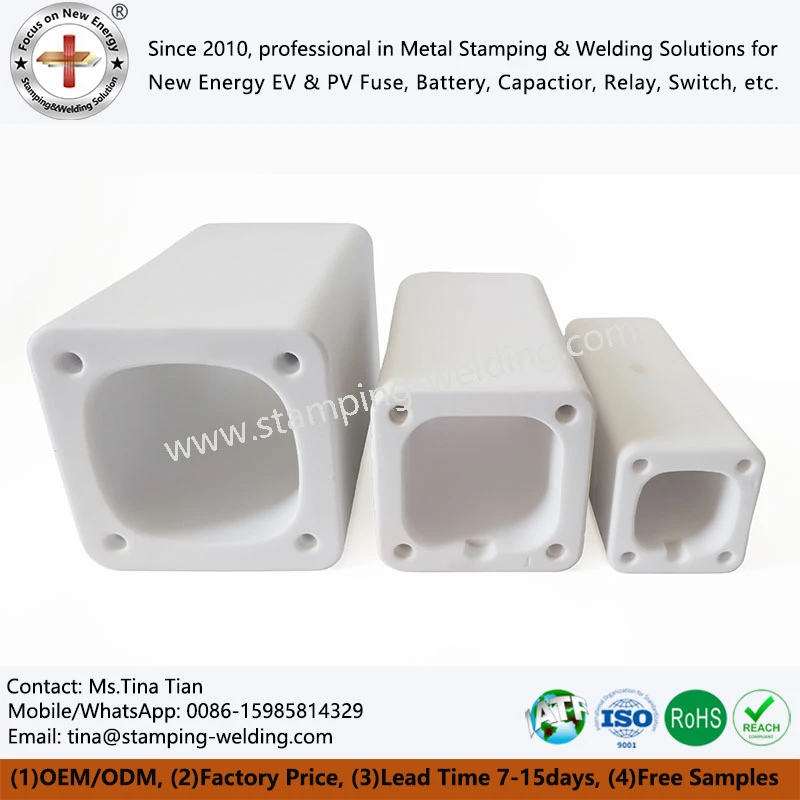
The insulated ceramic tube in EV fuses- also known as an EV fuse ceramic body or alumina ceramic tube for fuses-is typically installed inside automotive high-voltage fuses to house the fuse element and related internal components. Under normal operating conditions, the ceramic tube must provide stable electrical insulation for internal conductive parts while maintaining sufficient mechanical strength. When a short circuit or severe overcurrent occurs in a new energy vehicle's high-voltage system, the fuse element melts and breaks the circuit. This process can generate high-temperature electric arcs; the ceramic tube must remain structurally stable in this high-temperature, arc-prone environment and work in conjunction with the fuse's internal arc-extinguishing medium to help control the arc.
Consequently, the insulating ceramic tube plays an active role in the fuse's fault-current interruption process. Product specifications for EV fuses indicate that high-alumina ceramic tubes are used to withstand arc exposure and high temperatures while serving as a structural support for the internal fuse element.
Why can't ordinary plastic or metal tubes simply replace ceramic ones?
The operating environment for high-voltage fuses in new energy vehicles differs significantly from that of standard low-voltage fuses. Power battery systems in new energy vehicles often operate on high-voltage platforms of several hundred volts or more and are capable of delivering massive short-circuit currents. When the fuse interrupts a fault current, it is subjected to intense thermal loads and arcing.
Therefore, the fuse tube body requires high heat resistance, excellent electrical insulation, and mechanical stability. While plastic materials offer insulation, issues such as softening and thermal decomposition arise in extreme high-temperature and arcing environments. Metal materials possess high mechanical strength but are electrically conductive, making them unsuitable for the required insulation function. Ceramics, however, offer a combination of high electrical insulation, high-temperature resistance, and superior mechanical stability, making them a common choice for insulating tube bodies in high-voltage fuses. Industry specifications frequently cite high-purity alumina ceramics for EV fuse bodies, highlighting their insulating, heat-resistant, and arc-resistant properties.
Why is alumina commonly used for Ceramic Body for Fuse Bolted Series?
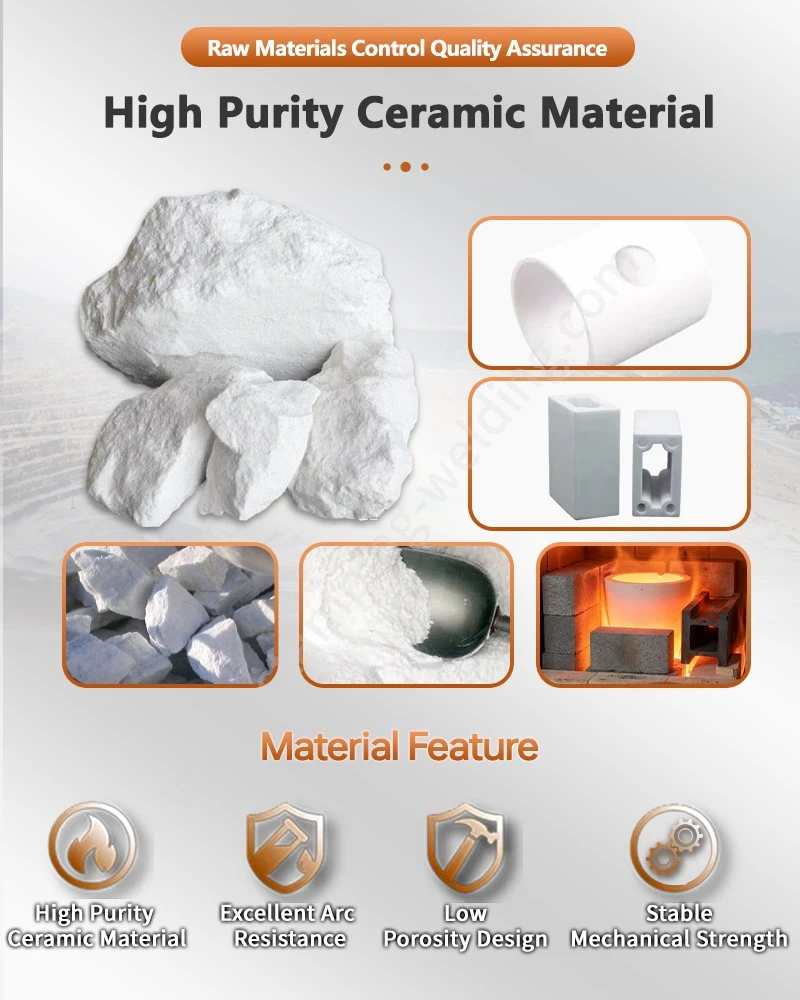
Among electrical ceramic materials, alumina offers an excellent balance of properties. High-purity alumina ceramics typically exhibit high electrical resistivity, dielectric strength, heat resistance, and mechanical strength, making them suitable for structural components that require electrical insulation and thermal stability. For a ceramic tube for an EV DC Fuse, the material must meet multiple performance requirements simultaneously. First is electrical insulation: the ceramic tube must prevent unwanted electrical connections between the internal conductive elements and external metal components. Second is heat resistance: during the fusing process, the fuse element heats up rapidly and generates an electric arc, requiring the ceramic tube to maintain its structural integrity. Third is mechanical performance: as new energy vehicles are subject to road vibrations, shocks, and temperature fluctuations during long-term operation, the internal ceramic tube must not easily crack or break.
Some industry products utilize 95% or 99% alumina ceramics as the material system for high-voltage EV fuse bodies. Specific ceramic formulations should be selected based on the fuse structure, rated voltage, arc-extinguishing method, and manufacturing process.
How do insulating ceramic tubes help extinguish the electric arc?
This is one of the key differences between ceramic tubes for EV BS series and standard insulating sleeves. When the fuse element ruptures, the circuit does not instantly transition to a state of zero current. Arc control is particularly critical for high-voltage DC systems. New energy vehicle (NEV) high-voltage systems utilize direct current (DC); unlike alternating current (AC), DC arcs do not naturally pass through a zero-current point. Consequently, the fuse must actively control the arc through its structural design and the use of arc-extinguishing media.
In many high-voltage fuses, the interior of the ceramic tube is filled with arc-extinguishing materials, such as quartz sand. When the fuse element melts and generates an arc, the ceramic tube and the arc-extinguishing filler work together to absorb heat, cool the arc, and control the arc channel. Technical specifications for EV fuses indicate that combining high-alumina ceramic tubes with high-purity quartz sand as the arc-extinguishing medium is a common structural configuration for high-voltage automotive fuses.
Why is insulation performance so critical for NEV high-voltage systems?
The traction battery system of a new energy vehicle typically comprises high-voltage positive and negative terminals as well as various high-voltage electrical connection components. A failure in insulation can lead to current leakage, short circuits, or other electrical safety issues.
Consequently, the ceramic tubes used in fuses must maintain stable insulation performance throughout the product's entire lifecycle.
The stability of the ceramic material is particularly critical when the component is subjected to the simultaneous presence of high temperatures, high humidity, vibration, and voltage stress.
Therefore, when sourcing ceramic tubes for EV fuses, one should not focus solely on color and appearance; it is also essential to consider the material system, dielectric properties, dimensional accuracy, and product testing requirements.
Mechanical Strength: A Key Indicator for Ceramic Tubes
Although ceramics possess excellent heat resistance and insulation properties, the material itself is inherently brittle.
Therefore, mechanical strength and thermal shock resistance are equally important for ceramic tubes for EV charger fuses. Vehicles are subjected to road vibrations, mechanical shocks, and temperature cycling during long-term operation. Internal defects, cracks, or dimensional instability in the ceramic tube can compromise the reliability of the entire fuse.
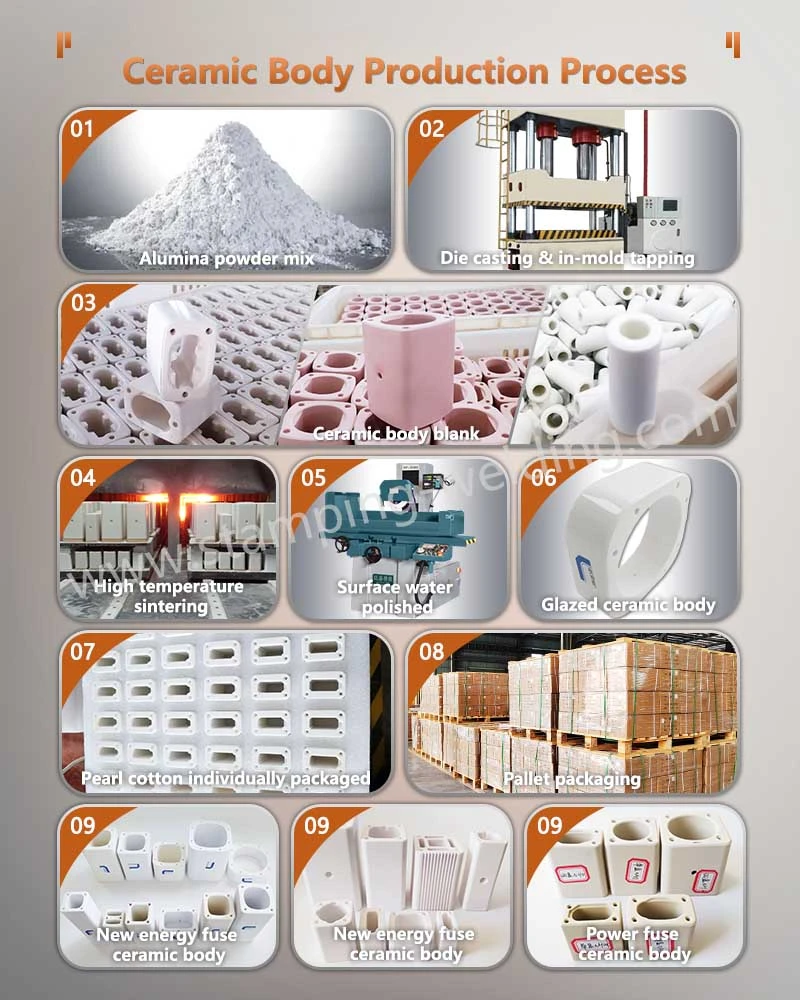
Consequently, the manufacturing process requires strict control over raw material purity, forming density, sintering quality, and the quality of subsequent processing steps. Quality verification for the ceramic body often involves testing flexural strength, thermal cycling resistance, and other parameters.
Why is precise dimensional control required for PV Energy Storage Fuse Ceramic Body?
Ceramic tubes serve not only as insulators but also as housings for the fuse element and the arc-extinguishing medium. Consequently, dimensions such as inner diameter, outer diameter, length, and end-face specifications directly impact the final assembly of the fuse. An inner diameter that is too small can hinder the assembly of internal components, while one that is too large may alter the internal volume and arc-extinguishing characteristics. Furthermore, the length and end-face dimensions must precisely match the metal end caps, connection terminals, and other structural components.
As a result, high-voltage ceramic tubes for Electric and Hybrid Vehicle Fuses are typically highly customized ceramic structural components.
Application of Insulated Ceramic Tubes in New Energy Vehicles
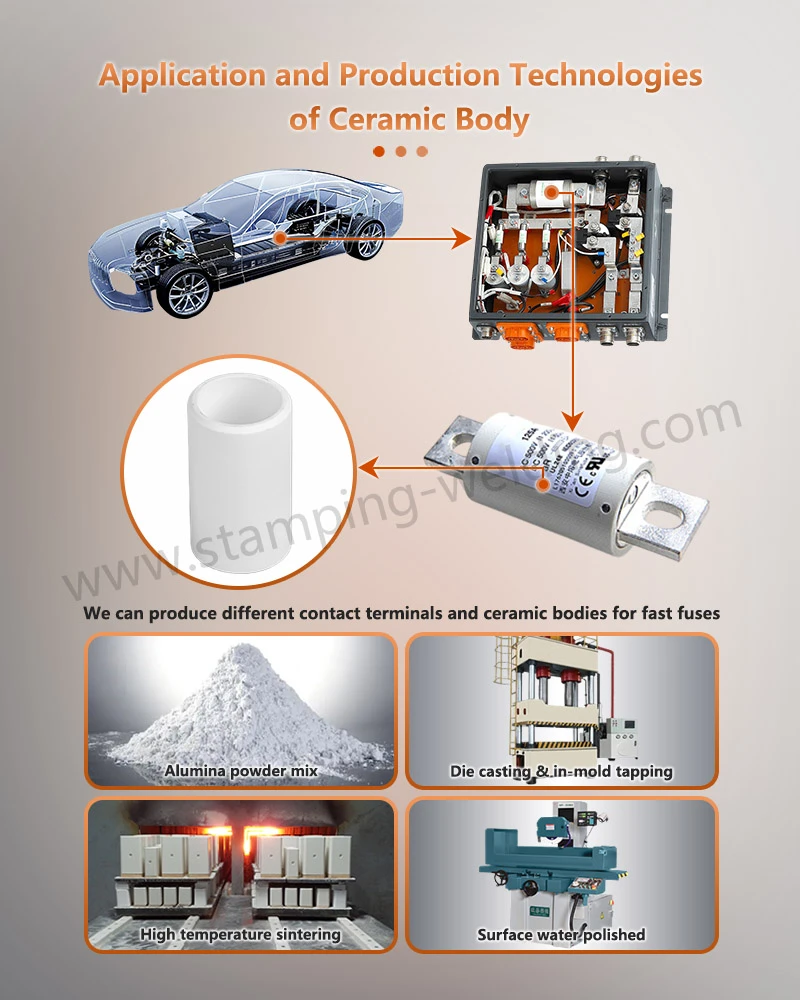
Ceramic tubes for energy storage fuses are primarily used for high-voltage circuit protection in new energy vehicles. Applications include main traction battery circuits, auxiliary high-voltage circuits, inverter protection, On-Board Chargers (OBCs), and high-voltage power distribution systems. Certain automotive-grade EV fuses already utilize ceramic tube structures designed specifically to provide overload and short-circuit protection for electric and hybrid vehicles.
As high-voltage platforms in new energy vehicles evolve, ceramic tubes must adapt to higher voltage and current ratings, as well as more demanding thermal environments.
Relationship Between EV Fuse Ceramic Tubes and Energy Storage Fuses
Although the operating environments for electric vehicles (EVs) and energy storage systems differ, both involve high-voltage DC circuit protection. Battery clusters, Power Conversion Systems (PCS), and DC distribution circuits within energy storage systems likewise require reliable overcurrent protection.
Consequently, ceramic tubes designed for high-voltage fuses can also be applied to new energy storage systems, power electronics, and certain charging infrastructure. This extends the market application of EV fuse ceramic body beyond the automotive industry alone.
Future Development Trends for Ceramic Body for EV Fuse
As new energy vehicles shift toward 800V and higher voltage platforms, requirements for insulation materials, arc-extinguishing performance, and dimensional consistency in high-voltage electrical protection components will become increasingly stringent. Future insulated ceramic tubes in EV fuses will likely place greater emphasis on material purity, dimensional precision, thermal shock resistance, mechanical reliability, and compatibility with automated assembly processes.
For ceramic tube manufacturers, the ability to produce a basic cylindrical tube is no longer sufficient to meet automotive-grade application standards. Material formulation, forming processes, sintering control, precision machining, and quality inspection capabilities will become critical factors in product competitiveness.
Insulated ceramic tubes serve as vital insulating and structural components within high-voltage fuses for new energy vehicles. They must simultaneously meet requirements for electrical insulation, high-temperature resistance, mechanical support, and stability in arc-prone environments, working in concert with the fuse element, arc-extinguishing medium, and metal end caps to interrupt high-voltage fault currents. For both EV fuse manufacturers and purchasing enterprises, selecting the appropriate ceramic materials, dimensional specifications, and manufacturing processes is fundamental to ensuring the stable operation of high-voltage fuses.
Contact Us