Why Are New Energy Aluminum Battery Cases Widely Used for Prismatic Lithium-Ion Batteries?
Sep 18, 2026
With the development of new energy vehicles, energy storage systems, power tools, and other new energy equipment, lithium-ion batteries face increasingly stringent requirements regarding energy density, weight, structural safety, and manufacturing efficiency. Among the various cell packaging formats, prismatic lithium-ion batteries are widely used in power and energy storage battery systems due to their regular shape and high space utilization.
For prismatic cells, the aluminum alloy casing is a critical structural component. It not only encapsulates and protects the internal cell but also withstands mechanical loads and-together with the top cover, terminals, sealing mechanisms, and pressure relief structures-forms a complete cell packaging system. Consequently, these new energy aluminum battery cases are not merely simple metal enclosures; they are vital structural components that influence cell reliability, manufacturing efficiency, and system integration.
What is an aluminum alloy casing for prismatic lithium batteries?
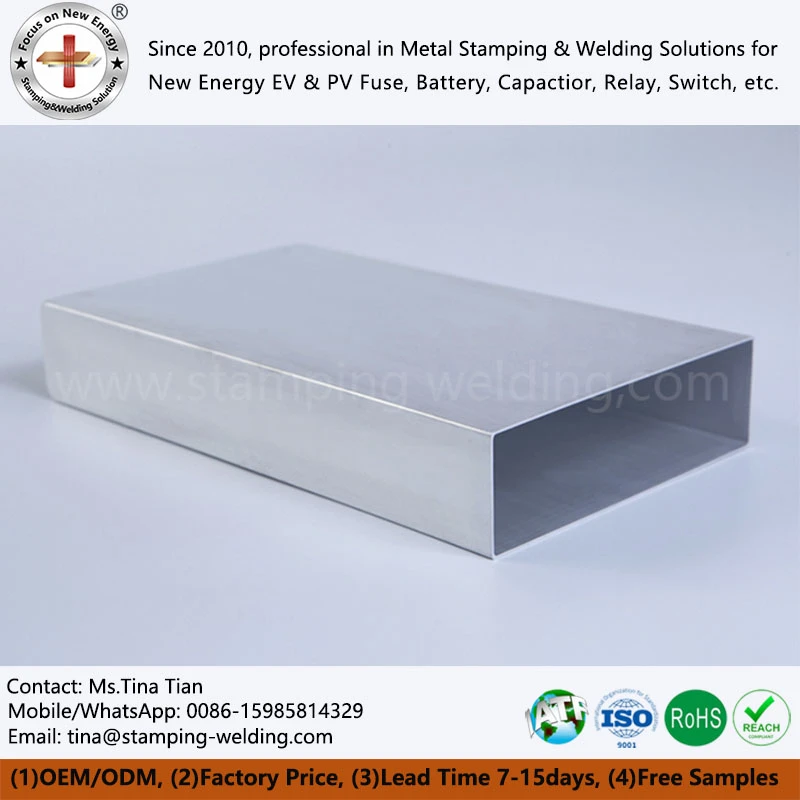
The aluminum alloy casing for prismatic lithium batteries-also known as a prismatic lithium battery case or aluminum battery shell-is primarily used to encase prismatic lithium-ion battery cells. A typical prismatic cell consists of components such as an aluminum alloy housing, a top cover assembly, electrode assemblies, terminal posts, an electrolyte filling structure, and a pressure relief mechanism. After the cell undergoes winding or stacking, the internal components are inserted into the aluminum housing, which is then sealed by connecting the top cover to the housing.
During manufacturing, precision welding is typically required to join the housing and the top cover, ensuring a stable, airtight seal. Some prismatic batteries also feature explosion-proof or pressure relief mechanisms in the top cover area to provide a controlled path for pressure release during abnormal conditions. Consequently, the aluminum battery casing must meet specific requirements regarding mechanical properties, formability, weldability, dimensional accuracy, and sealing performance.
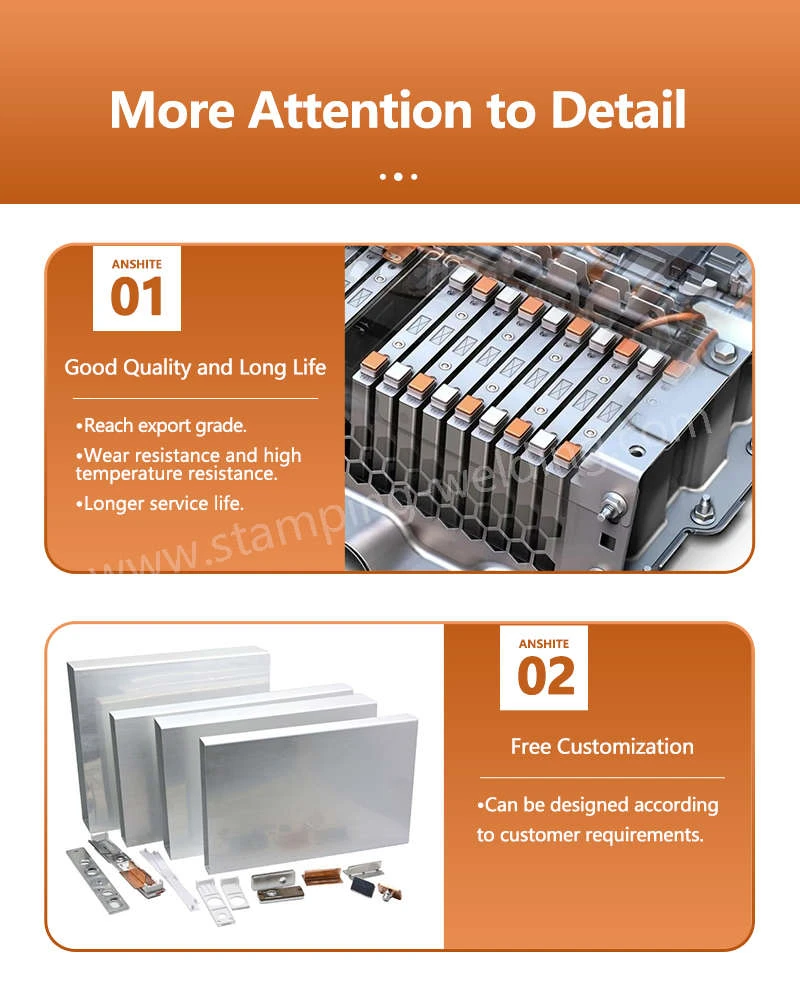
Why do prismatic lithium batteries use aluminum alloy casings?
Aluminum alloy facilitates battery lightweighting
For new energy vehicles and energy storage systems, battery pack weight directly impacts the structural design of the entire system. Aluminum alloy has a significantly lower density than steel; thus, it can reduce the weight of the battery casing itself while still meeting structural requirements. Early research on aluminum alloy casings for prismatic lithium-ion batteries demonstrated that using aluminum alloy reduces casing weight and improves the overall specific energy performance of the cell. For battery packs composed of a large number of cells, the cumulative weight difference of individual cell casings becomes a significant factor in the lightweight design of the entire battery system.
Good thermal conductivity aids thermal management
Lithium-ion batteries generate heat during charging and discharging. If heat generated inside the cell is not conducted away and managed promptly, it can affect the cell's cycle performance and operational stability. Aluminum alloy possesses excellent thermal conductivity, allowing the battery casing to participate in heat transfer from the cell and work in conjunction with external cooling structures. It should be noted, however, that the aluminum casing alone cannot replace a complete battery thermal management system. In practice, power batteries or energy storage batteries still require the configuration of liquid cooling plates, cooling channels, thermal interface materials, or other thermal management solutions based on the cell structure. Therefore, when designing aluminum battery casings, factors such as wall thickness, external dimensions, contact area, and internal battery pack space must be comprehensively considered.
Design enabling high space utilization for prismatic cells
One of the key characteristics of the prismatic structure is its regular shape. Compared to cylindrical cells, prismatic cells can be arranged more tightly within battery modules and packs, thereby minimizing unnecessary gaps. Aluminum alloy casings can be formed into regular prismatic shapes using processes like deep drawing and stamping, providing stable geometric dimensions for both the internal cell space and external module mounting. Modern battery casing manufacturing also focuses on strictly controlling dimensions, wall thickness, the flatness of the opening, and the quality of welding zones.
Suitability for deep drawing and precision forming
Prismatic aluminum casings typically require forming processes to transform flat aluminum sheets into casings of a specific depth. Consequently, the material chosen for the battery casing must not only offer sufficient strength but also balance elongation, formability, and dimensional stability after processing. Different aluminum alloy grades vary in terms of strength, elongation, corrosion resistance, and weldability; therefore, the actual material selection must be determined based on battery dimensions, casing structure, forming processes, and welding methods.
The Aluminum Case Is More Than Just a "Protective Shell"
When first encountering prismatic lithium battery cases, many people mistake them for ordinary metal housings. In reality, the battery casing must perform multiple functions simultaneously.
First, it must secure the internal cell structure, preventing unwanted mechanical displacement of the cell during transport and operation. Second, it must form a reliable seal with the top cover to prevent electrolyte leakage and the ingress of external moisture. Furthermore, since gas and pressure can build up inside the battery under certain abnormal conditions, the design of modern prismatic cells typically incorporates a pressure-relief mechanism. In other words, the aluminum case, top cover, sealing system, and pressure-relief device function together as an integrated whole.
Common Manufacturing Processes for Rectangular Aluminum Battery Cases
Depending on product design and the supplier's specific process flow, rectangular aluminum battery cases can be manufactured using various methods. Common processes include material blanking, deep drawing, stamping, trimming, dimensional calibration, precision machining, cleaning, and subsequent welding operations. Among these, deep drawing is a critical forming process. For battery cases with significant depth, it is essential to properly control the number of drawing stages, mold design, material condition, and forming speed. Improper control of forming parameters can lead to issues such as wrinkling, cracking, and uneven wall thickness.
Therefore, when sourcing aluminum battery cases for new energy applications, one should not focus solely on the aluminum alloy grade and price; it is also crucial to verify whether the supplier possesses reliable capabilities in deep drawing and dimensional control.
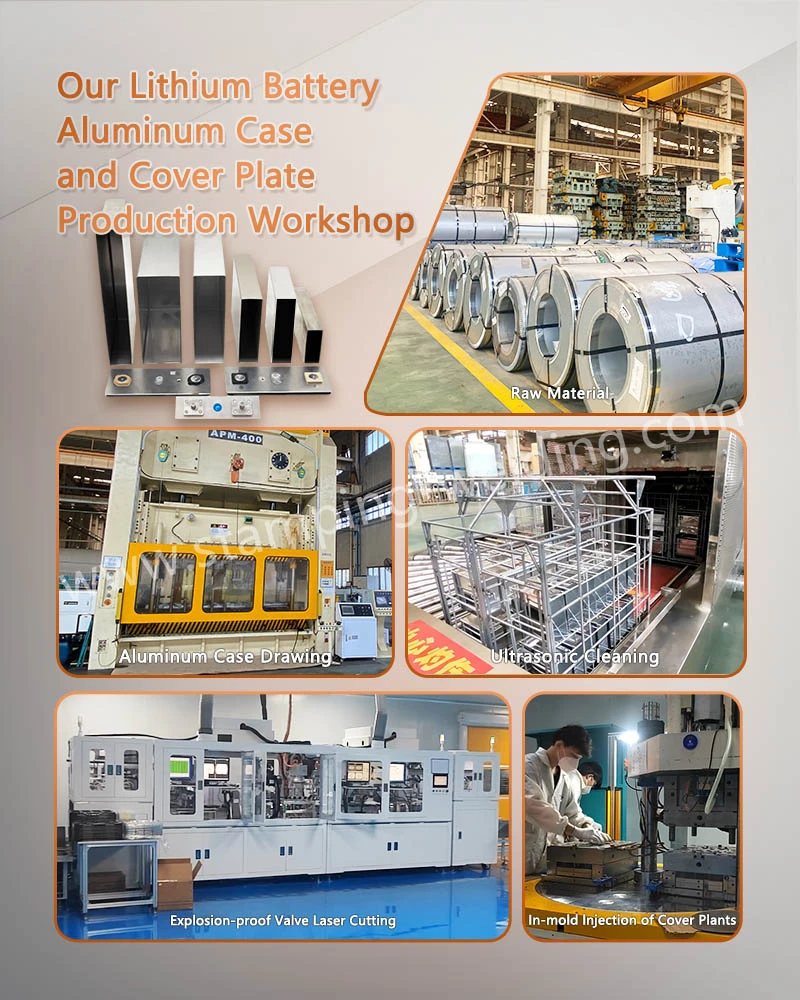
Why is high-precision welding required between the aluminum casing and the top cover?
The casing and top cover of a prismatic battery cell typically need to form a hermetically sealed unit.
In modern battery manufacturing, laser welding is widely used to join the battery casing, top cover, and related metal components. Its advantages include a concentrated welding zone, a minimal heat-affected zone, and suitability for automated production. However, laser welding places high demands on the flatness of the casing opening, dimensional consistency, material surface condition, and assembly clearances.
Consequently, an aluminum casing-while seemingly simple-can significantly impact the efficiency of the subsequent welding process. For instance, significant deformation or burrs at the casing opening can compromise top cover positioning and weld quality. Therefore, some manufacturers of aluminum battery casings employ precision trimming and flatness control at the opening to enhance consistency in the subsequent laser welding stage.
Which industries utilize prismatic aluminum-cased lithium batteries?
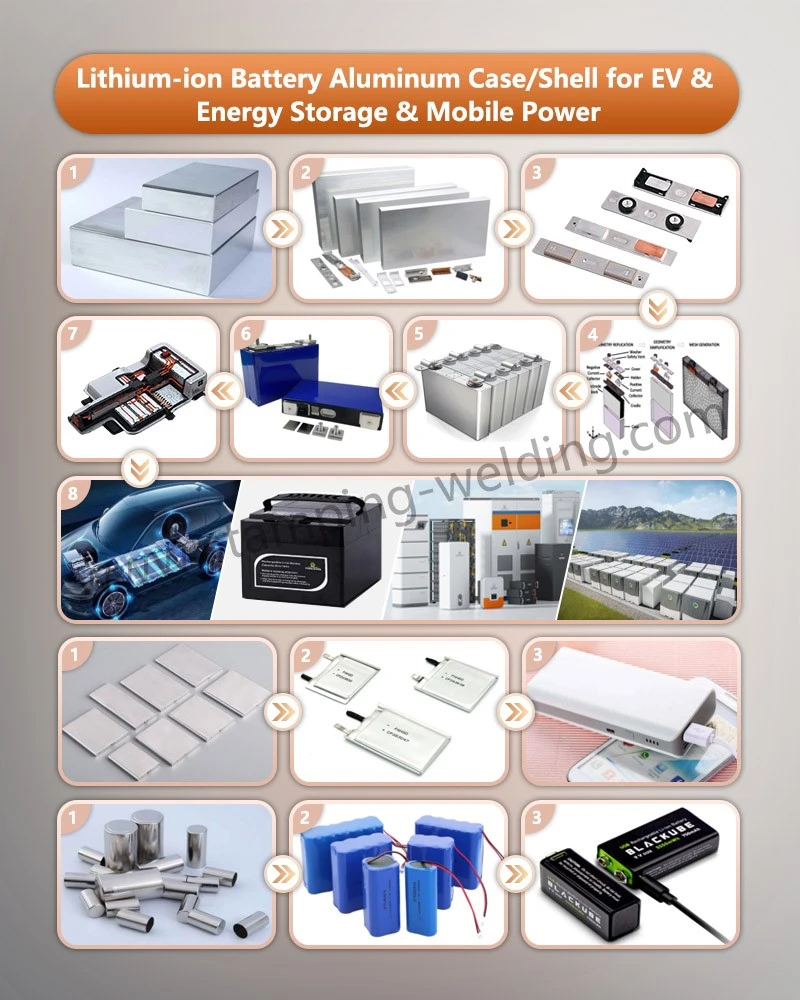
Currently, prismatic aluminum-cased batteries are primarily used in the following areas:
New energy vehicles represent a crucial application market. Power batteries must balance weight, space utilization, structural stability, and thermal management; consequently, prismatic aluminum-cased cells are well-suited for battery module and pack designs.
Energy storage systems are another key application area. As the capacity of energy storage equipment increases, cells must deliver high energy storage capabilities within limited space while maintaining structural stability and reliable packaging.
In addition, power tools, industrial equipment, robotics, low-speed electric vehicles, and certain consumer electronics may also employ prismatic lithium-ion cells.
What parameters should be considered when sourcing prismatic aluminum battery cases?
If you are sourcing prismatic lithium battery cases, it is recommended to verify at least the following information:
· Case length, width, and height
· Material grade and temper
· Case wall thickness
· Deep-drawing depth
· Opening dimensions and tolerances
· Case flatness
· Top cover mating dimensions
· Welding zone structure
· Locations of the electrolyte filling hole and explosion-proof structure
· Surface treatment requirements
· Airtightness and related testing requirements
· Annual demand and batch order quantities
For new energy vehicle and energy storage projects, additional factors must be confirmed, such as the cell's design life, operating environment, vibration conditions, and the subsequent battery pack installation method.
Future Trends in Prismatic Aluminum Battery Casings
As new energy vehicles and energy storage systems evolve toward higher energy density, lightweighting, and automated manufacturing, aluminum battery casings are also trending toward greater precision. Future products must not only be lighter but also strike a balance between material strength, formability, dimensional accuracy, and welding compatibility. Furthermore, the development of large-format prismatic cells-resulting in increasingly large casings-places higher demands on material uniformity, forming processes, flatness, and welding quality.
Consequently, competition in the aluminum battery casing sector is shifting from simple metal stamping to a comprehensive contest involving capabilities in materials, tooling, forming, precision machining, and quality control.
Aluminum alloy casings for prismatic lithium batteries serve not only the fundamental function of protecting the battery cell but are also closely linked to lightweighting, structural stability, thermal management, sealing integrity, and automated production. For battery manufacturers, pack assemblers, and procurement professionals in the new energy vehicle and energy storage industries, selecting the right aluminum battery casing supplier requires a holistic evaluation of materials, dimensional accuracy, forming capabilities, welding performance, and mass-production stability, rather than a mere comparison of unit prices.
Contact Us