An Upgrading The Selection And Structural Design Of Low-Voltage Power Distribution Cabinets: An Analysis Of Fixed-Type, Drawout-Type, And Intelligent Power Distribution Systems
Nov 26, 2026
As industrial manufacturing, commercial buildings, data centers, and new energy infrastructure continue to evolve, low-voltage power distribution systems are facing new challenges, including a greater diversity of load types, an increase in the number of circuits, and more stringent requirements for operational reliability. Power distribution cabinets perform essential functions such as power distribution, circuit protection, and equipment control; furthermore, their structural design, circuit layout, expandability, and maintenance requirements directly influence the operational efficiency and total lifecycle cost of the distribution system.
In practical engineering, fixed-type and drawout-type (withdrawable) power distribution cabinets are two common configurations for low-voltage switchgear. The former is characterized by a simple structure, straightforward maintenance, and relatively controlled costs, while the latter utilizes modular functional units to enhance the efficiency of circuit inspection and replacement. Neither option is inherently superior; the choice depends on a comprehensive assessment of factors such as load capacity, the number of circuits, requirements for operational continuity, future expansion plans, and available space.
Structural Differences: Fixed-type vs. Drawout-type Cabinets
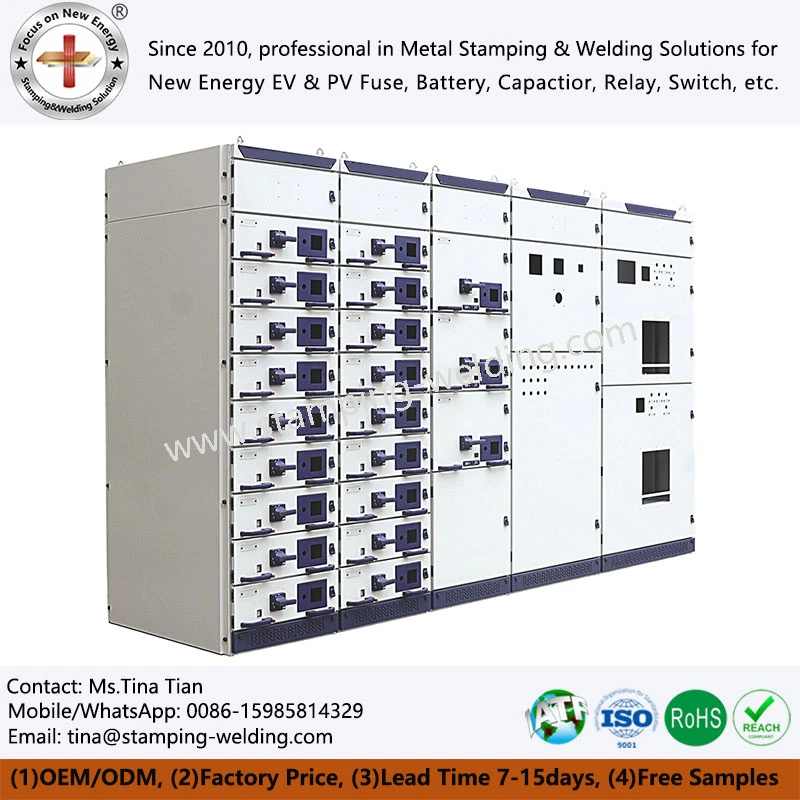
Fixed-type cabinets-exemplified by designs such as the GGD series-feature circuit breakers, contactors, instruments, and other electrical components installed in permanent, fixed positions within the enclosure, connected via busbars, wiring, and terminals. Their internal structure is relatively simple, and the space is utilized in a direct manner, making them well-suited for applications with stable loads, a limited number of circuits, and the flexibility to schedule power outages for maintenance.
Drawout-type cabinets-represented by series such as GCS, MNS, and GCK-organize their internal space into functional units, with each outgoing circuit assigned to a specific "drawer" (or module). These drawers can be shifted between different positions-such as "connected," "test," and "disconnected"-facilitating the inspection, maintenance, and replacement of individual circuits. For facilities with a large number of circuits and high requirements for operational continuity, this modular design offers greater flexibility for maintenance tasks.
It should be noted that a drawout-type design does not imply that all faults can be addressed without interrupting power. All operations must strictly adhere to the manufacturer's safety protocols, isolation requirements, and the facility's electrical management policies. The interchangeability of drawer units depends on factors such as the switchgear series, rated parameters, and interface design; compatibility cannot be determined solely based on external dimensions.
In high-voltage power distribution systems, "middle-mounted" (withdrawable) switchgear-such as the KYN28 series-utilizes a truck-mounted design, where the position of the truck (withdrawable unit) allows for the isolation and maintenance of the main circuit. Low-voltage fixed-type units, low-voltage withdrawable units, and high-voltage truck-mounted units differ significantly in terms of voltage class, internal architecture, and operational requirements; therefore, they must be selected and configured individually during the engineering design phase.
Key Factors in Power Distribution Cabinet Selection
When procuring power distribution cabinets, one should not focus solely on the unit price. It is equally important to consider long-term maintenance costs, potential losses due to power outages, and the investment required for future capacity expansion. For enterprises with continuous production processes, a failure in a critical circuit-if it necessitates a prolonged power outage for repairs-could result in production losses far exceeding any initial savings on equipment procurement. Consequently, operational reliability and the time required for fault recovery should be factored into the cost-benefit analysis during the selection process.
The number of circuits and the provision for spare capacity are also critical criteria. Engineering design should determine the number of functional units within a cabinet based on the current equipment list, projected future load increases, and potential temporary power requirements. While withdrawable-type cabinets offer greater flexibility for future expansion through reserved slots for functional units, a lack of initial planning for spare space may later necessitate the addition of entire cabinets or modifications to the busbar structure. The ratio of spare capacity should be determined based on the project's expansion plans, anticipated load fluctuations, and the specific conditions of the electrical room, rather than by applying a rigid, standardized percentage.
Available space is another major factor influencing the choice of cabinet type. During the design phase, it is essential to verify dimensions (width, depth, and height), operational aisles, maintenance clearances, and the routing of incoming and outgoing cables. In projects where space is constrained, one must also account for the door-swing radius, busbar connection points, and the required spacing between cabinets to prevent issues with installation or maintenance once the equipment arrives on-site.
Furthermore, complete switchgear assemblies from different manufacturers may vary in terms of external dimensions, busbar interface configurations, internal compartment layouts, and interlocking mechanisms. For expansion projects where equipment from different series must be connected to the same power distribution system, it is essential to verify interface dimensions, rated parameters, phase sequence, and protection coordination in advance. If necessary, a professional design should be developed to determine the appropriate transition connection scheme.
Power Distribution Cabinet Configurations for Various Applications
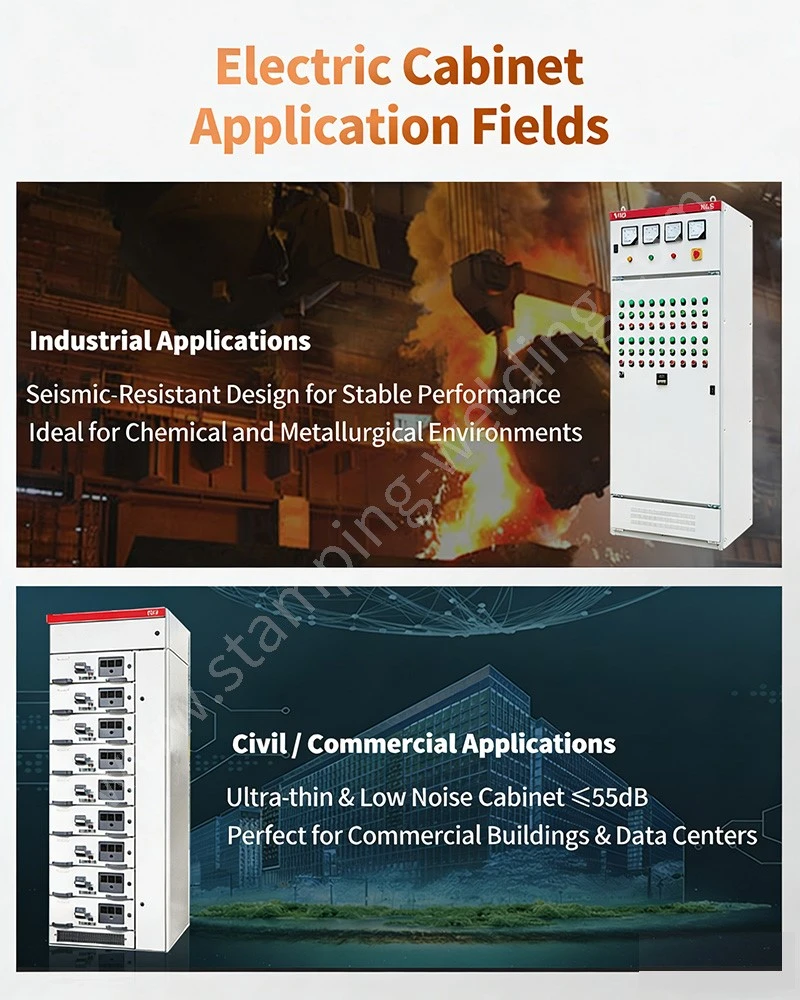
In industrial manufacturing workshops, equipment such as CNC machines, air compressors, refrigeration units, production lines, and auxiliary facilities typically exhibit distinct load characteristics. For production areas with a high number of circuits, frequent maintenance requirements, and significant costs associated with downtime, draw-out (withdrawable) distribution cabinets may be considered, as they allow for the independent inspection and maintenance of specific functional units. For lighting, general power supply, and branch circuits with relatively stable loads, fixed-structure cabinets can be used, depending on capacity requirements and cost considerations.
In commercial buildings and complex developments, power supply for air conditioning, elevators, lighting, fire protection systems, and public facilities is generally organized into separate zones. The main power distribution system should prioritize load classification, dual-power switching, fire protection integration, and operational monitoring, while terminal distribution equipment should be configured based on the load distribution within each specific area. Power distribution circuits across different floors and functional zones should be clearly labeled to facilitate routine inspections by facility management and maintenance personnel.
For industrial parks and multi-tenant buildings, power distribution systems must typically accommodate individual metering, independent control, and fault isolation. Properly segmenting feeder circuits helps minimize the impact that a fault in one user's area might have on other parts of the facility. For outdoor-installed distribution cabinets, key considerations include protection against rain, dust, and corrosion, as well as mechanical robustness and resilience to ambient temperature fluctuations; the cabinet structure and sealing design must be tailored to the specific installation environment.
Higher Design Standards for Power Distribution Cabinets in Data Centers
Data center power supply systems are characterized by high load density, stringent requirements for continuous operation, and complex power distribution paths. A clear power distribution architecture must be established among server racks, UPS units, battery systems, precision air conditioning, and other distribution equipment. Compared to standard industrial power distribution, data centers place a greater emphasis on power redundancy, circuit monitoring, load balancing, and fault isolation capabilities. In data center infrastructure, server cabinet power distribution primarily concerns the delivery of power within and at the level of individual server cabinets.
Solutions must be determined based on factors such as equipment power requirements, power supply standards, outlet configurations, and redundancy architecture. Power rack distribution cabinets require systematic planning that accounts for cabinet layout, upstream power distribution equipment, and downstream loads, ensuring that cable routing, thermal management (airflow) paths, and maintenance access meet operational requirements.
As data centers scale up, the design of distribution cabinets increasingly emphasizes modular configurations and real-time operational monitoring. For different power zones, strategies such as zonal distribution, branch-circuit metering, and status monitoring can be employed to enhance the visibility of load management. Intelligent distribution cabinets, by integrating measurement, communication, and monitoring modules, can collect data on current, voltage, power, and equipment status-providing a foundation for energy consumption analysis and early fault warning.
For DC power applications, DC distribution cabinets must be specifically designed based on DC bus voltage, rated current, short-circuit protection methods, and equipment interface requirements. Because the requirements for interrupting and protecting DC circuits differ from those of AC systems, circuit breakers and fuses must be selected to match specific DC operating conditions; they cannot simply be substituted using parameters intended for AC equipment.
Distribution Cabinet Materials and Structural Design
The materials and manufacturing processes used for distribution cabinets influence their mechanical strength, ingress protection, and long-term operational stability. Common structural materials include cold-rolled steel, stainless steel, and other metal sheets that meet project-specific requirements. Steel distribution cabinets are typically manufactured through processes such as metal sheet bending, welding, assembly, and surface finishing, making them suitable for a wide range of industrial and building power distribution applications.
For scenarios with limited installation space or requirements for wall-adjacent placement, wall-mounted metal distribution cabinets can be designed with optimized dimensions and internal component layouts to minimize their footprint. Design considerations must still account for the load-bearing capacity of the mounting surface, the clearance required for opening cabinet doors, the positioning of cable entry and exit points, and ease of access for routine maintenance.
In outdoor or complex environments, the cabinet's ingress protection (IP) rating and surface treatment must be selected based on specific environmental factors, such as dust, humidity, salt spray, and temperature fluctuations. For installations in coastal regions or industrial environments exposed to corrosive gases, it is essential to evaluate the corrosion resistance of the enclosure materials, coating systems, sealing structures, and fasteners.
Modular distribution cabinets enhance the flexibility of equipment configuration through the combination of standardized enclosure units and functional modules. This modular approach must balance internal space utilization, busbar connection methods, compartment partitioning, and maintenance safety. A more complex enclosure structure is not necessarily better; rather, a balance should be struck between functional requirements, manufacturing costs, and maintenance needs.
Distinctions Between Power Distribution Cabinets and Fiber Optic Distribution Equipment
In power distribution projects, electrical distribution equipment and telecommunications distribution equipment may occasionally appear within the same infrastructure project; however, they differ significantly in function and internal architecture. Electrical cable distribution cabinets are primarily designed for the distribution, connection, and protection of power cables, with a focus on parameters such as rated voltage, current capacity, insulation clearances, grounding methods, and ingress protection (IP) ratings.
In telecommunications networks, an ODF (Optical Distribution Frame/Cabinet) is used for securing optical cables, fiber splicing, circuit routing, and line protection. Optical distribution cabinets are employed for the distribution and allocation of fiber optic networks, with their specific design contingent upon the installation environment-whether it be an indoor equipment room, a building telecommunications closet, or an outdoor network node.
Data distribution cabinets are designed for the centralized management of data lines and communication equipment, requiring consideration of port density, cable organization, equipment mounting, and thermal management. Fiber distribution hub cabinets focus on the centralized distribution and splicing management of fiber optic lines. For outdoor telecommunications networks, outdoor fiber optic cross-connection cabinets must provide the necessary protection, sealing, and cable management capabilities suited to their specific environment.
In certain telecommunications and low-voltage electrical projects, terms such as "fused distribution cabinet" may be used to describe distribution structures that incorporate fuse-based protection. When procuring such equipment, it is crucial to clearly specify the internal configuration, operating voltage, protection mechanisms, and intended application system to avoid confusing power distribution cabinets, fiber optic distribution cabinets, and data communication cabinets. For specific products or models-such as the Primex P4200-verification should be based on the official technical documentation, scope of application, and interface specifications provided by the manufacturer.
Key Technical Parameters and Acceptance Requirements for Power Distribution Cabinets
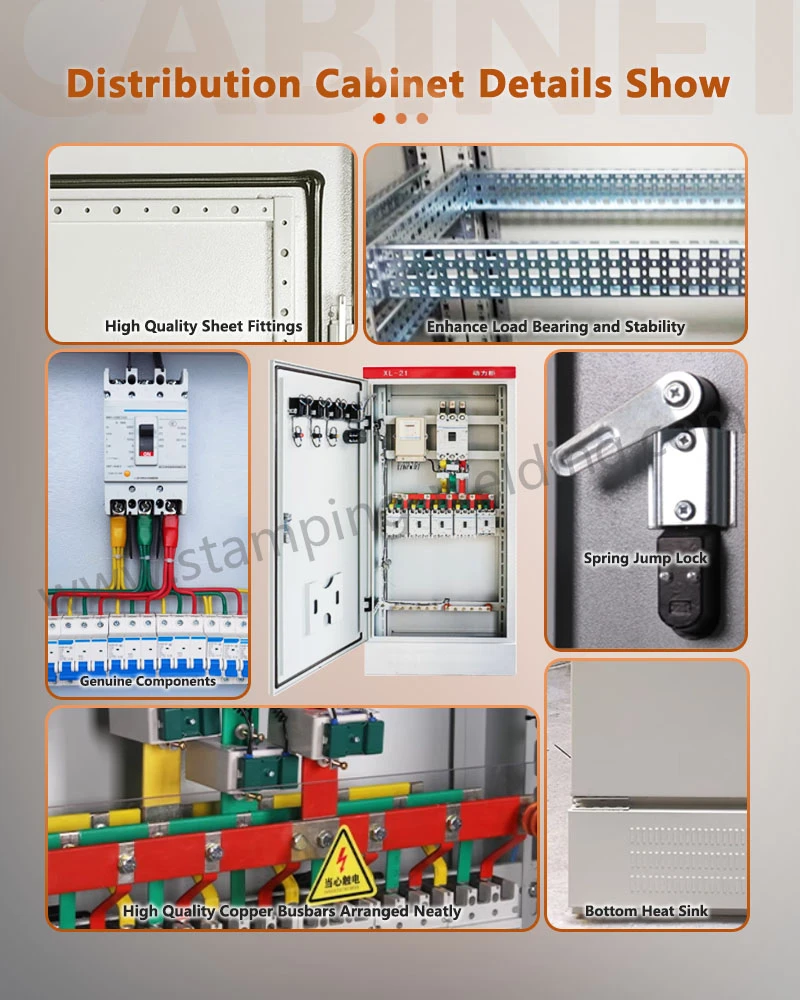
The design of a power distribution cabinet must begin with the verification of the rated operating voltage, rated current, rated frequency, and the configuration of incoming and outgoing lines. The cross-sectional areas of the main and branch busbars must be determined based on calculated loads, ambient temperature, installation conditions, and temperature-rise requirements; additionally, thermal and dynamic stability under short-circuit conditions must be verified. Busbar selection cannot be determined simply by multiplying the rated load current by a fixed coefficient; it must be validated against system short-circuit current calculations and applicable standards.
The ingress protection (IP) rating should be determined based on the installation environment. Requirements for dust protection, waterproofing, and ventilation/heat dissipation vary significantly between clean indoor electrical rooms, production workshops with high dust levels, and outdoor environments. Increasing the IP rating may alter the heat dissipation conditions within the cabinet; therefore, ventilation design, temperature rise, and necessary temperature-monitoring measures must be considered concurrently.
Regarding electrical safety, inspections should cover main circuit connections, protective grounding, insulation clearances, compartment partitioning, and mechanical interlocks. For draw-out (withdrawable) type cabinets, the mechanical operating limits and electrical interlock functions for each drawer must be verified across all operational positions. For circuits equipped with circuit breakers, fuses, or residual current protection devices, it is essential to confirm the rated parameters of these protective components, their breaking capacity, and the coordination between upstream and downstream protection.
Before leaving the factory, equipment must undergo inspections and tests in accordance with applicable standards and technical requirements. This includes checks on appearance and structural integrity, main circuit connections, the continuity of protective grounding, insulation performance, and other relevant electrical tests. Upon arrival at the site, the equipment must be re-examined for its condition following transport, as well as for installation quality, cable connections, phase sequencing, and protection settings. Specific test items, test voltages, and acceptance criteria should be established based on the equipment's rated parameters, applicable standards, and project-specific technical documentation; a single insulation resistance value should not be applied as a universal acceptance criterion for all power distribution cabinets.
Evolution Toward Intelligent, Modular, and Integrated Power Distribution Systems
Driven by the growing demand for industrial automation and energy management, the functionality of power distribution cabinets is expanding beyond traditional power distribution to include operational monitoring and data management. By incorporating smart meters, communication modules, and temperature sensors, operations and maintenance (O&M) personnel can track load fluctuations in critical circuits, monitor equipment status, and detect abnormal temperature rises-providing a foundation for proactive, preventive maintenance.
Modular design is also gaining traction. Standardized functional units help reduce the complexity of equipment configuration and spare-parts management; however, their effectiveness depends on design consistency across product lines, careful component selection, and adherence to interface standards. For expansion projects, utilizing cabinets from the same product series-while pre-planning for busbar connections and spare capacity-can significantly simplify future modifications.
Furthermore, the design, manufacturing, and on-site installation of power distribution equipment are increasingly moving toward an integrated, collaborative approach. Defining circuit lists, load parameters, metering requirements, communication interfaces, and cabinet layouts during the early stages of a project minimizes the need for on-site adjustments after production. By completing tasks such as busbar fabrication, component installation, secondary wiring, and factory testing during the manufacturing phase, the on-site work is streamlined to focus on cabinet anchoring, cable termination, system testing, and protection relay settings-ultimately ensuring a more standardized and professional project delivery.
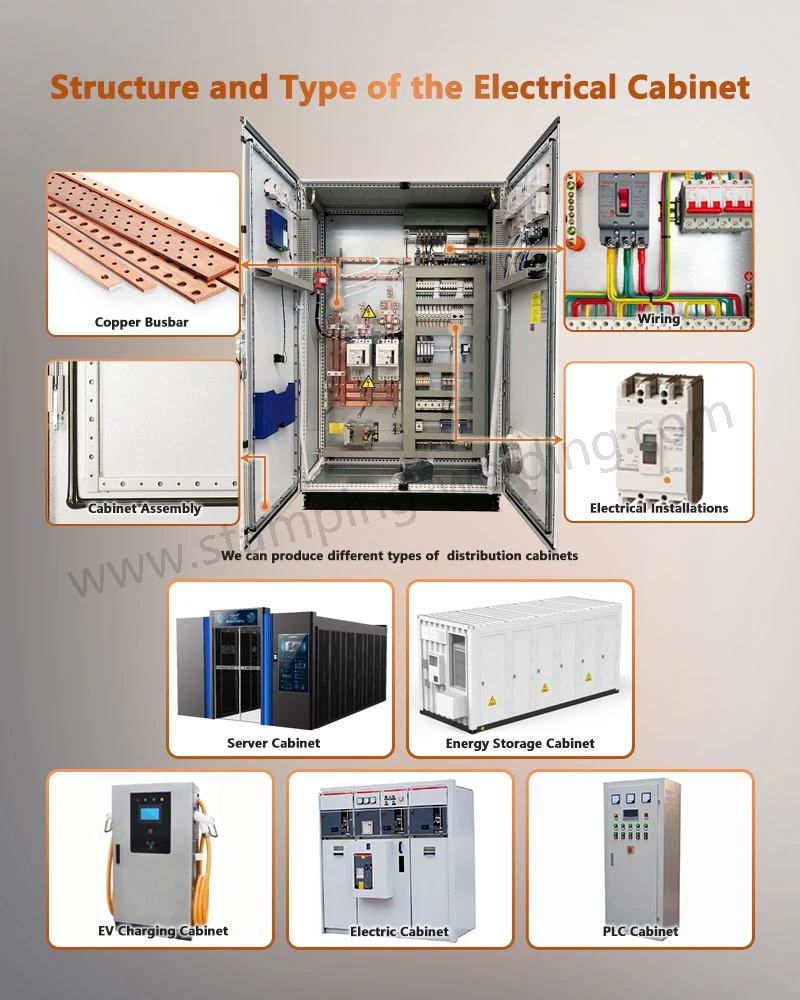
Selecting and Specifying Power Distribution Cabinets for Engineering Procurement
When procuring power distribution cabinets for industrial facilities, commercial buildings, data centers, or outdoor installations, one should not rely solely on model numbers or external appearance. Project teams must compile essential technical data in advance, including single-line diagrams, circuit lists, load capacities, short-circuit current ratings, installation dimensions, cable entry/exit orientations, and operating environment conditions. It is also necessary to clarify requirements for spare circuits, sub-metering, remote monitoring, or specialized protective designs.
During the design validation phase, it is critical to verify the cabinet structure, busbar specifications, component models, protection configurations, communication interfaces, and maintenance clearance. Additionally, requirements for factory testing, on-site acceptance, and the delivery of technical documentation should be clearly established. For customized projects, providing site dimensions for the electrical room and outlining future expansion plans ensures that cabinet arrangement, functional unit configuration, and busbar system design are all considered in a holistic, coordinated manner.
Project procurement personnel and equipment design teams can submit single-line diagrams, circuit lists, load parameters, and enclosure installation requirements based on specific application needs. This allows for the further refinement of specifications-such as whether a fixed or draw-out design is required, the choice of enclosure materials and surface finishes, functional configurations, and manufacturing processes. Through early-stage technical consultation and the validation of prototype units or samples, the risks of equipment interface mismatches and on-site rework can be minimized, ensuring that the power distribution cabinet solution aligns more effectively with the project's operational requirements and long-term maintenance needs.
contact us