Analysis Of 2026 Energy Storage Industry Trends: Market-Oriented Power Systems, Computing Power Energy Storage, And Overseas Markets Drive The Industry Into A New Phase
Sep 05, 2026
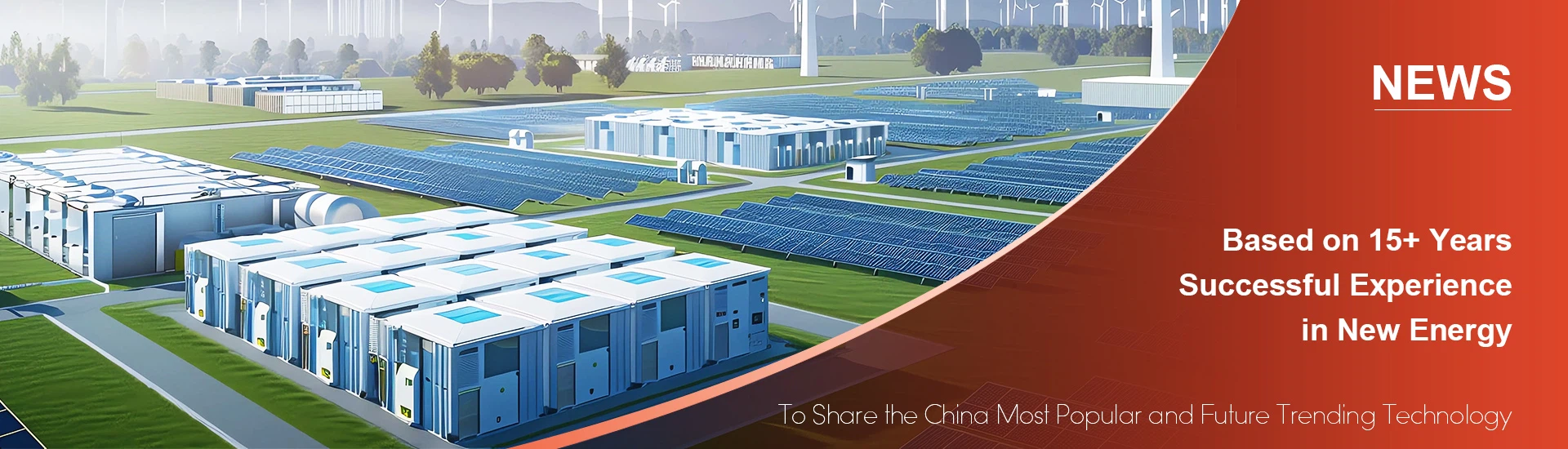
As the global energy transition progresses and the installed capacity of new energy sources grows rapidly, the energy storage industry is shifting from an early development model driven by policy and scale expansion to a new phase centered on application value, operational returns, and system capabilities. By 2026, the focus of competition in the industry will shift from mere equipment manufacturing capabilities to competencies in energy asset operation, scenario adaptability, and global market service.
Against the backdrop of deepening power market reforms, surging demand for AI computing power, and the continued expansion of overseas new energy applications, the scope of energy storage system applications is broadening. From traditional pairing with new energy sources to diverse scenarios such as grid regulation, data center power supply, and home energy management, energy storage is increasingly becoming vital infrastructure that connects new energy, power systems, and the digital economy.
Future industry development will focus primarily on three areas: power trading and operations, energy storage for computing centers, and the overseas residential energy storage market. The industry value chain will also extend from hardware manufacturing to system integration, intelligent management, and long-term operational services.

Power Market Reform Drives the Restructuring of the Energy Storage Value System
In the past, the development of energy storage projects relied heavily on the need to pair storage with new energy sources, with market attention focused on installed capacity, battery costs, and equipment delivery capabilities. However, as power market mechanisms mature, the profitability models for energy storage are evolving.
In this new market environment, energy storage is no longer merely auxiliary equipment for new energy projects but an energy asset with independent operational value. By participating in energy trading, ancillary services, peak-valley arbitrage, and virtual power plant (VPP) dispatch, energy storage systems can generate diversified revenue streams through flexible regulation capabilities.
For energy storage enterprises, future competitive advantages will depend not only on battery system manufacturing capabilities but also on a deep understanding of grid operational dynamics, power trading mechanisms, and full-lifecycle project management. Due to regional differences in electricity price structures, grid demands, and market rules, the profitability of energy storage projects will also vary significantly.
Energy storage solutions equipped with intelligent energy management systems can automatically adjust charge and discharge strategies in response to power market fluctuations, thereby enhancing equipment utilization. For instance, a stackable residential energy storage system-designed with home energy management needs in mind-can meet the capacity requirements of various households through modular expansion while offering greater installation flexibility.
In the future, the development logic of the energy storage industry will shift from merely "selling equipment" to "providing energy solutions"; enterprises must enhance long-term project returns through capabilities in technology, operations, and data management.

Computing Power Centers Emerge as a New Growth Area for Energy Storage Applications
Driven by the rapid advancement of artificial intelligence, large-scale model training, and cloud computing, the electricity demand of data centers and AI computing centers continues to rise. High-density computing equipment requires not only a stable power supply but also high standards for power quality, backup power response times, and energy management capabilities.
While traditional data centers rely primarily on UPS systems to ensure power continuity, energy storage systems are becoming a vital component of data center energy infrastructure as computing scales expand. By utilizing energy storage to manage peak loads, reduce electricity costs, and integrate renewable energy sources, energy utilization efficiency can be further improved.
Amid this trend, energy storage systems are evolving from simple backup power sources into comprehensive energy management platforms. For instance, adopting an integrated design concept-similar to "all-in-one" residential energy storage systems-allows for the high-level integration of batteries, battery management systems (BMS), power conversion equipment, and smart control modules, thereby enhancing system deployment efficiency.
Although the scales of application differ between residential energy storage and large-scale computing-related energy storage, they share common development trajectories: reducing installation complexity through system integration and increasing the level of intelligence in energy management.
Looking ahead, energy storage projects targeting data centers, industrial parks, and commercial buildings will place greater emphasis on high reliability, safety, and long-term operational capabilities.
Overseas Residential Energy Storage Market Maintains Growth Trend
As competition intensifies in the domestic large-scale energy storage market, the overseas residential energy storage market has become a key direction for industry growth.
Regions such as Europe, North America, and Australia are seeing rapid growth in residential energy storage applications, driven by high electricity prices, increasing adoption of renewable energy, and a growing desire for energy independence. An increasing number of households aim to lower electricity costs and enhance energy autonomy by combining solar power generation with energy storage equipment.
To cater to diverse residential environments, energy storage products are increasingly evolving toward modularity, miniaturization, and intelligence. Hybrid residential solar storage systems, which combine photovoltaic (PV) generation with energy storage units, help households maximize solar energy utilization and reduce reliance on the traditional power grid.
At the same time, overseas markets are setting higher standards for safety certifications, system stability, and ease of installation regarding energy storage equipment. Compared to standalone battery products, integrated energy storage systems better meet end-user needs regarding installation, maintenance, and the overall user experience.
For instance, residential solar energy storage systems often feature an integrated design combining battery modules, inverters, and energy management systems, enabling homeowners to manage their energy consumption more conveniently.

Evolution Toward Modular and Smart Residential Energy Storage
As the demand for home energy management grows, residential energy storage products are evolving toward higher levels of integration.
Traditional energy storage systems typically require the installation of multiple separate components-such as battery cabinets, inverters, control systems, and communication modules-resulting in complex installation processes and demanding requirements for installers.
Future residential energy storage products will place greater emphasis on installation efficiency and user experience. Integrated designs reduce the number of components, enhance system reliability, and lower installation and maintenance costs.
Current market offerings include wall-mounted systems, low-voltage systems, and modular, expandable systems. Wall-mounted units are ideal for homes with limited space, whereas low-voltage, floor-standing battery units are better suited for residential and small-scale commercial applications requiring higher capacity.
Furthermore, as lithium-ion battery technology advances, residential lithium-ion storage systems will see continuous improvements in safety, cycle life, and intelligent management, providing more stable energy storage support for home energy systems.
Competition in the Energy Storage Industry Shifts to Comprehensive Capabilities
Industry trends indicate that future competition in the energy storage sector will extend beyond battery cell costs and production scale, centering instead on system design, application scenarios, intelligent control, and global service capabilities.
On one hand, companies must strengthen core technology R&D to enhance battery safety, system efficiency, and equipment reliability. On the other hand, they need to gain a deep understanding of diverse market demands and develop differentiated solutions tailored to power grids, power plants, residential settings, and industrial applications.
As the share of new energy sources rises, energy storage will play an increasingly vital role in energy regulation, grid stability, and the integration of renewable energy. In the coming years, the industry will continue to evolve toward greater intelligence, globalization, and diverse application scenarios.
From home energy management to large-scale energy infrastructure, and from renewable energy integration to AI data centers, energy storage is emerging as a key technological pillar driving the energy transition. Companies possessing strong system integration and long-term operational capabilities will secure greater market opportunities in this new phase of industry development.
contact us