Application Scenarios Of Stamping Copper Sheet in Electrical And Automotive Industries
Jul 27, 2025
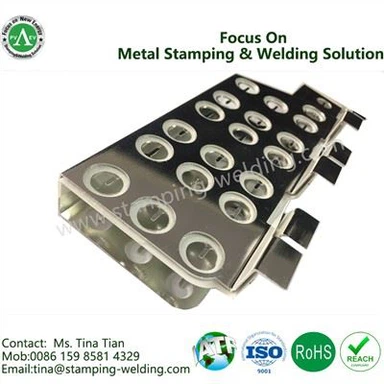
Stamping copper sheet refers to copper materials processed by stamping, which are formed into various precise components through processes like punching and bending. It is widely used in electrical and automotive fields due to its excellent conductivity and processability. This article will explore its functional characteristics, application fields, matching principles with other parts, processing quality control, our company's advantages, and development trends.

Functional Characteristics
1. Electrical Conductivity
Stamping copper sheet has low resistivity, making it an ideal material for current-carrying parts in electrical equipment and automotive circuits.
2. Mechanical Property
Copper stamping parts have good toughness, which can withstand certain impact forces and are not easy to crack during installation and use.
3. Corrosion Resistance
Custom copper stamping with anti-corrosion treatment can maintain stable performance in humid or high-temperature environments such as engine compartments.
Application Fields
1. Electrical Control Systems
Copper strip stamping is used to make contact pieces in contactors, ensuring reliable connection and disconnection of circuits.
2. Automotive Power Transmission
Copper stamped components serve as conductive bridges in automotive wire harnesses, ensuring efficient transmission of electrical signals.
3. Energy Storage Equipment
Copper stamping part is made into electrode plates for batteries, which can improve the charging and discharging efficiency of energy storage systems.
4. Industrial Inverters
Custom copper stamping is applied to heat sinks in inverters, combining conductivity and heat dissipation to protect core components.

Matching Principles with Other Parts
In industrial applications, the compatibility design of stamped copper parts is crucial. For electrical enclosure applications, it is essential to ensure dimensional accuracy within ±0.05mm to achieve IP68 level sealing protection, while automotive connectors require a safety clearance of more than 0.3mm from insulating materials to prevent short-circuit risks. We validate the matching performance of each copper part through finite element analysis and environmental simulation tests, ensuring compliance with ISO 9001 standards and maintaining stable conductivity and mechanical strength under operating conditions ranging from -40°C to 125°C.
Processing Quality Control
Dimensional Accuracy
Use high-precision stamping dies to control the size of copper stamped components, ensuring that the tolerance is within ±0.03mm.
Surface Treatment
Polish copper stamping parts to reduce surface roughness, which helps improve conductivity and prevent oxidation.
Strength Testing
Conduct tensile tests on custom copper stamping to ensure that its mechanical properties meet the requirements of different application scenarios.
Our Company's Advantages
1. Technology Innovation
We have a professional R&D team that can develop new stamping processes for copper stamping parts according to customer needs.
2. Strategic Partnerships
We collaborate with many renowned brands in the industry, leveraging our advanced automatic production lines to deliver high-quality stamping copper sheet with exceptional consistency and reliability.
3. Comprehensive Support
We provide complete technical support for copper strip stamping applications, including prompt resolution of installation and matching issues.

contact us