When Should Carbon Steel Sheet Metal Stamping Parts Be Selected For Structural Load-Bearing Applications? A Guide To Procurement And Selection
Aug 18, 2026
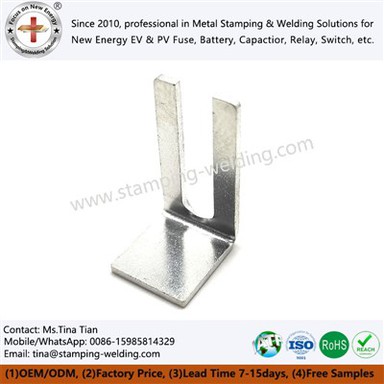
When selecting materials for structural load-bearing components, carbon steel is typically suitable for applications with specific requirements regarding mechanical strength, rigidity, and procurement costs. For parts such as brackets, mounting plates, reinforcements, and equipment structural elements, Carbon steel Sheet Metal Stamping Parts can be mass-produced using processes like punching, bending, and forming. Unlike copper, carbon steel is not prized for its electrical conductivity; therefore, it is better suited for products where structural support and cost control are the primary objectives.

Under what circumstances is carbon steel stamping a suitable choice?
Carbon steel is a common material choice for parts that primarily serve functions such as mounting, support, fastening, or reinforcement, while also requiring a certain load-bearing capacity. Selection decisions should be based on factors such as the part's loading conditions, material thickness, installation method, and operating environment, rather than relying solely on material cost.
For carbon steel sheet metal stamped parts, if the product design involves numerous holes, bends, or localized forming features, the stamping process can reduce the need for secondary operations and is well-suited for stable, high-volume production. For projects with high annual volume requirements, options such as progressive dies or multi-stage stamping processes can also be evaluated.
Which structural components are suitable for the stamping process?
Common products include mounting brackets, mounting plates, equipment supports, reinforcements, clips, and internal structural components for electrical cabinets. These parts typically feature regular 2D profiles and are formed into their final 3D structures through bending or forming processes.
Carbon steel stamping is particularly well-suited for parts requiring a combination of punching, trimming, and bending operations. For high-volume production, the stamping process ensures consistent dimensional accuracy while reducing the processing time per unit. The specific manufacturing approach must be evaluated based on factors such as material thickness, structural complexity, and annual demand.

How does structural design affect load-bearing capacity?
The load-bearing capacity of Carbon steel Sheet Metal Stamping Parts depends not only on the material itself but also on factors such as sheet thickness, bending configuration, flanging, stiffening ribs, and the overall forming method. Strategically adding bent flanges or localized reinforcement features can sometimes enhance part rigidity without significantly increasing material thickness.
For precision carbon steel custom bending projects, procurement and engineering personnel should focus on verifying critical bending dimensions, angles, mounting hole locations, and load-bearing areas. Clearly defining these parameters during the design phase enables suppliers to determine appropriate stamping dies and processing methods more effectively, while also helping to minimize the need for subsequent engineering changes.
Is your stamped bracket strong enough without increasing material thickness?
Submit Your Drawing for DFM Review
How do carbon steel stamped parts meet corrosion resistance requirements?
Carbon steel is inherently susceptible to moisture; therefore, the choice of surface treatment should be determined based on the specific operating environment. Common methods include electro-galvanizing, hot-dip galvanizing, powder coating, and electrophoretic coating. While standard protective measures may suffice for indoor structural components, applications in outdoor or high-humidity environments require careful consideration of corrosion resistance ratings and expected service life.
When sourcing custom OEM zinc-coated carbon steel metal stampings, it is essential to clearly specify the coating type, surface finish requirements, and the intended operating environment. Since the material primarily provides structural strength while the surface treatment addresses corrosion protection, both aspects must be evaluated in conjunction.
How can the procurement costs of carbon steel stamped parts be controlled?
When sourcing carbon steel metal stampings, it is not advisable to compare only the unit price of the material or the quote per part. Actual costs are typically influenced by factors such as material utilization rates, tooling investment, annual purchase volumes, stamping processes, and subsequent surface treatments.
For long-term, high-volume projects, it is worth focusing on material layout utilization and tooling costs; for products with high demand, one can evaluate whether progressive stamping might reduce long-term unit processing costs. If the product design is relatively simple, comparing standard stamping against multi-stage processing options allows for the selection of a manufacturing method that aligns with the actual order scale.
What information is required for a carbon steel stamping RFQ?
For custom carbon steel stamping projects, a comprehensive inquiry package enables suppliers to more accurately assess material specifications and manufacturing approaches. It is recommended to provide the following information:
- Material grade and thickness
- 2D/3D product drawings
- Critical dimensions and tolerances
- Load or structural requirements
- Surface treatment requirements
- Estimated annual volume
For volume procurement, projected order quantities and delivery requirements should also be specified in advance. When evaluating Chinese carbon steel stamping manufacturers, it is also advisable to verify their capabilities regarding tooling development, sample validation, mass production, and quality inspection.
Have drawings but need a practical stamping and tooling assessment?
Get a Carbon Steel Stamping Quote
FAQ
Yes, it is suitable. For parts where structural load-bearing is the primary function-such as brackets, mounting plates, and reinforcements-carbon steel offers a good balance between strength and cost. The final material selection should be determined based on factors such as the loads the part will bear, material thickness, structural design, and the actual operating environment.
Common options include zinc plating, hot-dip galvanizing, powder coating, and e-coating (electrophoretic coating). The specific choice should be based on the product's installation environment, humidity levels, corrosion risks, and service life requirements, rather than applying the same surface treatment to all carbon steel parts.
It is recommended to provide the material grade, sheet thickness, 2D/3D drawings, critical tolerances, structural load-bearing requirements, surface treatment specifications, and estimated order volume. The more complete the information, the more accurately the tooling, stamping process, and production costs can be assessed.
Contact Us
If you are evaluating a solution for carbon steel structural stamped parts, please provide product drawings, material thickness, critical dimensions, and estimated purchase volumes to facilitate further assessment of the stamping process, surface treatment, and mass production options.