Distribution Cabinet Industry Trends: Types, Structural Design, Applications, And The Shift Toward Intelligent Power Distribution
Nov 21, 2026
With the continued development of industrial automation, data center infrastructure, renewable energy systems, and smart buildings, demand for low-voltage power distribution equipment is expanding across multiple industries. As a key connection between upstream power supplies and downstream electrical loads, distribution cabinets perform essential functions such as power distribution, circuit protection, operational monitoring, and equipment control. Their structural design and configuration directly affect the safety and reliability of electrical distribution systems.
From conventional building lighting circuits to industrial power systems, data centers, and fiber optic communication infrastructure, distribution equipment is evolving beyond basic power distribution. Modular construction, intelligent monitoring, and application-specific customization are becoming increasingly important. Different operating environments require different enclosure materials, protection ratings, internal layouts, thermal management solutions, and electrical connection structures.
Working Principles and Main Functions of Distribution Cabinets
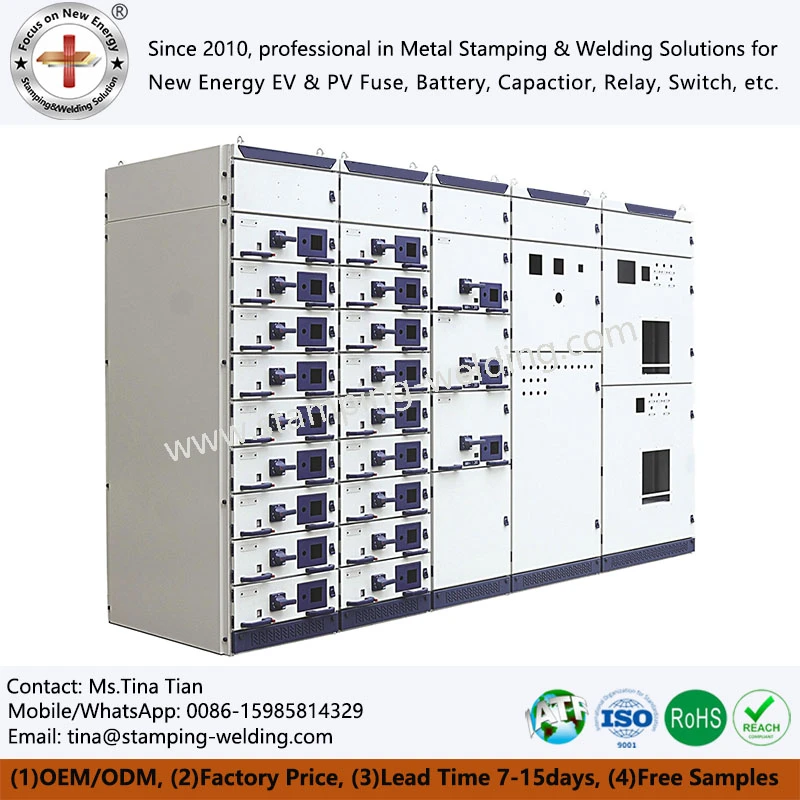
A distribution cabinet is generally composed of a metal or non-metal enclosure, circuit breakers, fuses, contactors, relays, measuring instruments, busbars, and auxiliary connection components. It is primarily used to distribute electrical power and protect individual circuits in low-voltage power distribution systems.
Common applications include single-phase 220V AC systems and three-phase 380V AC systems. The actual rated voltage, current, and electrical configuration must be determined according to the requirements of the specific installation.
The basic operating process begins when the incoming power supply enters the cabinet through the main incoming terminal. Power is then distributed through the main switch and internal busbar system to multiple independent branch circuits. Each branch supplies a specific load, such as lighting equipment, motors, control systems, or dedicated industrial machinery.
When an abnormal condition occurs, such as an overload, short circuit, or earth leakage fault, the corresponding protective device operates according to its specified characteristics and disconnects the affected circuit. This helps limit the impact of electrical faults on other connected equipment.
The main functions of a distribution cabinet include:
- Power distribution: Dividing the incoming power supply into multiple branch circuits to serve different electrical loads.
- Circuit protection: Using circuit breakers, fuses, and applicable residual current protection devices to reduce risks associated with electrical faults.
- Operational monitoring: Collecting electrical data through current meters, voltage meters, energy meters, and monitoring modules.
- Maintenance management: Enabling individual circuit control to simplify equipment maintenance and fault diagnosis.
It is important to distinguish low-voltage distribution cabinets from high-voltage switchgear. Distribution cabinets are generally used for terminal power distribution and control in low-voltage systems, while high-voltage applications require dedicated switching equipment designed for the corresponding voltage class and applicable standards.
Distribution Cabinet Types and Their Application Requirements
As requirements in construction, manufacturing, and telecommunications continue to change, distribution cabinets are increasingly classified according to their installation environment, functional purpose, and structural design.
Classification by Installation Environment
Indoor distribution cabinets are commonly installed in residential buildings, offices, commercial facilities, and industrial workshops. Their design focuses on insulation performance, internal wiring space, accessibility, and heat dissipation. Common configurations include recessed and wall-mounted designs. Wall-mounted metal distribution products are suitable for installations where floor space is limited and electrical circuits need to be organized in a centralized enclosure.
Outdoor distribution equipment must withstand environmental conditions such as rain, dust, ultraviolet exposure, temperature fluctuations, and corrosion. An Exterior Distribution Cabinet generally incorporates sealed enclosure structures, protective door designs, and suitable surface treatments to meet outdoor installation requirements.
For equipment exposed to moisture or dust over extended periods, the enclosure IP rating should be selected according to the actual operating environment. The required protection level should be verified against the installation conditions rather than determined solely by the product name.
Steel remains a widely used enclosure material in industrial power distribution, building electrical systems, and equipment control applications. Steel distribution cabinets offer good mechanical strength and manufacturing flexibility. Sheet metal processing methods such as cutting, punching, bending, welding, and surface coating can be used to produce enclosures in different dimensions and configurations.
For highly corrosive environments, material selection should also consider stainless steel options, coating systems, and long-term maintenance requirements.
Classification by Functional Purpose
Lighting distribution cabinets are primarily used to supply lighting fixtures, general-purpose sockets, and other relatively low-power electrical loads. They typically contain multiple branch circuits with comparatively low individual circuit loads.
Power distribution cabinets are designed to supply industrial equipment such as motors, pumps, fans, air compressors, and production machinery. Their configuration must account for operating current, motor starting characteristics, and short-circuit protection requirements.
Metering distribution cabinets integrate energy meters and related measurement modules to record parameters such as voltage, current, active power, and electricity consumption. They are commonly used in commercial buildings, industrial parks, and sub-metering systems.
Intelligent distribution equipment adds data acquisition, communication, and remote monitoring functions to conventional electrical distribution structures. An Intelligent Distribution Cabinet can monitor electrical parameters, generate fault alarms, record energy consumption, and transmit operating data, depending on its installed modules and control configuration. Typical applications include smart factories, data centers, and intelligent buildings.
For DC power systems, a DC Power Supply Distribution Cabinet is used to distribute and protect DC power across different circuits. Its configuration must be selected according to DC bus voltage, branch current, short-circuit protection requirements, and equipment interface specifications.

Data Center and Telecommunications Applications Drive Structural Improvements
Data centers and telecommunications infrastructure have demanding requirements for power continuity, equipment density, and cable management. Servers, network switches, communication equipment, and auxiliary systems require stable power distribution, while cabinet structures must provide organized cable routing and convenient maintenance access.
Distribution Cabinets for Data Centers are used for power distribution and related equipment installation within data center environments. Their design should consider distribution capacity, busbar arrangement, thermal management space, cable routing, and maintenance access. In high-density facilities, future load growth and power redundancy requirements should also be evaluated.
Fiber optic communication equipment serves a different purpose from conventional electrical distribution equipment. Its primary functions include optical cable access, splicing, splitting, distribution, and protection.
An Outdoor fiber optic distribution cabinet is commonly installed in outdoor fiber optic networks to organize and protect optical cable connections. Its internal structure needs to accommodate cable fixation, splicing, optical splitting, and cable protection.
The design of an Outdoor Fiber Distribution Cabinet should take into account the installation location, fiber capacity, cable entry and exit arrangements, and environmental protection requirements.
In telecommunications networks, a Fiber Distribution Hub Cabinet typically serves as a centralized distribution point between feeder cables and distribution cables. Its internal layout should provide sufficient space for fiber bending, splicing, and cable identification to reduce the risk of fiber damage during installation and maintenance.
For communication equipment power management, Cable Distribution Cabinets can be used for centralized cable and distribution connection management. The actual configuration should be determined by whether the equipment is intended for electrical power distribution, communication cable management, or integrated cabling. These functions should not be treated as interchangeable.
Cabinet Structure and Core Components Affect Operational Reliability
The structural design of a distribution cabinet affects more than its appearance and installation method. It also influences component mounting, heat dissipation, electrical clearances, and long-term maintenance.
From a manufacturing perspective, a typical enclosure consists of an outer housing, mounting plate, door panel, support structures, DIN rails, busbar supports, and grounding components. Common manufacturing processes include laser cutting, CNC punching, sheet metal bending, welding, riveting, and surface coating.
The enclosure must have sufficient mechanical strength to resist deformation during transportation, installation, and long-term operation. The sealing structure between the door and cabinet body should be designed according to the required protection rating. Outdoor products also require appropriate protection around locks, hinges, gaskets, and cable entry points.
Internal electrical components must be arranged according to current ratings, circuit quantities, and maintenance requirements.
- Circuit breakers control circuit switching and provide overload and short-circuit protection.
- Contactors are used to switch electrical loads under specified operating conditions.
- Relays perform control signal switching and auxiliary control functions.
- Busbars and terminals provide electrical power transmission and circuit connections.
For projects requiring standardized dimensions, batch installation, and future configuration changes, Modular Distribution Cabinets can improve flexibility through standardized mounting units, DIN rails, and functional partitions.
A Modular Fiber Cabinet serves a different purpose by providing a modular structure for fiber optic distribution. It allows the internal configuration to be adjusted according to optical cable quantities and port requirements.
During manufacturing, quality inspections should cover sheet thickness, bending dimensions, welding quality, mounting hole positions, surface coating, and grounding continuity. For enclosures with higher protection requirements, sealing performance and assembly consistency should also be included in the inspection process.

Key Technical Parameters for Distribution Cabinet Selection and Installation
Distribution cabinet selection should begin with the actual electrical loads and installation environment. The following technical factors should be evaluated.
1. Rated electrical parameters
Circuit breakers and busbars should be selected according to system voltage, load current, available short-circuit current, and the number of branch circuits. Circuit breaker ratings and breaking capacities must match the electrical characteristics of the system. Replacing a frequently tripping breaker with a higher-current model without checking the circuit design can compromise protection.
2. Enclosure protection rating
IP ratings indicate the level of protection provided by an enclosure against solid objects and water ingress. Indoor dry environments and outdoor humid environments have different protection requirements. The appropriate rating should be selected according to the actual installation location, cleaning methods, and exposure conditions.
3. Enclosure material and surface treatment
Cold-rolled steel is commonly used in standard indoor applications. Stainless steel or appropriately coated materials may be more suitable for humid or corrosive environments. Material selection should also consider mechanical strength, manufacturing accuracy, and maintenance costs.
4. Internal space and heat dissipation
Adequate electrical clearances and creepage distances must be maintained between components in accordance with applicable product requirements. Space should also be reserved for cable bending, terminal connections, and maintenance access.
For equipment with significant heat generation, ventilation or temperature control requirements should be evaluated based on the thermal load and installation conditions.
5. Grounding and installation requirements
Accessible conductive parts and metal enclosures must be connected to the protective earthing system in accordance with applicable electrical standards. Installation inspections should also cover mounting strength, cable entry points, terminal tightness, and separation between power and signal wiring.
The design, manufacturing, installation, and inspection of distribution cabinets should comply with the electrical standards and product requirements applicable to the project location. Additional requirements may apply to explosion-proof installations, fire protection systems, and specialized industrial environments.
Consult Our Electrical Engineers Today
Industry Trends: Intelligent Monitoring, Modular Construction, and Customization
As industrial equipment becomes increasingly connected and energy management requirements expand, distribution cabinets are incorporating more electrical data acquisition, remote communication, and operating condition analysis functions.
Traditional equipment relies heavily on manual inspection and on-site operation. Intelligent configurations can collect operating data through sensors and communication modules, helping maintenance personnel identify abnormal current, temperature increases, and load variations.
Modular construction is another important development direction. Standardized enclosure dimensions, mounting structures, and functional units can improve manufacturing and assembly efficiency while making future circuit modifications and equipment maintenance easier.
However, modular designs must still account for component dimensional compatibility, connection methods, and electrical safety requirements.
At the same time, data centers, fiber optic networks, renewable energy systems, and industrial automation applications have different equipment configurations. These differences are driving more project-specific cabinet designs.
For non-standard products, enclosure dimensions, sheet specifications, mounting holes, internal partitions, surface treatments, and cable interfaces may need to be customized according to customer drawings and actual operating conditions.
In the future, competition in the distribution equipment industry will depend not only on enclosure fabrication and component assembly, but also on structural engineering, manufacturing consistency, electrical integration, and quality traceability. Manufacturers will need to balance standardized production with project-specific customization to meet the requirements of different applications/
Conclusion
Distribution cabinets are essential components of low-voltage electrical systems. Their classification and structural configuration are closely related to installation environments, load characteristics, and functional requirements.
From building lighting and industrial power distribution to data centers and fiber optic communication networks, different applications require specific enclosure protection, internal layouts, electrical connections, and monitoring functions.
As smart buildings, industrial automation, and communication infrastructure continue to develop, distribution equipment is moving toward intelligent monitoring, modular construction, and application-specific customization.
For engineering designers and procurement teams, product selection should involve a comprehensive assessment of rated electrical parameters, enclosure protection ratings, materials, internal structures, and applicable standards. This helps ensure that the selected equipment is compatible with the actual power distribution system.
contact us