Fuse Contact Maintenance Instructions
Dec 12, 2024
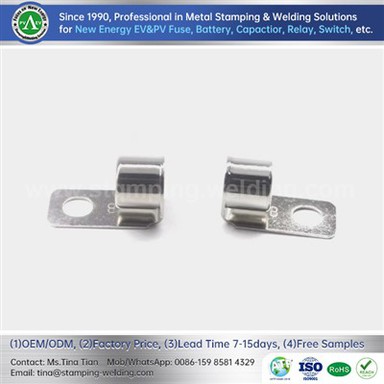
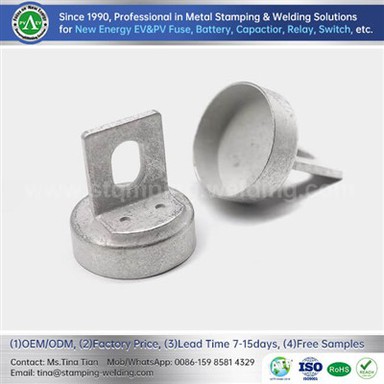
Maintenance of the Fuse End Caps is a key link to ensure its normal operation and extend its service life. The following is a detailed description of the maintenance method of the fuse contact blade:

I. Regular inspection and maintenance.
1. Appearance inspection:
Regularly check the appearance of the product to ensure that there is no damage, deformation or corrosion on its surface. Remove dust, dirt and oxides on the contact blade to keep its surface clean.
2. Contact inspection:
Use an eraser or sandpaper to gently wipe the contact part of the contact blade to ensure that it has good contact and no looseness or poor contact. Check whether the fit between the contact blade and the fuse holder is tight. If there is any looseness, tighten it in time.
II. Correct replacement and installation.
1. Choose a suitable fuse:
When replacing the product, choose a new contact blade with the same model and specification as the original fuse. Ensure that the rated current, rated voltage and other parameters of the new contact blade are consistent with the original contact blade to meet the circuit requirements.
2. Correctly install the contact blade:
When installing the contact blade, ensure that it has good contact with the fuse holder to avoid false operation due to increased melt temperature. For tube fuses, they should be installed vertically as required to ensure that the contact area between the Copper Pipe End Stop and the fuse is sufficient.
3. Pay attention to installation details:
During the installation process, the Copper Pipe End Stop should be protected from mechanical damage to avoid affecting its service life and performance. Ensure that the contact blade's wiring screws are tightened to avoid poor contact causing heating or melting.

III. Use environment and maintenance cycle.
1. Use environment:
The fuse should be installed in a dry and ventilated place to avoid moisture and water accumulation that affect its service life. Avoid long-term exposure of the product to high temperature, high humidity or corrosive environment to avoid accelerated aging or corrosion.
2. Maintenance cycle:
Develop a reasonable maintenance cycle based on the use and environmental conditions of the fuse. Clean, inspect and tighten the Fuse End Caps regularly to ensure that it is in good working condition.
IV. Precautions.
1. Power-off operation:
When replacing or repairing the Copper Cap Fittings, the relevant circuit switch must be turned off first to ensure that the circuit is powered off to avoid the risk of electric shock.
2. Professional tools:
Use special tools or manual tensioners for replacement and installation to avoid damage to the Copper Cap Fittings caused by using inappropriate tools.
3. Records and backups:
Establish a complete maintenance record to record the time, content, replaced parts and other information of each maintenance. Reserve an appropriate amount of spare parts so that they can be replaced in time when needed.

In summary, the maintenance methods of fuse contact blades include regular inspection and maintenance, correct replacement and installation, use environment and maintenance cycle, and precautions. Through scientific maintenance methods, the normal operation of the fuse contact blade can be ensured, and the reliability and safety of the circuit can be improved.
Contact Us
If you encounter other problems related to Fuse End Caps, or need to learn related knowledge, please feel free to contact us.