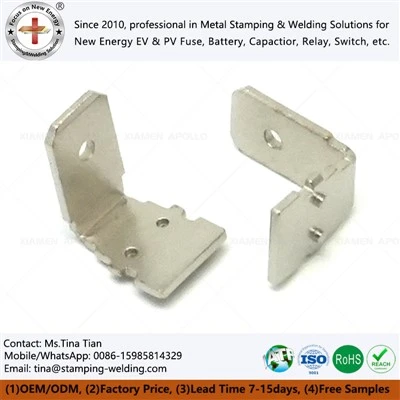
Selection Guide For Flexible Braided BusBar: An Analysis Of Current, Cross-Sectional Area, Dimensions, And Terminal Specifications
Aug 19, 2026
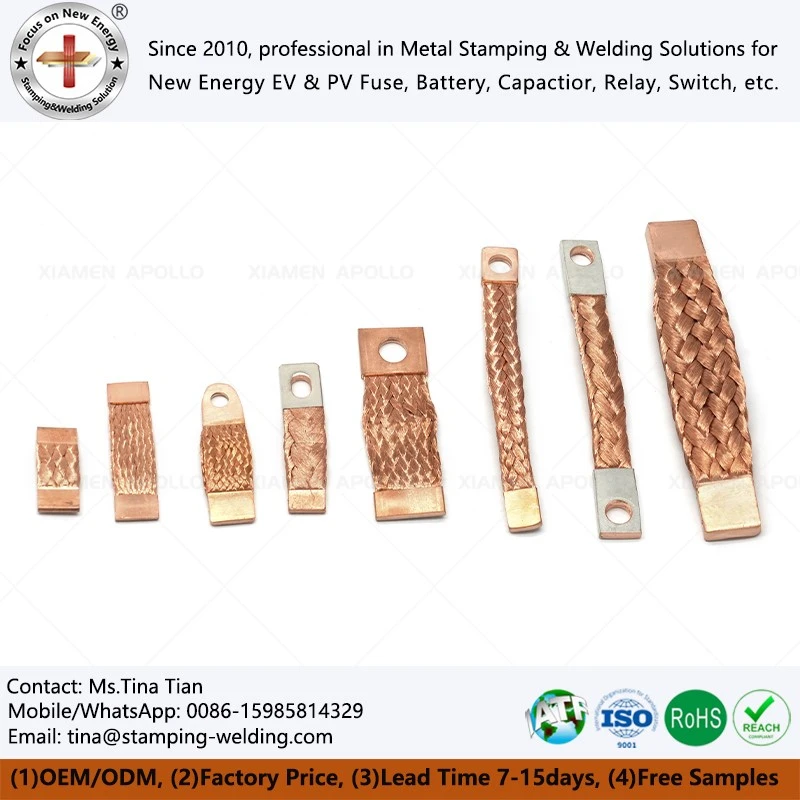
In applications such as new energy vehicles, battery packs, energy storage systems, and industrial electrical equipment, Flexible Braided BusBar serve primarily to provide a flexible electrical connection between two fixed conductors while accommodating assembly tolerances, equipment vibration, and thermal expansion or contraction. Relying solely on rated current or product dimensions during selection can lead to issues during actual operation, such as excessive temperature rise, terminal overheating, bending fatigue, and stress concentration at installation points. Therefore, when selecting flexible copper braided wire connectors with welded ends, factors including current, conductor cross-sectional area, structural dimensions, terminal connection methods, and the operating environment must all be taken into account.
Electrical Parameters: Current, Cross-sectional Area, and Temperature Rise
While current is the fundamental factor in selecting braided flexible busbars, it cannot serve as the sole criterion. Engineers must first determine the continuous operating current, peak current, and actual duty cycle, then factor in ambient temperature, heat dissipation conditions, and permissible temperature rise to specify the conductor. For high-current applications, laminated high-current copper wire braided flexible connectors can meet higher current-carrying requirements by increasing the conductor's cross-sectional area or utilizing a multi-layer structure.
Key parameters to verify during selection include:
- Continuous Current: Normal continuous operating current
- Peak Current: Starting current or short-duration peak current
- Allowable Temperature Rise: Permissible temperature rise
- Ambient Temperature: Actual operating environment temperature
- Cooling Condition: Natural cooling or forced cooling
Even with the same operating current, the required specifications may differ significantly depending on factors such as confined installation space, high ambient temperatures, or prolonged continuous operation. Therefore, product specifications cannot be determined simply by applying a fixed "A/mm²" ratio. For copper braided connectors used in new energy vehicles, selection must also be aligned with the specific operating conditions of the battery, electric drive, and high-voltage power distribution systems.
Need help matching current, cross-sectional area, and temperature rise for your flexible busbar?
Request Flexible Busbar Selection Support
Dimensions and Flexibility: Installation space must also be considered
Once electrical parameters meet requirements, the Flexible Braided BusBar's dimensions must also be suitable for equipment installation. The length, width, and thickness of braided flexible connectors affect not only current-carrying capacity but also bending direction, flexibility, and installation stress. For low-profile or space-constrained structures, flexible flat copper braid connectors can be designed with specific width and thickness combinations to suit the available installation space.
When procuring these components, it is generally necessary to verify:
- Product length and the mounting distance between ends
- Width, thickness, and overall cross-section
- Bending direction and installation path
- Terminal positioning and installation clearance
- Presence of any special bends or offset configurations
After installation, the product should maintain a natural curve, avoiding prolonged tension, excessive bending, or forced twisting. Particularly in compact assemblies such as battery packs and energy storage cabinets, verifying installation space beforehand helps minimize the need for subsequent sample modifications and prevents assembly interference issues. The dimensions of the flexible copper conductor should also align with the internal equipment space and the location of mounting points.
Terminal structure: Connection method and contact area cannot be overlooked
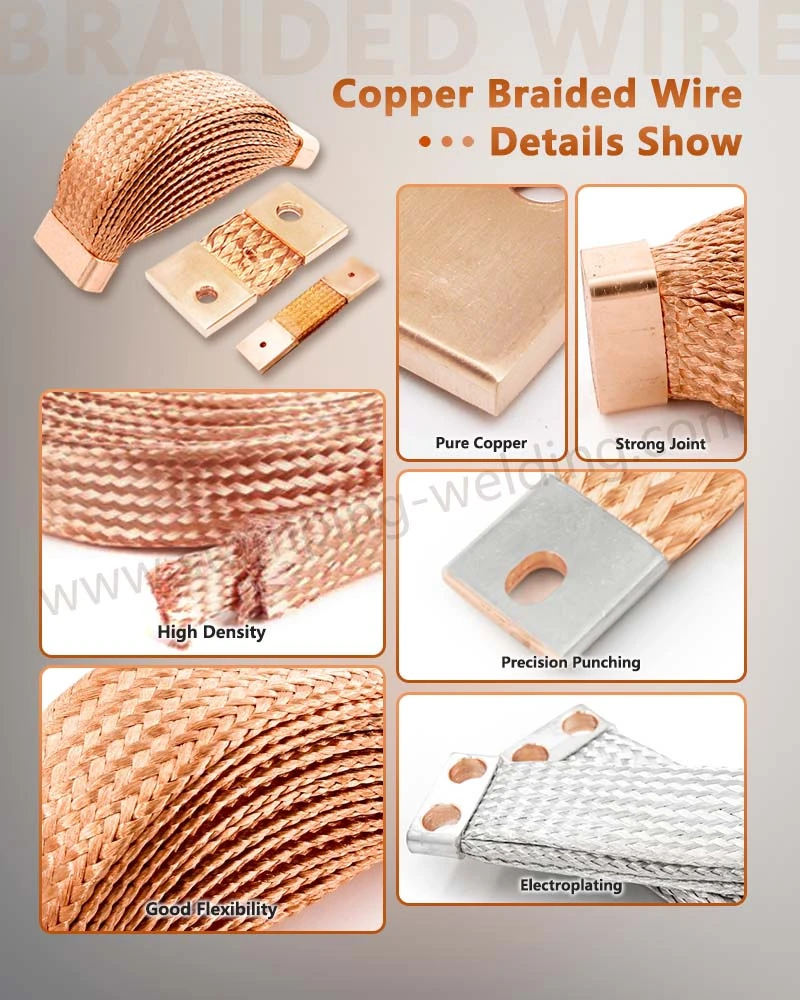
The terminals of braided flexible connectors are integral to the electrical connection; therefore, their design significantly impacts the final contact resistance and temperature rise. When sourcing these components, it is essential to verify not only the dimensions of the braided body but also the terminal width, thickness, mounting hole diameter, hole spacing, and connection method. For copper braided flexible busbar connectors, the terminal design should be selected based on the equipment structure and current requirements.
Common terminal configurations include:
Welded terminals: Suitable for applications requiring high connection stability, large contact areas, and high-current transmission.
Crimped terminals: Suitable for certain standardized connection structures; specific suitability depends on factors such as cross-sectional area, crimping method, and mass production requirements.
Surface treatment must also be selected based on the operating environment. Tin plating is primarily used for oxidation resistance and standard electrical connections; nickel plating is suitable for high-temperature or specialized environments; and silver plating is typically employed in scenarios demanding superior conductivity and low contact resistance. A braided copper flexible connector with tin-plated terminals is a common configuration in new energy and low-voltage electrical equipment.
Unsure which terminal design and plating fits your current and installation requirements?
Request Custom Terminal Design & Quote
Operating environment: temperature, vibration, and corrosive conditions
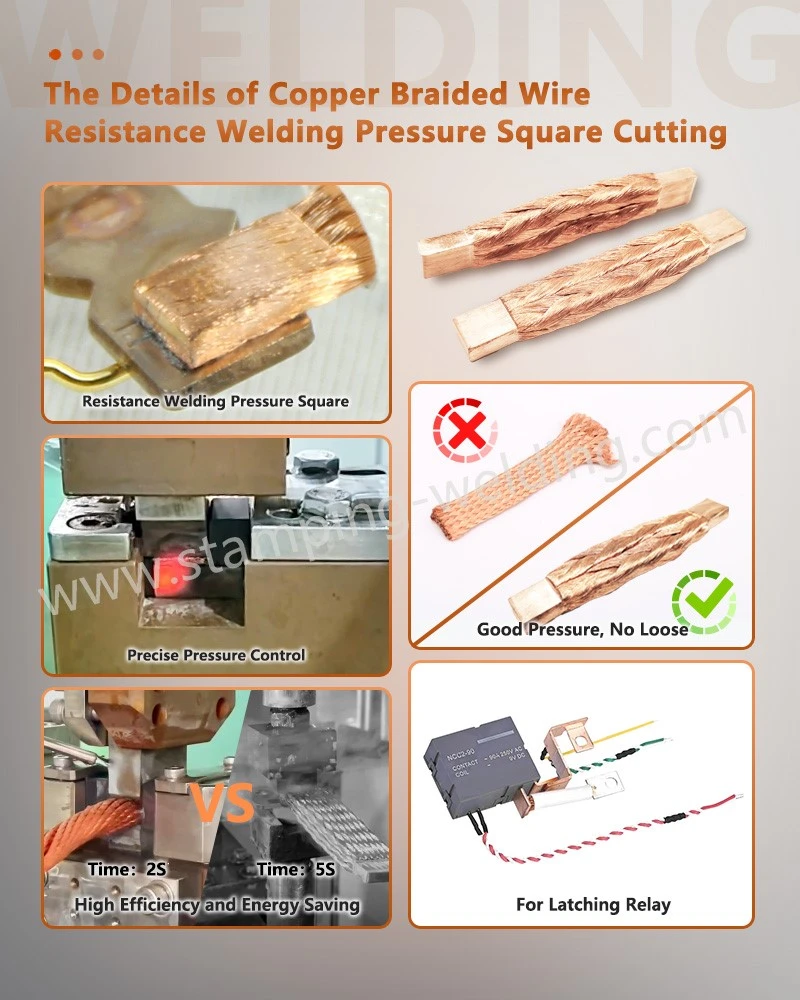
In addition to electrical and mechanical parameters, the operating environment also affects the long-term performance of Flexible Braided BusBar. New energy vehicles and energy storage systems typically involve temperature cycling, mechanical vibration, and continuous charge-discharge operations; therefore, the actual operating environment should be clearly defined during procurement.
Key factors to verify include:
- Operating temperature range
- Vibration and mechanical movement conditions
- Humidity and corrosive environments
- Indoor or outdoor installation
- Presence of frequent start-stop cycles or thermal cycling
For instance, the structural requirements for grounding applications differ from those for power current connections; braided copper grounding straps prioritize flexibility, electrical continuity, and grounding installation requirements, whereas flexible grounding connections for communication equipment must be selected based on the specific equipment structure and grounding system.
Which parameters should ideally be confirmed all at once during procurement?
To minimize back-and-forth communication, it is best to provide complete, fundamental specifications upfront when requesting a quote. These should ideally include:
Operating current, peak current, length, width, thickness, terminal dimensions, mounting hole diameter, hole spacing, connection method, surface treatment, operating temperature, and application scenario.
If 2D or 3D CAD drawings are available, please provide them as well so the supplier can verify installation space, terminal configuration, and bending paths. For power connectors, flat flexible battery busbars, and braided busbars, comprehensive data on current, dimensions, and terminals significantly improves the accuracy of specification matching and the efficiency of the quoting process.
Contact Us
If you are looking for a supplier of braided flexible busbars, please provide parameters such as current rating, dimensions, terminal specifications, and application environment; we can assist with specification matching, structural assessment, and the confirmation of customized solutions.