Industry Insights On Aluminum Battery Casing For Electric Vehicle Batteries
Jan 10, 2026
The rising adoption of electric vehicles (EVs) worldwide has driven rapid growth in demand for lightweight, high-strength battery enclosure solutions. Among these, Aluminum Battery Casing products are critical protective housings that ensure structural integrity, thermal management, and safety performance of EV battery modules. With expanding EV sales and tightening safety regulations, the Battery Shell market continues to demonstrate strong growth momentum and evolving technical challenges.

Global Market Trends and Growth Forecasts
Robust Market Expansion
The global market for Rechargeable Aluminum Shell products is projected to grow substantially over the next decade, with current estimates showing a rise from approximately USD 2.7 billion in 2025 to over USD 14.1 billion by 2032, reflecting a strong compound annual growth rate (CAGR).
Regional Contributions to Growth
Asia Pacific, especially China, continues to dominate demand for EV Car Battery Shell solutions due to rapid EV adoption and local manufacturing scale, while Europe and North America also contribute significantly as automakers expand local EV production.
Diverse Application Segments
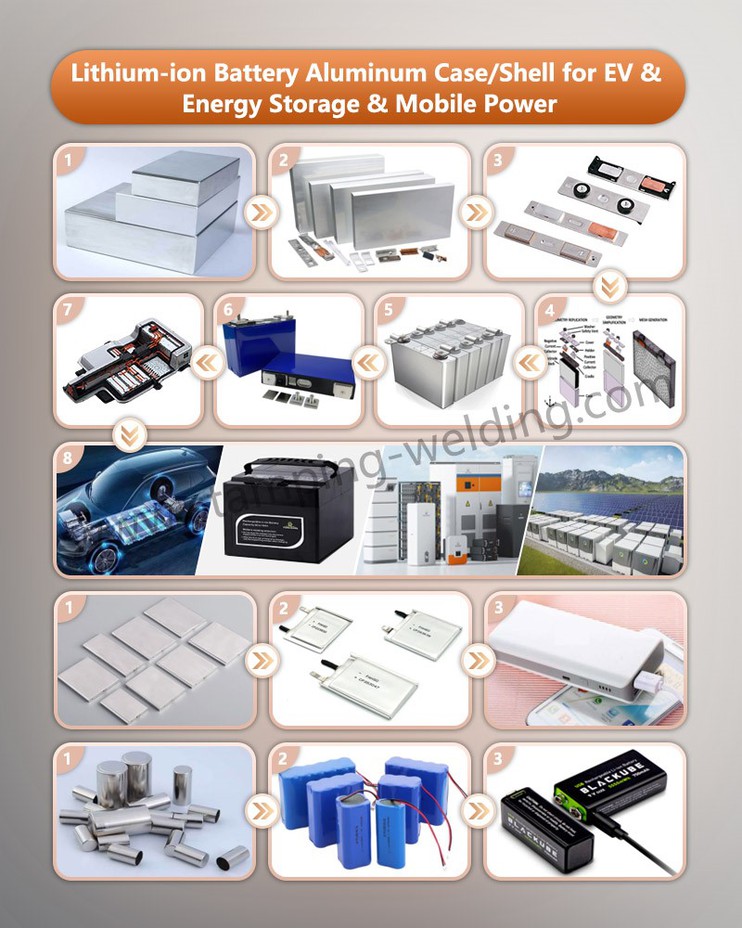
Beyond passenger EVs, Lithium-ion Battery Aluminum Shell enclosures are increasingly used in commercial vehicles, energy storage systems, and other applications where robust battery protection and heat dissipation are essential.
Functional Roles in EV Battery Systems
Structural Protection and Safety
Automotive Battery Aluminum Case plays a key role in protecting battery modules from external collision forces, impacts, and mechanical stresses, ensuring the safety and durability of the entire battery pack.
Thermal Management Support
Due to the high thermal conductivity of aluminum,Aluminum Case for New Energy Cars not only safeguards cells but also contributes to the battery's thermal management strategy, helping maintain optimal operating temperatures and extending battery life.
Weight Reduction and Vehicle Efficiency
The lightweight design advantage of Lithium Battery Aluminum Case solutions can significantly reduce battery system weight and improve overall EV range and energy efficiency-an important consideration in vehicle design optimization.

Manufacturing Challenges and Technical Barriers
Material Cost and Processing Complexity
Although aluminum delivers excellent performance characteristics, the production of Battery Aluminum Cases products requires specialized casting, extrusion, and machining processes that contribute to higher material and manufacturing costs relative to alternative materials.
High-Precision Tolerance Requirements
Achieving precise dimensional tolerances and structural integrity for New Energy Aluminum Battery Cases units is a technical challenge that demands advanced tooling and quality control systems throughout the fabrication process.
Crashworthiness and Regulatory Standards
As EV safety standards become more rigorous, Battery Shell designs must meet mechanical performance requirements such as impact resistance, environmental sealing, and crashworthiness, increasing design complexity.

Future Opportunities and Innovation Directions
Lightweight and Composite Solutions
Ongoing material innovation is encouraging hybrid structures that pair aluminum with composites or advanced alloys, creating enhanced Rechargeable Aluminum Shell architectures that balance strength, durability, and weight reduction.
Advanced Thermal and Structural Integration
Integrating heat dissipation features and multi-functional structural elements into EV Car Battery Shell designs enables greater system efficiency and performance in next-generation EV platforms.
Circular Economy and Recycling Efforts
Investments in end-of-life recycling and closed-loop material recovery are expected to improve sustainability and lifecycle performance of Lithium-ion Battery Aluminum Shell systems as EV adoption increases.

Conclusion
In summary, Automotive Battery Aluminum Case products have become an indispensable component of modern electric vehicle battery systems, driven by global EV market expansion and performance-oriented design trends. Although manufacturing cost, material volatility, and standardization remain challenges, ongoing technological innovation and expanding production capacity support a strong outlook for this sector in the coming decade. Continued integration of lightweight design, thermal management innovation, and supply chain optimization will further enhance the value and performance of aluminum battery casings in EV applications.
contact us