How To Select PVC Dipped Insulated BusBar For High-Humidity Environments: A Guide To Environmental Durability And Selection
Aug 06, 2026
In applications such as new energy vehicles, energy storage systems, power equipment, and industrial control systems, busbars are tasked with continuous high-current transmission; however, environmental factors-including humidity, salt spray, dust, and temperature fluctuations-can compromise conductor performance and insulation safety. Consequently, for high-humidity environments, it is essential to select insulated bars with robust protective capabilities to mitigate risks such as copper oxidation, insulation degradation, and short circuits. PVC Dipped Insulated BusBar provide reliable environmental protection for electrical connection systems through the encapsulation of the conductor with insulating material.
Why are insulated busbars required in high-humidity environments?
In outdoor power distribution cabinets, new energy equipment, and energy storage systems, atmospheric moisture can condense on the surface of busbars. Prolonged exposure often leads to copper oxidation, resulting in increased contact resistance and compromised stability of current transmission. Furthermore, high-humidity environments can reduce electrical clearances and creepage distances, thereby increasing the risk of insulation failure.
Compared to bare copper bars, PVC-insulated copper busbars effectively isolate the conductor from the external environment. This minimizes the impact of moisture, dust, and corrosive substances, enhances operational safety, and makes them particularly suitable for applications requiring superior moisture and corrosion resistance.
How can PVC dip-coated insulated busbars enhance environmental adaptability?
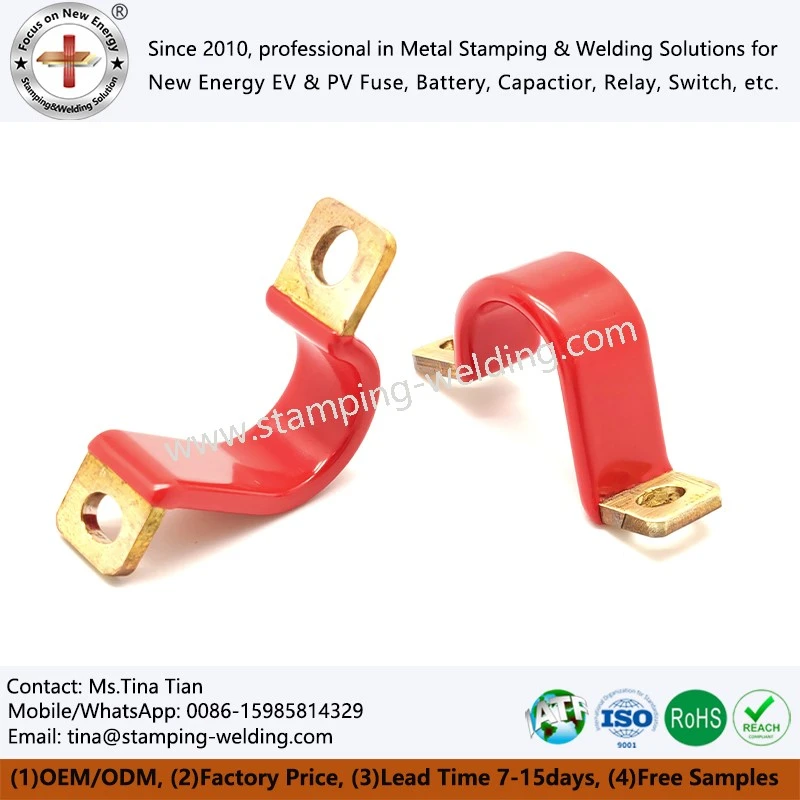
The PVC dip-coating process involves fully immersing the copper busbar in an insulating material, allowing the PVC to evenly coat the conductor's surface and form a continuous protective layer. This structure provides electrical insulation while simultaneously enhancing the bar's mechanical protection.
For equipment operating in humid environments over extended periods, PVC-dipped copper bars reduce the risk of direct exposure of the copper surface, thereby improving resistance to heat, humidity, and corrosion. Additionally, the PVC insulation layer possesses a degree of flexibility, enabling it to withstand minor mechanical impacts during busbar transport and installation.
In battery systems for new energy vehicles, PVC dip-coating insulation is also commonly applied to battery busbars, helping to meet requirements for compact, highly safe electrical connections.
How do manufacturing processes affect the quality of PVC-coated busbars?
The reliability of PVC dip-insulated busbars depends not only on material selection but also closely on production process control.
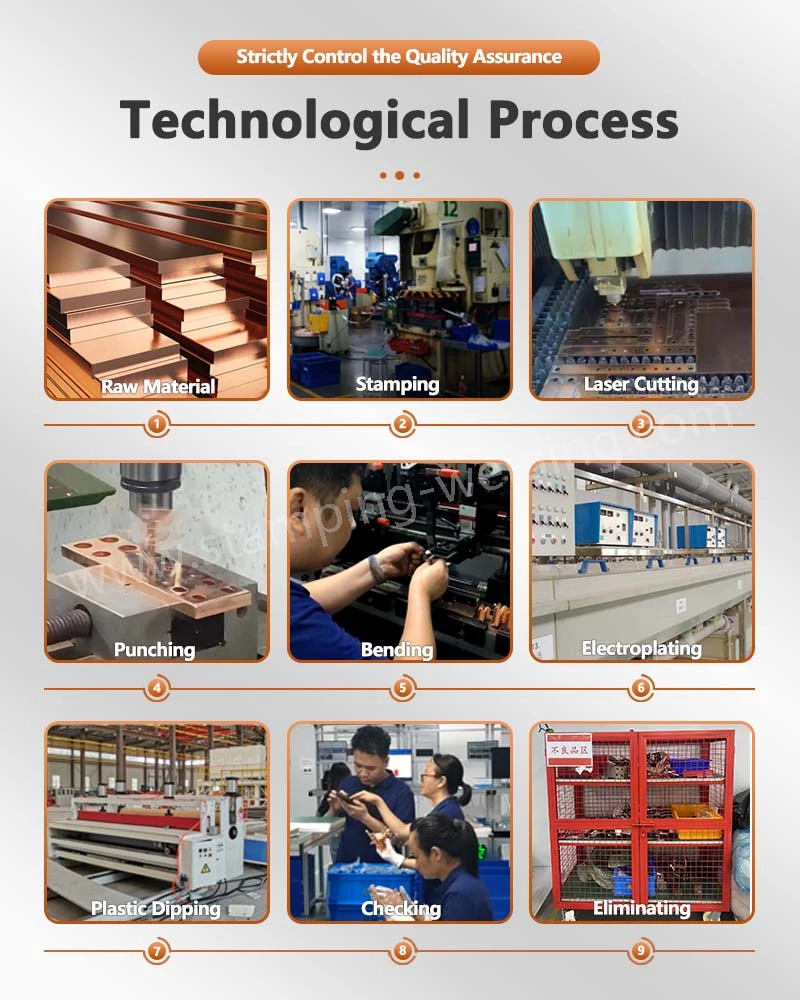
First, the copper busbars undergo precision cutting, punching, and bending to ensure dimensional accuracy meets assembly requirements.
For applications such as new energy vehicles and energy storage equipment, dimensional consistency directly impacts assembly efficiency.
Second, surface cleaning and pre-treatment are required prior to the dip-coating process to remove oil, oxide layers, and machining residues, thereby enhancing the bond strength between the PVC material and the copper substrate.
Subsequently, the dip-coating process controls the coverage and thickness of the insulation layer, creating a stable insulating protective structure. The production process also includes visual inspections, dimensional checks, and insulation performance testing to ensure the product meets the requirements for mass application.
For applications requiring plated protection, PVC dip-insulated copper busbars can incorporate surface treatments such as tin or nickel plating to enhance corrosion resistance in the connection areas.
Key Application Scenarios for PVC Dip-Coated Insulated Busbars
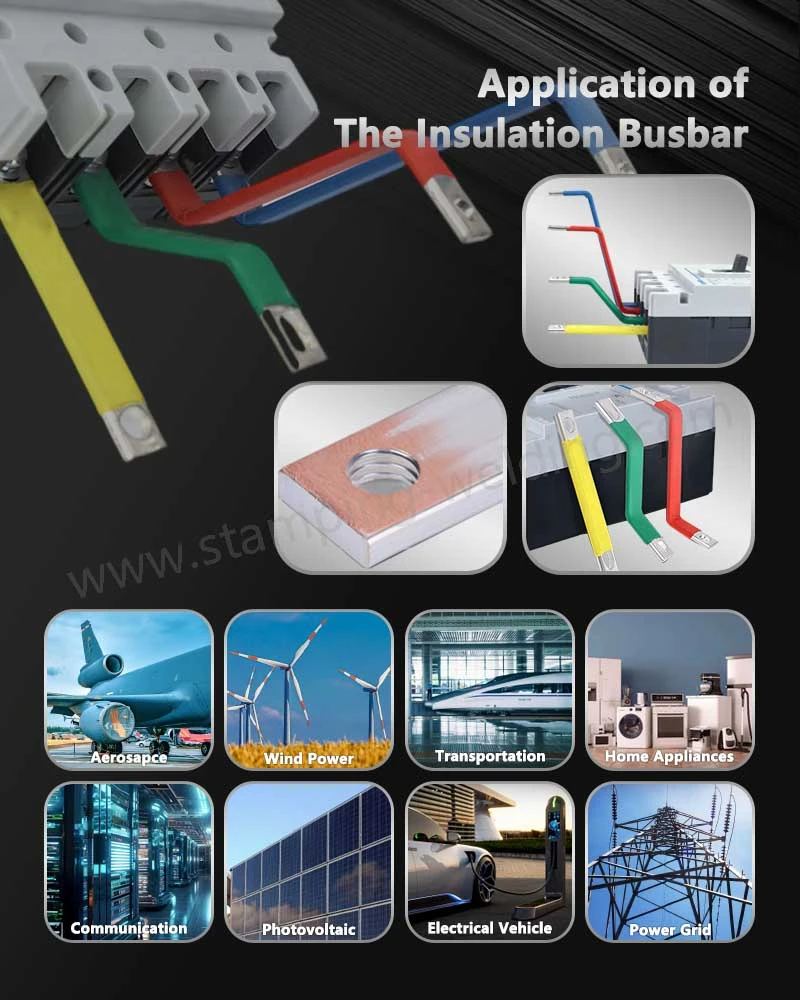
PVC dip-insulated busbars are widely used in sectors such as new energy, electric power, and industrial equipment-including new energy vehicle battery packs, energy storage cabinets, industrial power distribution systems, and automation equipment.
In the new energy vehicle sector, bars must meet requirements for both high-current transmission and safe insulation; for instance, PVC dip-insulated battery busbar connectors are commonly used for internal connections within battery modules.
In stationary power equipment, PVC insulation structures help mitigate the risk of short circuits during installation and enhance safety during equipment maintenance. For applications requiring robust electrical connections, PVC-insulated copper busbars provide reliable electrical conductivity and insulation support.
What key parameters should be considered when selecting PVC-coated busbars?
When selecting PVC Dipped Insulated BusBar, engineering procurement professionals must look beyond the insulation material itself and comprehensively consider electrical performance, structural design, and the actual operating environment.
Insulation performance is a primary consideration, encompassing insulation thickness, voltage withstand ratings, and the material's temperature tolerance range. Different voltage levels necessitate specific insulation requirements; for instance, high-voltage systems in new energy vehicles typically demand more rigorous insulation protection designs.
Next are the copper bar material and current-carrying capacity. Common conductor materials include T2 tough-pitch copper and C1100 pure copper; the busbar's cross-sectional area must be determined based on rated current, available installation space, and temperature rise limits. Materials with high electrical conductivity help minimize power loss and enhance overall system efficiency.
Structural compatibility is another crucial factor. Different equipment imposes varying requirements regarding bar shape, bending angles, and mounting methods; for example, custom solid power busbars with dip-insulated coatings can be tailored to specific equipment structures, effectively accommodating complex installation spaces.
How do you choose the right supplier for PVC-coated insulated busbars?
For procurement and engineering teams, supplier selection impacts not only product quality but also project development timelines and long-term supply stability.
When evaluating suppliers, key areas of focus include:
First, the possession of comprehensive copper busbar processing capabilities, including cutting, bending, stamping, plating, and insulation treatment.
Second, the ability to support OEM custom development, designing suitable busbar solutions based on technical drawings, installation space constraints, and electrical parameters.
Third, the existence of robust quality inspection processes, covering dimensional checks, insulation testing, and material control.
Fourth, the capacity to meet mass production requirements and establish production management processes compliant with standards such as ISO9001 and IATF16949.
For applications involving high-voltage new energy systems and industrial equipment, the selection of pure copper insulated busbars must take into account actual voltage, current, and environmental conditions to ensure long-term operational reliability.

Contact Us
Requirements regarding busbar material, insulation class, and structural configuration vary depending on the specific project. Providing product dimensions, current specifications, and details of the actual operating environment enables the engineering team to analyze requirements and recommend a suitable PVC Dipped Insulated BusBar solution.