Manufacturing Process of New Energy Vehicle Parts: Application of Stamping Technology
Jul 18, 2024
Preface
As the world pays increasing attention to environmental protection and sustainable development, the market demand for new energy vehicles is also gradually expanding. As one of the core components of new energy vehicles, the manufacturing process of parts is particularly important. In the manufacturing process of new energy vehicles, Shenyang stamping processing technology is an indispensable manufacturing process. This article will introduce in detail the application of stamping processing technology for new energy automobile parts, including principles, process flow, material selection, etc.
The principle of stamping technology
Stamping technology refers to a processing method that uses stamping dies to plastically deform metal sheets to obtain the required shape and size. The core principle is to use stamping dies to apply a certain amount of pressure to metal sheets, and through shearing, bending, stretching and other deformations, the metal sheets can reach the predetermined shape and size requirements.
During the stamping process, metal sheets are placed between two dies. When pressure is applied, the metal undergoes significant changes in form and structure, enabling manufacturers to create intricate designs and components with precision. This method is not only efficient but also highly adaptable, making it suitable for producing a wide range of products, from automotive parts to electronic casings.
The advantages of stamping technology extend beyond mere shape alteration; it allows for high-volume production with consistent quality and reduced material waste. By leveraging this process, companies can meet stringent design specifications while optimizing their manufacturing workflows, ultimately leading to cost-effective and scalable production solutions.

Application of stamping technology in the manufacturing of new energy vehiclearts
1. Car body manufacturing
Stamping technology plays a vital role in the manufacturing of new energy vehicle body parts. Stamping technology can be used to manufacture various shapes of body parts, such as doors, roofs, carports, etc. Compared with traditional welding methods, stamping technology has the advantages of low cost, high efficiency and good consistency.
The environmental benefits associated with stamping technology also align well with the goals of new energy vehicles, which aim to reduce overall carbon emissions. By optimizing material usage and reducing waste, stamping contributes to a more sustainable manufacturing process. This makes it an ideal choice for manufacturers focused on creating eco-friendly vehicles that align with global sustainability goals.
2. Chassis parts manufacturing
Chassis parts are an important part of new energy vehicles and have a significant impact on the performance and safety of the entire vehicle. Stamping technology can be used to manufacture various shapes of holes, protrusions and depressions in chassis parts to meet the design requirements of the entire vehicle. At the same time, stamping technology can also ensure the dimensional accuracy and surface quality of chassis parts, and improve the service life and reliability of chassis parts.
One of the key benefits of using stamping technology in chassis parts manufacturing is its ability to maintain high dimensional accuracy and superior surface quality. These factors are vital in ensuring that components fit together seamlessly, which enhances the overall structural integrity of the vehicle. Moreover, the durability and reliability of chassis parts produced through stamping can lead to a longer service life, ultimately benefiting both manufacturers and consumers.
In addition to enhancing safety through structural strength, stamped chassis parts can be designed to reduce vehicle weight without compromising performance. This reduction in weight is particularly important for new energy vehicles, as it can lead to improved energy efficiency and extended driving range, directly addressing consumer concerns about battery performance and vehicle capability.
3. Battery component manufacturing
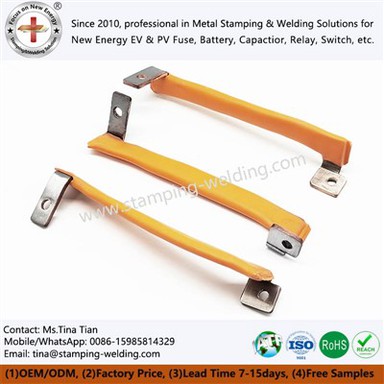
Battery components are one of the key components of new energy vehicles and have a significant impact on the vehicle's range and performance. The stamping process can be used to manufacture key components such as the battery housing and electrode sheets. The stamping process can ensure the dimensional accuracy and consistency of the battery components and improve the energy density and service life of the battery components.
The stamping process guarantees high dimensional accuracy and uniformity across all battery parts, which is essential for optimizing energy density and overall battery efficiency. For instance, properly shaped electrode sheets can enhance the surface area available for electrochemical reactions, directly impacting the performance and longevity of the battery. By utilizing stamping technology, manufacturers can produce high-quality components that contribute to a more efficient energy storage system, vital for the success of new energy vehicles.
Furthermore, as the demand for electric vehicles grows, the need for reliable and high-performance batteries becomes increasingly important. Stamping technology not only supports the production of advanced battery components but also aligns with the industry's broader goals of reducing costs and enhancing sustainability. This method minimizes waste and allows for the efficient use of materials, contributing to the overall environmental benefits of new energy vehicles.

Process flow of stamping technology
The process flow of stamping technology mainly includes die design, material selection, sheet cutting, and determination of stamping process parameters. Among them, die design is the key step in the stamping process, which directly affects the quality and production efficiency of parts. The process of material selection and sheet cutting should take into account factors such as material strength, processability and cost to meet the use requirements of parts.
Material selection in stamping technology
In the stamping process of new energy vehicle parts, the selection of materials is crucial. Commonly used materials include high-strength steel plates, aluminum alloy plates, etc. High-strength steel plates have good strength and durability and are suitable for manufacturing body parts and chassis parts. Aluminum alloy plates have low density and good thermal conductivity and are suitable for manufacturing lightweight battery components.

Conclusion
Through the detailed introduction of stamping processing technology for new energy vehicle parts, we can see the important position of stamping processing technology in the manufacturing of new energy vehicles. Stamping processing technology can not only improve the quality and precision of parts, but also improve production efficiency and save energy. With the continuous development of the new energy vehicle industry, stamping processing technology will be more widely used in the future.
Contact Us
We look forward to working with you to jointly promote the development and progress of the electric vehicle industry. For more information about Aluminum alloy stamping or to place an order, please contact us through the following contact information: