Material Performance Of Fuse Link Contact Copper in Next-Gen Electric Vehicle Power Systems
Jul 31, 2025
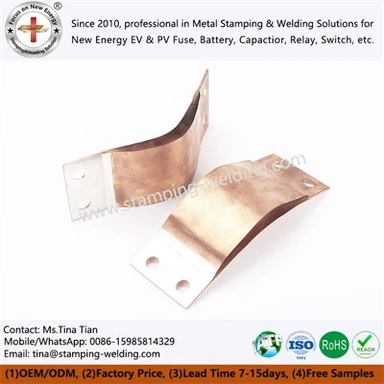
In the rapidly evolving electric vehicle (EV) sector, fuse link contact copper has emerged as a critical material for power system safety and reliability. With EV production expected to triple by 2027, demand for high-performance electrical components is surging. This article examines the technical specifications, innovative applications, and manufacturing breakthroughs for copper-based fuse systems in 800V EV architectures. We'll analyze key material properties, industry trends, and our ISO 9001/UL-certified production capabilities that serve leading automakers worldwide.
Key Applications in EV Power Systems
These specialized components serve essential functions:
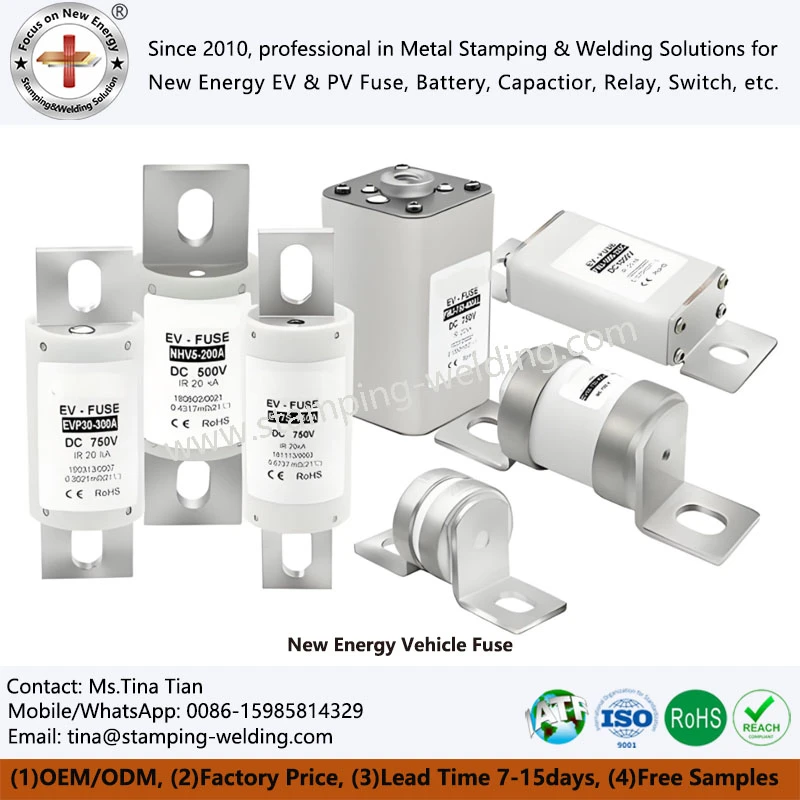
1. High-Voltage Protection: Fuse link contact copper ensures safe current interruption during faults.
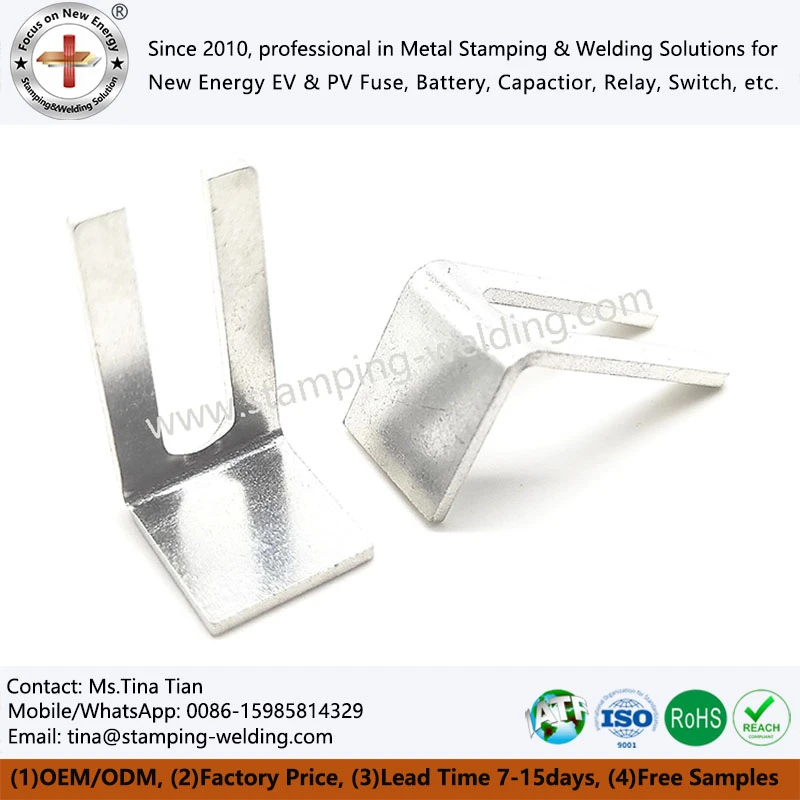
2. Power Distribution: L-type terminals maintain stable connections in 400A+ circuits.
3. Thermal Management: Copper sheet fuse parts dissipate heat in compact battery compartments.
4. Modular Assembly: End blade ferrules copper enable scalable power distribution designs.
The shift to 800V systems has particularly increased demand for components that combine high conductivity with thermal stability.
Material Specifications and Performance
EV power systems require materials with exceptional properties:
| Electrical Conductivity | Copper electrical fuse contacts must maintain less than 50μΩ resistance (minimum 101% IACS) |
| Thermal Endurance | L-type terminals require stable performance up to 180°C |
| Mechanical Strength | End blade ferrules copper must exceed automotive vibration standards |
| Corrosion Resistance | Withstanding harsh underhood environments for vehicle lifespan |
These components demand specialized alloys and precise dimensional control to ensure reliable performance in next-generation EV architectures. The material formulations must balance high conductivity with mechanical durability under extreme operating conditions.
Advanced Manufacturing Processes
1. Precision Stamping
Laser-guided dies produce copper sheet fuse parts with ±0.03mm accuracy.
2. Surface Treatment
Proprietary plating enhances durability of L-type terminals.
3. Thermal Processing
Controlled annealing optimizes grain structure in high-current components.
4. Quality Validation
Automated systems test every copper electrical fuse contact before shipment.
These processes have improved production yields by 35% while reducing material waste by 28%.
Emerging Industry Trends
The EV component sector is witnessing several key developments:
1) Smart copper sheet fuse parts with integrated temperature monitoring.
2) High-strength alloys enabling thinner copper sheet fuse parts.
3) Automated optical inspection for end blade ferrules copper.
4) Sustainable production methods reducing environmental impact.
These innovations are crucial as EVs adopt higher voltage systems and autonomous features requiring ultra-reliable power distribution.
Our Technical Capabilities
We deliver superior solutions through:
1.Certified Production - ISO 9001 & UL-listed manufacturing facilities.
2.Material Expertise - High-performance copper electrical fuse contacts.
3.Custom Engineering - Application-specific L-type terminal solutions.
4.Quality Assurance - 100% testing of end blade ferrules copper.
5.Global Support - Technical teams in 8 key markets.
Our fuse link contact copper products combine cutting-edge metallurgy with automotive-grade reliability. Contact our engineering team to discuss your project requirements.

contact us