Tesla Releases 2022 Q1 Financial Report With Revenue Of $18.8 Billion And Global Deliveries Of Over 310,000 Units
May 07, 2022
On April 20, Tesla announced its financial report for the first quarter of 2022, of which total revenue reached US$18.8 billion, or approximately RMB 121.11 billion; car sales revenue reached US$14.218 billion, or approximately RMB 91.57 billion, and gross profit margin reached The operating income was 3.6 billion US dollars, or about 23.2 billion RMB; the cash flow reached 18 billion US dollars, or about 115.98 billion RMB; the net profit was 3.318 billion US dollars, or about 21.38 billion RMB; the total debt was already below 1 million US dollars, or about 644 million RMB.
It is understood that Tesla's total revenue in the first quarter of 2022 increased by 81% year-on-year, mainly due to the increase in vehicle delivery, the increase in average transaction price, and the increase in other business income.
In the first quarter of this year, Tesla delivered 310,048 units in the global market, including 295,324 units of the more accessible Model 3/Y series and 14,724 units of the higher-end Model S/X series. In terms of production capacity, Tesla produced a total of 305,407 units globally in the first quarter, including 291,189 Model 3/Y units and 14,218 Model S/X units.
In terms of operating income, Tesla posted an operating margin of 19.2% in the first quarter of this year. The increase in operating income was primarily attributable to higher vehicle deliveries, higher average transaction price, lower cost per vehicle, and lower stock-based compensation expenses. At the same time, Tesla said that the increase in raw material procurement, necessities and logistics, the increase in the cost of improving efficiency, and the increase in operating costs have also restricted the further improvement of the company's operating income to a certain extent.
In the cash flow segment, Tesla's cash, cash equivalents and short-term marketable securities rose $300 million to $18 billion in the first quarter. Tesla also paid down $2.1 billion in debt in the first quarter, bringing its total debt excluding auto and energy product financing to less than $100 million.
In the earnings report, Tesla said that the fully autonomous FSD beta version has undergone 7 software updates in 2022, and the R&D team will continue to work on reducing the number of errors in the system, especially by reducing deceleration events to improve FSD in the unprotected left. Accuracy in turn and smooth ride, the goal is to release the FSD beta version to all U.S. FSD customers by the end of this year.
In addition, Tesla said that nearly half of Tesla vehicles produced in the first quarter were equipped with lithium iron phosphate (LFP) batteries that do not contain nickel or cobalt. Currently, lithium iron phosphate batteries are used in most of Tesla's standard models as well as in commercial energy storage applications. In addition, the Model 3 equipped with a lithium iron phosphate battery pack can still achieve an EPA range of 267 miles (about 430km) due to the energy-saving motor.
In addition, Tesla said that nearly half of Tesla vehicles produced in the first quarter were equipped with lithium iron phosphate (LFP) batteries that do not contain nickel or cobalt. Currently, lithium iron phosphate batteries are used in most of Tesla's standard models as well as in commercial energy storage applications. In addition, the Model 3 equipped with a lithium iron phosphate battery pack can still achieve an EPA range of 267 miles (about 430km) due to the energy-saving motor.
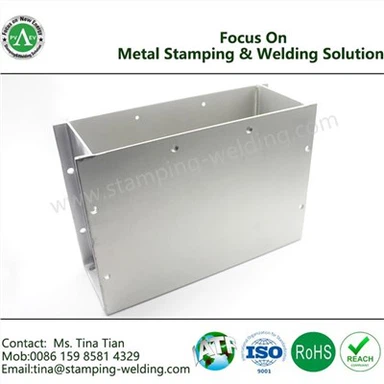
With the rapid expansion of electric vehicle production and the increasing adoption of lithium battery technology, the demand for high-performance battery structural components is also rising. As a key protective structure of the battery pack, aluminum alloy battery housings play a vital role in ensuring lightweight design, heat dissipation efficiency, and overall safety of new energy vehicles. Our company specializes in the manufacturing of aluminum alloy housings for lithium battery packs used in new energy vehicles, providing high-precision forming, excellent corrosion resistance, and reliable structural protection to support the safe and efficient operation of next-generation electric mobility solutions.

contact us