The Analysis Of Structural Design, Classification, And Application Technology For Copper Busbars
Jul 12, 2026
As a core conductive component in power transmission systems, the copper busbar plays a pivotal role in modern power distribution and energy systems. Structurally, it is classified as a fundamental conductor unit within electrical busbar systems, widely utilized for power distribution and equipment interconnection.

Depending on the conductive path and system design requirements-and often referred to as Copper Busbar or Power Busbar-it ensures stable current transmission across low-, medium-, and high-voltage distribution architectures. In engineering contexts, it is also described as an Electrical Busbar, highlighting its conductive and connecting functions within electrical circuits, while materials engineering professionals often use the specific term Electrical Copper Busbar.
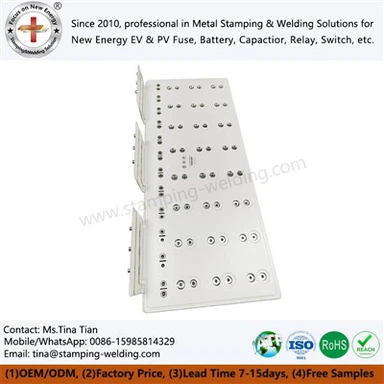
Structurally, copper busbars come in various forms. Rigid busbars-often termed Solid Copper Busbars-feature a stable geometric structure and are suitable for internal equipment connections where space is limited, but current density is high. Flexible structures, achieved through lamination or composite processes, can be bent to fit complex spatial layouts; these Bendable Copper Busbars are frequently used in new energy battery packs and compact power distribution assemblies.
Certain high-conductivity structures are also referred to as Copper Power Bars, emphasizing their high-current transmission capabilities; in busing systems, the term Power Busbar is used to describe scenarios involving parallel conduction across multiple circuits.
Regarding materials and performance, copper busbars can be further categorized based on purity and processing methods-such as Electrolytic Copper Busbars, which offer superior conductivity stability and lower electrical resistance. System designs also classify them by function to meet grounding and insulation requirements: examples include Electrical Ground Busbars (emphasizing protective performance), Telecom Ground Busbars (used for shielding and grounding in communication systems), and Isolated Ground Busbars (used in safety isolation scenarios). Design standards regarding voltage ratings-such as High Voltage Busbars-govern busbar configuration for systems operating at different voltage levels.
In terms of application, copper busbars serve a wide range of power equipment and industrial systems. In the integration of complex electrical systems-such as those involving circuit breakers, contactors, and switchgear-they are often designed to align with industrial equipment standards (e.g., busbars compatible with ABB systems).
Furthermore, high-current connection structures must meet specific requirements regarding electrical conductivity and contact stability. As standardization progresses within the power industry, design specifications for various configurations have emerged; busbar manufacturers now provide both standardized and customized solutions to suit the needs of diverse industrial applications.
From a systems engineering perspective, copper busbars serve not only as conductors but also as critical nodes for interconnection and distribution, facilitating efficient energy transmission and path optimization within power networks. Certain specialized designs incorporate integrated grounding and shielding solutions-such as the use of copper ground busbars-to enhance system stability and safety. Within the overall electrical architecture, these conductors are frequently integrated into power distribution units to ensure reliable connectivity and effective current distribution between devices.

In summary, as fundamental conductive components in modern power systems, copper busbars are seeing continuous expansion in their structural forms, material compositions, and application scenarios. Their design standards are constantly evolving to keep pace with sectors ranging from traditional power distribution to new energy and high-end industrial equipment, where they play a vital role in ensuring highly reliable and efficient power transmission.
contact us