The Difference Between A Single Hat And A Double Hat
Sep 15, 2021
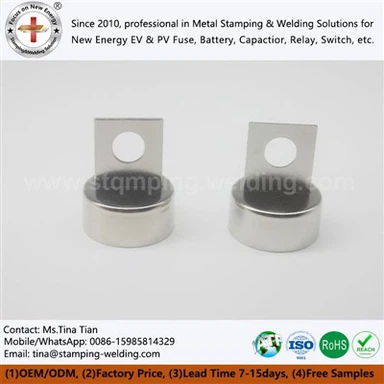
The concept of "single cap and double cap" pertains primarily to the cylindrical fuse design, which is widely encountered. In reputable and standardized manufacturing facilities, it is standard practice to use double caps, meaning that the fuse assembly consists of both a contact cap and the actual contacts; this is referred to as the double cap (inner and outer cover). Conversely, smaller or clandestine processing operations might opt for a single-cap approach with press riveting as a means to economize on labor and materials, thereby reducing costs. However, this cost-cutting measure can significantly compromise the product's characteristics, safety performance, and the reliability of the fuse.
Regarding "external welding and internal welding," this distinction is drawn from the Fusible Link Cap manufacturing process. Your inquiry seems to pertain to the spot welding techniques used in different fuse types. Typically, the external welding of a fuse is evident from its visible solder joint on the outside, whereas internal welding is characterized by the solder joint being concealed from view, as it is inside the fuse component.

The terms "fast melting and slow melting" describe different fuse types relative to the electrical appliances they are designed to protect. Fuses intended for the protection of semiconductor devices such as thyristors, diodes, transistors, and silicon rectifier elements are commonly known as fast melting fuses, and they fall under the "art" category. On the other hand, slow melting fuses, often designated as "GG" fuses, are those with full breaking capacity and are typically utilized for overload or short-circuit protection of electrical lines. These two represent the standard varieties of fuses. Additionally, there are other commonly used fuse types like "am," "GD," "GR," and more. For a comprehensive understanding of these and other fuse types, one can refer to the fuse standards outlined in GB13539.1-GB13539.4.
contact us