Analysis of laminated busbar industry knowledge
Jun 02, 2026
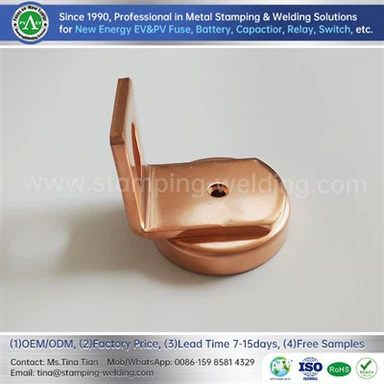
Laminated Busbar, also known as composite busbar, mezzanine busbar or low-inductance busbar, is a power distribution connection device designed with a multi-layer composite structure. Its typical structure consists of conductive layers (mostly copper or copper alloys) and insulating layers (polymer films or composite materials) alternately laminated to form a compact, low-inductance integral component through hot pressing or gluing processes. Compared with traditional discrete wire or copper bus wiring methods, laminated busbars use the principle of mutual cancellation of electromagnetic fields between conductors to reduce parasitic inductance significantly. At the same time, they have the characteristics of low impedance, strong anti-interference ability, compact structure, and convenient assembly. In Laminated Busbar SIC Application, this low-inductance characteristic is particularly critical to leverage the high-speed switching capabilities of SiC devices. In addition, for scenarios with specific unplated interface requirements, Laminated BusBar Copper without Tin Plated can be used to ensure high conductivity and avoid contact resistance variation caused by plating.

Material advantages
The material system used in laminated busbars directly affects its electrical, thermal and mechanical properties. The conductive layer usually uses high-conductivity copper or copper alloy, and can choose bare copper, tin plating, nickel plating or silver plating surface treatment according to corrosion resistance and solderability requirements. Among them, Laminated BusBar Copper without Tin Plated is suitable for special applications that require maintaining a pure copper contact interface. The insulation layer material needs to have high dielectric strength, low moisture absorption and good heat aging resistance. Commonly used materials include PET (polyester film), PI (polyimide) and flame-retardant epoxy resin prepreg, and meet the UL94 V-0 flame-retardant grade and ROHS environmental requirements. BusBar with PET Insulating Paper is a mature and reliable combination where insulation performance and thin design need to be taken into consideration. PET insulating paper provides stable electrical isolation and is easy to bond during the lamination process. In addition, high thermal conductivity insulating materials will be used in the Laminated Bus Bar for Variable Frequency Drive to assist in heat dissipation of the power module.

Manufacturing process
The manufacturing process of the laminated busbar determines the consistency and reliability of its final performance. Core processes include: conductor blanking and stamping, surface treatment (such as passivation, tin plating or silver plating), insulation material cutting and lamination positioning, hot press lamination, edge sealing, drilling and terminal riveting/welding, etc. Among them, the hot-pressing lamination process is a key technology node, which requires precise control of temperature, pressure and holding time to ensure that the insulating material fully flows and is tightly bonded with the conductor to avoid residual air gaps causing partial discharge.
For applications that require complete insulation on all sides, such as Laminated Bus Bar for Cellular Base Station Power Distribution, an edge sealing process is usually added, and insulating glue or secondary molding is used to seal the conductor edges, thereby eliminating the need for additional electrical clearance avoidance designs within the entire machine. In the production of Motor Controller BusBar, sheet metal processes such as multi-bending and integrated stamping of special-shaped terminals will also be involved to meet the needs of compact chassis assembly. In addition, for high-density connection applications such as Laminated Bus Bar for Router Backplane Distribution, high-precision CNC drilling or punching is required to ensure that the terminal position tolerance is within ±0.1mm. The final product needs to withstand a voltage test, an insulation resistance test, an inductance test and a thermal cycle aging test to verify its long-term reliability in high-frequency and high-speed switching scenarios such as Laminated Busbar SIC Application.

Application areas
Laminated busbars are widely used in industrial fields that have high requirements for power distribution density, reliability and electromagnetic compatibility. Typical application industries include: traction converters for aerospace and rail transit, wind and solar photovoltaic inverters, industrial inverters, large uninterruptible power supply (UPS) systems, medical equipment power supplies, electric vehicle motor controllers, and communication base station power distribution systems. Specific to product type, Laminated Bus Bar for Variable Frequency Drive can effectively reduce the internal parasitic parameters of the drive and improve system stability; Laminated Bus Bar for Supercomputer Circuit Board serves computing platforms with extremely high current density and low noise requirements; Laminated Bus Bar for Distributing Power Backplane is used for the internal power distribution network of server cabinets or communication racks. In the field of mobile communications, Laminated Bus Bar for Cellular Base Station Power Distribution and Laminated Bus Bar for Router Backplane Distribution have become the preferred solutions for 5G and next-generation communications equipment due to their anti-interference and space-saving advantages.

contact us
We can provide mass production solutions based on low inductance design, high insulation reliability and process consistency. If you have customized development needs for Customized Copper Inverter Laminated Busbar for Electrical Installation, please contact our technical team for parameter docking and sample verification.