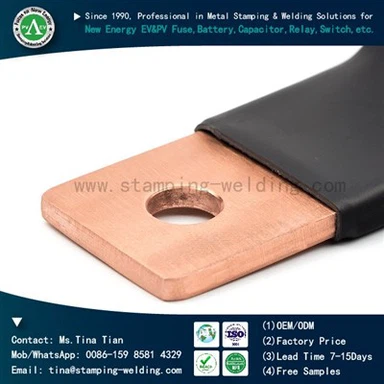
Analysis of the core reasons for tin plating on Tinned Copper BusBars: from national standard requirements to performance upgrades
Jan 28, 2026
Tin plating on Tinned Copper BusBar is a widely used performance optimization process in the field of electrical systems and power transmission. Most engineering practitioners are aware that copper bars require tin plating treatment, but their understanding of the core logic, national standards, and performance values behind it is often not comprehensive enough. This article will systematically analyze the core reasons for tin plating on copper bars from the perspective of national standards, and delve into its role in improving the comprehensive performance of copper bars, providing professional references for electrical engineers, engineering procurement and design personnel.

Standard definition of Flat Copper Bus Bar material
When it comes to Tinned Copper BusBar, it is necessary to first clarify the core requirements of national standards for copper bar materials. According to GB/T 5585.1-2018 Copper, Aluminum and Their Alloy Busbars for Electrical Use Part 1: Copper and Copper Alloy Busbars, regardless of round wire, flat wire or copper strip, the requirements for the chemical composition of copper+silver in electrical copper are unified, which sets the basic standard for the selection of copper busbar materials.
The statement 'Tin Plated Bus Bar is made of purple copper' in daily expressions is not rigorous. Purple copper is divided into four grades based on purity: T1, T2, T3, and T4. Among them, the copper+silver content of T2 copper is not less than 99.9%, which is also the minimum material standard for copper bars in power systems. That is, copper bars used in conventional engineering applications must reach T2 purple copper or above grade. It should be noted that this standard mainly applies to core conductive conductors such as USB bar coating, and does not include auxiliary components such as terminals. Copper, due to its excellent conductivity, has become the preferred conductive material for power systems. However, in practical engineering, other materials will be combined with requirements to achieve a balance between performance and economic benefits. For example, brass has a high electrical resistivity and is not suitable for core conductive components, but with its good mechanical properties and corrosion resistance, it can be used to manufacture auxiliary parts such as screws, fasteners, and casings; Copper alloys such as tin phosphorus copper are suitable for components with specific mechanical performance requirements, such as switches, sockets, connectors, etc., due to their excellent wear resistance and elasticity.

The core reason for tin plating on Tin Coated Copper BusBar
Barrier oxidation and maintain conductivity stability: Copper is prone to oxidation reactions in humid and aerobic environments, producing copper green with extremely poor conductivity (copper oxide, copper hydroxide composite). The formation of copper green not only directly reduces the conductivity efficiency of copper bars, but also leads to an increase in contact resistance, which in turn causes the local temperature rise to be higher, and in severe cases may affect the operational stability of the entire electrical system. The tin plating layer can form a dense protective barrier on the surface of Flat Copper Busbar, effectively blocking the contact between oxygen, water vapor, and copper substrate, preventing copper bar oxidation from the root and maintaining its good conductivity for a long time.
Optimizing conductivity and ensuring transmission efficiency: From the perspective of the material itself, the conductivity of tin is slightly lower than that of copper, but the impact of the tin plating process on the overall conductivity of copper bars can be ignored, and the conductivity can be optimized through multiple effects. On the one hand, the tin layer can keep the surface of Tin Plated Copper Bar clean, avoiding the adhesion of oxide layers and impurities, while providing a smooth and uniform overlap surface, reducing contact resistance, and making the conductivity of tin plated bars more stable in practical applications; On the other hand, copper and tin undergo a slight alloying reaction under specific conditions, forming a copper tin alloy that can further enhance conductivity stability. Compared to traditional pure copper conductors, tin plated copper busbars have better current carrying capacity and can better adapt to high current transmission scenarios.
Enhance corrosion resistance and extend service life: Copper has relatively active chemical properties, and long-term exposure to air can easily form copper green, which not only leads to a decrease in conductivity, but also corrodes copper substrates and reduces structural strength. After tin plating on the surface of the Tinned Copper Flat Bar, the tin layer can effectively isolate the copper substrate from contact with external corrosive media. Whether in humid environments, coastal scenes with salt spray, or industrial sites with chemical corrosive gases, it can significantly reduce the corrosion risk of copper bars. This protective effect can significantly extend the service life of copper bars, reduce maintenance costs and replacement frequency in the later stages of the project, and ensure the long-term stable operation of the electrical system.

summary
Tinned Copper BusBar tin plating is a process that combines protection, functionality, and economy. Its core value lies in achieving five performance upgrades through simple surface treatment: copper bar oxidation protection, conductivity optimization, corrosion resistance, easy welding, and heat dissipation assistance. Combining the specification requirements for copper bar materials in the GB/T 5585.1-2018 standard, tin plating further amplifies the core advantages of T2 copper and above-grade copper materials, providing a more reliable and stable conductive solution for various electrical engineering scenarios. A deep understanding of the core reasons for tin plating on copper bars can help engineering practitioners to more accurately select materials, adapt processes, and design systems, ensuring the long-term efficient operation of electrical systems.
contact us
Our team focuses on producing busbar series and has a professional engineering team. If you are currently in the Copper Tinned Busbar selection or technical evaluation stage, please provide project conditions and key parameters for engineering confirmation.