Extreme Marine and Desert Corrosion Protection for ESS Enclosures: C5-H Fluorocarbon and Cathodic Electrophoresis
Oct 19, 2026
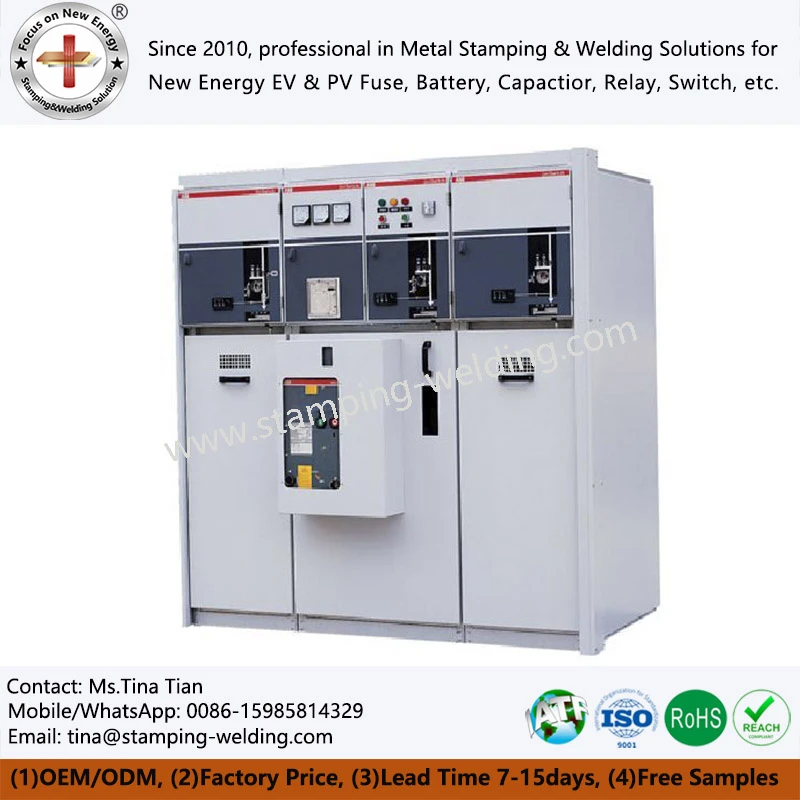
Commercial and industrial energy storage system (ESS) enclosures installed on offshore islands, coastal sites, and desert solar farms must resist salt contamination, persistent humidity, ultraviolet radiation, and abrasive airborne particles. A dual-layer coating system combining cathodic electrophoretic deposition (E-coat) with a qualified PVDF fluorocarbon finish or weather-resistant polyester powder coating can improve corrosion resistance, edge coverage, and long-term color stability. For C5-H exposure conditions, coating qualification, substrate preparation, welded-joint protection, and IP-rated sealing must be verified against the specified standards and actual service environment.
Xiamen Apollo Stamping Welding Technology Co., Ltd. manufactures custom metal enclosures and precision sheet-metal assemblies for ESS, photovoltaic power systems, and industrial electrical equipment. The engineering focus is on coating-system compatibility, corrosion-prone geometric features, enclosure sealing, and repeatable manufacturing quality.
ISO 12944 C5-H Exposure: Corrosion Risks for Marine and Desert ESS Cabinets
C5-H Marine Exposure: Salt Deposition and Persistent Humidity
Coastal energy storage installations are exposed to airborne chloride salts, condensation, wind-driven rain, and prolonged periods of high humidity. These conditions accelerate corrosion when protective coatings contain pores, cracks, poorly covered edges, or damaged interfaces.
Typical failure locations on an ESS enclosure include:
Weld toes and heat-affected zones
Folded sheet-metal edges and cutouts
Door hinges, fasteners, and mounting brackets
Cable glands and grounding points
Coating transitions around ventilation openings
Interfaces between dissimilar metals
ISO 12944 classifies protective paint systems according to environmental corrosivity and durability categories. C5 represents very high corrosivity, while H denotes a high durability range in the ISO 12944 framework. The classification and required coating system must be selected according to the applicable edition, substrate, and project specification.
A C5-H specification does not mean that every coating system automatically passes a fixed 2,000-hour salt spray test. Qualification requirements must be stated separately and supported by the relevant test reports.
Desert Exposure: UV Radiation, Abrasion, and Thermal Cycling
Desert ESS installations face a different combination of degradation mechanisms.
| Environmental Factor | Primary Failure Mechanism | Enclosure Design Response |
| High UV exposure | Binder degradation, fading, chalking | Qualified UV-resistant topcoat |
| Windblown sand | Surface abrasion and finish erosion | Abrasion-resistant coating system |
| Large day-night temperature swings | Differential expansion and seal fatigue | Compatible coating and gasket materials |
| Dust accumulation | Blocked vents and contaminated interfaces | Appropriate filtration and maintenance design |
| Low rainfall with concentrated cleaning events | Localized contamination and chemical attack | Site-compatible cleaning specification |
| High surface temperature | Accelerated coating and gasket aging | Temperature-rated materials |
For desert installations, coating selection should consider the combined effects of UV radiation, surface temperature, abrasion, and cleaning chemicals. Salt spray performance alone cannot establish outdoor weatherability.
Substrate Preparation at Welds and Cut Edges
A coating system is only as reliable as its substrate preparation.
Before E-coat or powder coating, the enclosure should undergo the specified sequence of degreasing, rinsing, surface conditioning, and pretreatment. Weld spatter, sharp burrs, oil residue, and embedded contaminants can compromise film continuity.
Critical preparation controls include:
Removal of stamping oil and welding residue
Burr removal and edge rounding where specified
Weld inspection before coating
Pretreatment chemistry and bath control
Rinse-water quality
Drying and contamination prevention
Verification of coating coverage at seams and recesses
For galvanized steel, carbon steel, and aluminum, the pretreatment chemistry must be compatible with the substrate. A process qualified for one metal should not automatically be applied to another.
Cathodic E-Coat and PVDF Fluorocarbon: Dual-Layer Corrosion Protection
Cathodic Electrophoretic Deposition: Coverage of Complex Cabinet Geometry
Cathodic electrophoretic coating deposits a charged paint film onto a conductive workpiece immersed in an electrically controlled coating bath. It is useful for sheet-metal enclosures containing recessed corners, folded flanges, and complex welded structures.
The coating result depends on:
Bath solids content and conductivity
Bath temperature and pH
Applied voltage and deposition time
Workpiece grounding and electrical continuity
Pretreatment quality
Drainage and rinsing
Curing temperature and time
E-coat can improve coverage in recessed regions, but it does not guarantee uniform film thickness at every internal corner. Geometry, electrical shielding, bath access, and drainage can produce local variations.
For ESS cabinets, process qualification should measure dry-film thickness at representative external surfaces, internal recesses, welds, and edges.
PVDF Fluorocarbon vs. Weather-Resistant Polyester Powder Coating
PVDF fluorocarbon coatings and polyester powder coatings have different formulation and application requirements. They should be compared using the complete coating system rather than resin names alone.
| Performance Factor | PVDF Fluorocarbon System | Exterior-Grade Polyester Powder |
| UV weatherability | Generally very high for qualified formulations | Good to very good for qualified exterior grades |
| Color retention | Strong long-term potential | Depends on resin, pigments, and exposure |
| Application method | Commonly liquid coating or coil-coating systems | Electrostatic powder application |
| Complex cabinet geometry | Depends on application route and substrate preparation | Suitable for many formed sheet-metal parts |
| Repair requirements | Product-specific | Product-specific |
| Film-thickness control | Depends on coating process | Depends on powder application and curing |
| Cost structure | Often higher for premium systems | Often economical for fabricated enclosures |
PVDF performance depends on resin content, formulation, pigment package, film build, pretreatment, and curing conditions. Exterior-grade polyester powders also vary substantially by formulation.
A PVDF topcoat over an E-coat primer should be qualified as a complete system. Compatibility between the primer and topcoat, including intercoat adhesion and curing conditions, must be confirmed before production release.
Cross-Cut Adhesion at ISO 2409 Class 0: Film Integrity
For applicable coating thicknesses and substrates, ISO 2409 cross-cut testing evaluates coating adhesion by assessing coating detachment around a standardized cut pattern.
Class 0 represents the best classification in the ISO 2409 scale. However, the test method has limitations, and results depend on the coating system, substrate, film thickness, and test conditions.
A robust qualification plan should include:
Adhesion before environmental exposure
Adhesion after the specified corrosion test
Adhesion after UV weathering
Film-thickness mapping
Inspection for blistering, cracking, and peeling
A class 0 result alone does not establish C5-H durability.
Request Free DFM Evaluation & Quote
2,000-Hour Salt Spray and 3,000-Hour Xenon Testing: Qualification Without False Equivalence
Neutral Salt Spray Testing: ASTM B117 and ISO 9227
Neutral salt spray (NSS) testing exposes coated specimens to a controlled saline atmosphere. ASTM B117 and ISO 9227 specify test procedures, but neither standard independently defines universal acceptance criteria for every ESS cabinet.
For a project requiring more than 2,000 hours of NSS exposure, the procurement specification should identify:
Test standard and edition
Substrate and pretreatment
Coating system and dry-film thickness
Scribed or unscribed test condition
Permitted blistering and corrosion creep
Edge and cutout evaluation
Post-test adhesion requirements
Salt spray duration must not be converted directly into a specific number of outdoor service years. Laboratory exposure does not reproduce every combination of UV radiation, temperature cycling, pollutant deposition, and mechanical damage encountered in the field.
Xenon-Arc Weathering at 3,000 Hours: UV and Moisture Resistance
Xenon-arc exposure simulates selected aspects of outdoor sunlight and may incorporate controlled moisture cycles. ASTM G155 and ISO 16474-2 are relevant references for xenon-arc exposure methods.
A project requiring more than 3,000 hours of xenon-arc exposure should specify the lamp filter, irradiance, black-panel temperature, humidity or water-spray cycle, and evaluation intervals.
Relevant acceptance metrics include:
| Test Characteristic | Measurement | Purpose |
| Color difference | Instrumental color measurement, such as ΔE | Tracks fading and color change |
| Gloss retention | Gloss measurement | Evaluates surface appearance degradation |
| Chalking | Applicable standardized assessment | Detects binder degradation |
| Cracking | Visual or microscopic inspection | Identifies film failure |
| Adhesion retention | Applicable adhesion test | Evaluates coating integrity |
| Blistering | Standardized visual assessment | Detects moisture-related coating failure |
The allowable color difference and gloss retention should be agreed with the customer rather than assigned a universal threshold.
Corrosion and Weathering as Separate Qualification Tracks
Salt spray and xenon-arc weathering evaluate different degradation mechanisms. Passing one does not establish performance in the other.
For severe marine and desert ESS projects, a qualification matrix should distinguish corrosion resistance, UV stability, mechanical abrasion, thermal cycling, and chemical resistance.
IP65 and IP66 Enclosure Sealing: EPDM Gaskets and Conductive Polyurethane Foam
IP65 vs. IP66: Dust Protection and Water-Jet Resistance
The IP rating applies to the tested enclosure configuration, not to an individual gasket or coating.
Under IEC 60529:
IP6X indicates dust-tight protection under the specified test.
IPX5 indicates protection against water jets under the specified test conditions.
IPX6 indicates protection against powerful water jets under the specified test conditions.
An IP65 or IP66 rating therefore requires validation of the assembled enclosure, including doors, cable glands, vents, mounting interfaces, and any pressure-equalization devices.
A cabinet that passes IP65 testing cannot automatically be described as IP66 compliant.
Dual EPDM Gaskets: Compression and Door Alignment
EPDM gaskets are commonly used where weather resistance, ozone resistance, and temperature flexibility are required. A dual-gasket arrangement can provide additional sealing redundancy when the door geometry and compression design support it.
Key engineering variables include:
Gasket cross-section and hardness
Compression percentage
Compression-force deflection
Joint continuity at corners
Splice quality
Door flatness and stiffness
Latch spacing and closing force
Compression set after aging
Insufficient compression can cause leakage. Excessive compression can accelerate permanent deformation and increase door-closing force.
The correct compression range must be established from the gasket supplier's data and validated on the actual door assembly.
Conductive Polyurethane Foam: EMI Shielding and Environmental Sealing
Conductive polyurethane foam gaskets can provide electromagnetic interference (EMI) shielding at selected enclosure interfaces. Their electrical function is different from that of a conventional EPDM environmental seal.
| Characteristic | Conductive PU Foam | EPDM Environmental Gasket |
| Primary function | Electrical continuity and EMI shielding | Environmental sealing |
| Electrical conductivity | Formulation-dependent | Normally electrically insulating |
| Water sealing | Depends on construction and compression | Suitable grades available |
| Compression set | Product-dependent | Product-dependent |
| Corrosion compatibility | Requires evaluation at conductive interfaces | Generally nonconductive |
| Typical location | EMI bonding interface | Door and panel weather seal |
Conductive foam should not be assumed to replace a qualified water-sealing gasket. If both EMI shielding and IP65/IP66 protection are required, the interface geometry must be designed and tested for both functions.
Door Assembly Validation: IEC 60529 and Environmental Aging
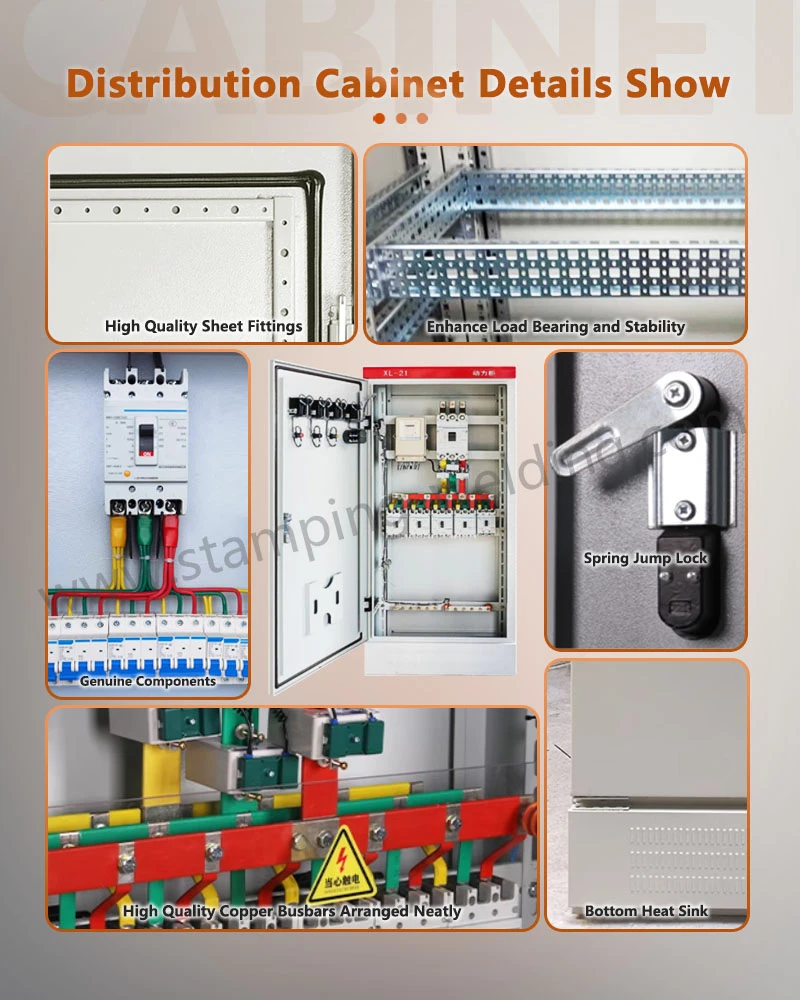
The final enclosure should be tested after representative assembly, including the specified gaskets, locks, hinges, cable glands, and vents.
Validation should consider:
Initial IP testing
Gasket aging and compression set
Door opening and closing cycles
Temperature cycling
Coating thickness at sealing surfaces
Corrosion at hinges and fasteners
Retesting after relevant environmental conditioning
The coating design must also prevent excessive film buildup on gasket seating surfaces where it could alter compression or door alignment.
Request Custom Cabinet Engineering Review
Heavy-Duty ESS Enclosure Manufacturing: Sheet-Metal Fabrication and Coating Control
Sheet-Metal Design: Weld Seams, Edges, and Drainage
Corrosion protection begins before the coating line. Enclosure geometry determines whether pretreatment fluids drain correctly, whether weld seams retain contamination, and whether water accumulates during outdoor service.
Design-for-manufacturing review should examine:
Folded-edge accessibility
Weld continuity and spatter removal
Drainage holes and liquid traps
Fastener and hinge interfaces
Cable entry and ventilation cutouts
Coating access to internal surfaces
Grounding points and masking requirements
A coating specification cannot compensate for poor drainage, inaccessible seams, or unprotected dissimilar-metal interfaces.
Coating Process Control: Film Thickness and Cure Verification
For repeatable mass production, coating controls should link the process parameters to measurable acceptance criteria.
| Process Stage | Critical Control | Verification |
| Degreasing | Oil and residue removal | Surface cleanliness check |
| Pretreatment | Bath chemistry and conversion layer | Process records and approved tests |
| E-coat | Voltage, bath condition, deposition time | Dry-film thickness and appearance |
| Topcoat application | Film build and coverage | Thickness mapping |
| Curing | Time and actual part-metal temperature | Cure-process records |
| Final inspection | Defects, adhesion, color | Visual and instrumented inspection |
Dry-film thickness should be measured at representative locations, including corners, recesses, edges, and external surfaces. The specified range must be based on the qualified coating system.
ISO 12944 C5-H and Production Traceability
A high-corrosivity coating system requires documented material and process control.
For OEM projects, useful records include:
Coating supplier and product identification
Pretreatment batch records
Coating thickness results
Curing records
Adhesion test reports
Corrosion and weathering reports
Nonconformance and corrective-action records
Production lot traceability
ISO 12944 should be used to establish the protective paint-system requirements for the intended environment. Project-specific laboratory tests should then verify that the selected system meets the required acceptance criteria.
C5-H Marine-Grade Battery Cabinet Manufacturer: OEM Design and Qualification
Custom ESS Cabinet and Charging Cabinet Integration
Apollo supports custom sheet-metal enclosures for energy storage systems, electrical distribution equipment, and charging infrastructure.
Engineering review can cover:
Cabinet dimensions and panel thickness
Sheet-metal stamping, bending, and welding
Door and mounting interface design
Corrosion-resistant coating specification
Cable entry and ventilation layout
Gasket installation and compression
Dimensional inspection and assembly verification
The coating, sealing, and fabrication specifications should be frozen before final qualification to prevent uncontrolled changes during mass production.
Qualification Checklist for Marine and Desert ESS Projects
| Qualification Item | Required Definition |
| Corrosivity category | ISO 12944 environment and durability requirement |
| Coating system | E-coat primer plus specified PVDF or powder topcoat |
| Film thickness | Approved range for each coating layer |
| Salt spray test | Standard, duration, scribe condition, acceptance criteria |
| UV weathering | Standard, exposure conditions, color and gloss limits |
| Adhesion | Test method and required classification |
| IP rating | IP65 or IP66 for the complete enclosure |
| Gasket performance | Material grade, compression, and aging requirements |
| Dimensional quality | Drawing tolerances and inspection method |
| Production traceability | Batch records and agreed quality documentation |
A clear qualification checklist reduces ambiguity between the enclosure manufacturer, coating supplier, ESS integrator, and final system owner.
FAQ
Q: Can an ESS enclosure achieve ISO 12944 C5-H protection with E-coat and PVDF?
A: Yes, if the complete coating system is designed, tested, and documented for the specified exposure category and durability requirements. E-coat and PVDF alone do not establish compliance.
Q: Does a 2,000-hour salt spray test guarantee long-term marine service life?
A: No. Salt spray duration is a laboratory test result, not a direct conversion to outdoor service years. Field durability also depends on UV exposure, temperature cycling, coating damage, and maintenance.
Q: Can Apollo manufacture marine-grade ESS cabinets with IP65 or IP66 protection?
A: Yes. Apollo can manufacture custom sheet-metal cabinets with specified coating and gasket systems. IP65 or IP66 compliance must be verified through testing of the final assembled enclosure.
contact us